
QE and QT explained
Educational only. This primer teaches balance-sheet vocabulary. It is not a forecast of the next QE or QT move, not financial advice, and not a signal to buy or sell any asset.
Site vs Telegram
Durable plumbing explainers live here. When balance-sheet headlines hit the wire, plain-English decoding belongs on Telegram: Macro Simplified on Telegram.
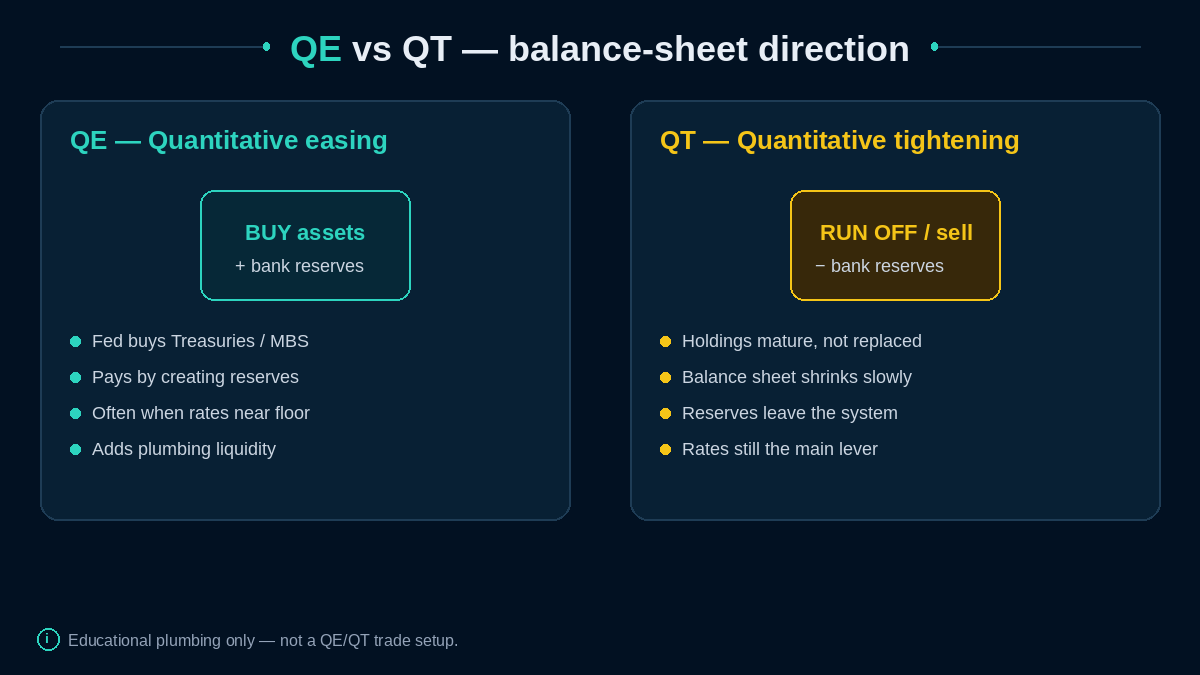
Diagram: QE vs QT — direction of the balance sheet and reserves, not a trade setup.
Two directions on the same sheet
The Fed’s balance sheet lists what it owns (assets) and what funds those holdings (liabilities). Beside the policy rate, two phrases describe direction on that sheet:
- QE (quantitative easing) — The Fed buys longer-term securities (often Treasuries and mortgage-backed securities) and pays by creating bank reserves. Holdings and reserves rise together.
- QT (quantitative tightening) — The Fed lets securities mature without fully replacing them (or sells), so the balance sheet shrinks and reserves leave the system gradually.
Metaphor you can keep: rates are the steering wheel; the balance sheet is plumbing and fuel. QE/QT change how much liquidity sits in the banking system. They are not a simple “print money → every risk asset goes up” switch.
For who the Fed is and what else it does, start with The Fed toolkit.
What QE is trying to do (in plain English)
Historically, QE showed up when the policy rate was already near zero, or when markets needed support in a stress period. Buying longer-term assets can:
- Add reserves into the system
- Put downward pressure on longer yields in some environments
- Signal that policy is easing beyond the overnight rate alone
None of that guarantees a particular stock, crypto, or gold path. Liquidity can support risk appetite in some regimes and barely matter in others. Think of QE as changing the backdrop of reserves and duration held by the central bank—not as a coupon mailed to retail portfolios.
When people say “the Fed is printing,” they are usually gesturing at reserve creation that accompanies asset purchases. That is accounting language for how the sheet expands—not a judgment about which asset you should own.
What QT is trying to do
QT is the reverse direction: shrink holdings slowly so policy can lean less on a giant balance sheet over time. In everyday language:
- Securities roll off → assets fall
- Reserves tend to fall with them (other things equal)
- The federal funds rate target remains the main day-to-day lever
QT is usually described as gradual and “in the background.” Officials often stress that the overnight rate—not the runoff pace—is the active steering tool. Sudden market stress can change the conversation about runoff speed; this page does not time those episodes or recommend positioning around them.
How QE/QT show up in everyday headlines
You will see phrases like “balance-sheet runoff,” “caps on Treasury reinvestment,” or “QT pause talk.” Translate them back to the teaching idea: is the sheet growing, shrinking, or holding steady—and how fast? Pair that with the policy-rate story and with Financial conditions (yields, credit, dollar, risk mood) rather than treating QE/QT as a standalone crystal ball.
Longer yields also mix in growth, inflation, and term premium debates. Balance-sheet policy can influence parts of that mix; it does not erase the rest.
Common confusions
- “QE is free money for my portfolio.” QE adds reserves and can ease financial conditions; it is not a coupon paid to retail investors.
- “QT always crashes markets.” QT removes liquidity at the margin. Outcomes depend on growth, inflation, credit, and how fast runoff runs—not a one-way rule.
- “QE and rate cuts are the same tool.” Cuts change the overnight price of money. QE changes the size and composition of the balance sheet.
- “If I learn QE/QT, I can predict the next FOMC.” Tools explain how. They do not announce what the committee will do next.
- “More reserves automatically mean higher crypto.” See Crypto and macro liquidity for why liquidity talk is context—not a token tip.
How this connects
- Balance-sheet plumbing deepens in Fed balance sheet and reserves and Overnight RRP plumbing.
- Policy-rate context: Interest rates and yields and Financial conditions.
- Risk-mood language (anti-signal): Risk assets 101.
- Definitions: Glossary.
Related reads
Telegram
Balance-sheet and FOMC days: Join Macro Simplified.