
Inflation expectations and anchoring
Educational only. This primer explains inflation expectations and anchoring as vocabulary. It is not a forecast of CPI, not a TIPS trade, and not a call on Fed credibility “winning” or “losing.”
Site vs Telegram
Expectations explainers live here. When breakevens or survey expectations spike in the news, use Telegram: Macro Simplified on Telegram.
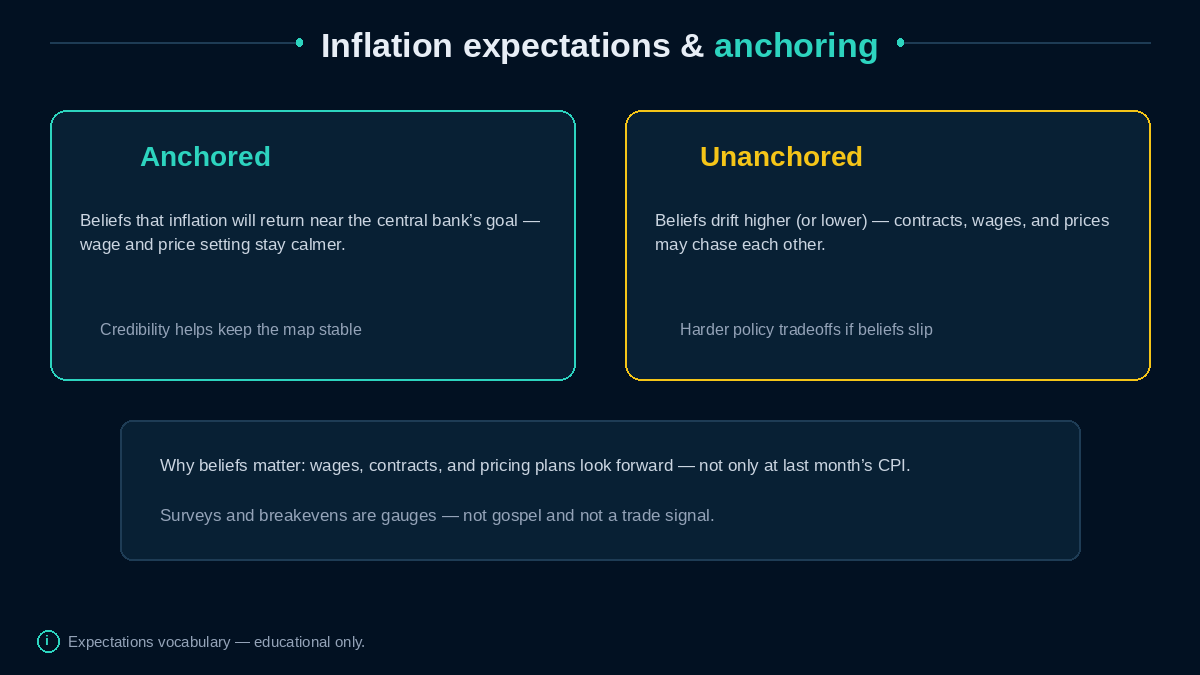
Diagram: Anchored near goal vs drifting beliefs — wages and contracts look forward.
Beliefs are part of the inflation process
Inflation is not only last month’s basket (Inflation 101). Wages, rents, and business price plans often embed guesses about future inflation. If people expect prices to keep rising quickly, they may bargain and set prices accordingly—feeding persistence.
Anchored expectations: beliefs stay near the central bank’s inflation goal even after shocks.
Unanchored expectations: beliefs drift, so the same shock can leave a longer inflation scar.
That language sits inside dual mandate debates and Phillips curve discussions about shifting curves.
Where beginners see expectations measured
- Surveys — households, firms, or professional forecasters
- Market-based gauges — e.g. breakeven inflation from TIPS vs nominal Treasuries (Real rates and breakevens)
Neither is perfect gospel. Surveys can be noisy; breakevens mix inflation views with liquidity and risk premia. Treat them as gauges for learning, not trading oracles (Priced in / expectations).
Why policymakers talk about anchoring
If expectations stay anchored, temporary shocks (energy, supply chains) may fade without wage-price chase. If they slip, policy may need to work harder to restore credibility—raising the cost of disinflation in many textbook stories (Inflation regimes, Energy shocks and inflation).
This site does not declare whether expectations are “broken” today. It teaches why the word appears.
Common confusions
- “One hot CPI print means unanchored.” Anchoring is about medium-term beliefs, not one month.
- “Breakevens are the Fed’s target.” They are market-implied stories—not a policy setting.
- “Anchored means inflation never moves.” Prices still wiggle; beliefs about the goal stay put.
- “This page says buy TIPS.” It does not.
In practice — hearing “anchored” in a press conference
When officials say expectations remain anchored, they are claiming shock-fade is still plausible. When they worry about de-anchoring, they are elevating persistence risk. Pair with Reading the Fed and sticky-services context (Sticky services and shelter inflation).
Short-run vs long-run expectations sometimes diverge in the data: near-term survey answers jump with gasoline while longer-horizon answers stay nearer the goal. That split is why officials obsess over which expectation measure moved. Learners can practice the same split without treating any single survey as destiny. For sticky components that keep the debate alive even when energy fades, see Sticky services and shelter inflation.
Contract indexation (rents, wages, some business contracts) is a concrete channel from beliefs into realized inflation. Where indexation is rare, expectations still matter through bargaining and markup choices—just harder to see in a single line of the CPI table.
Credibility is earned over many decisions; one speech rarely anchors or unanchors beliefs alone. Look for persistence across prints and surveys together.
How this connects
- Inflation 101 · Real rates and breakevens
- Phillips curve for beginners · Dual mandate
- The Fed toolkit · Priced in / expectations
Related reads
Telegram
Expectations and CPI days: Join Macro Simplified.