
Macro Simplified · Learn
Learn
Pick a path. Primers stay evergreen; live decoding is on Telegram.
Educational only. Ideas in plain English—not advice, signals, or trade recommendations.
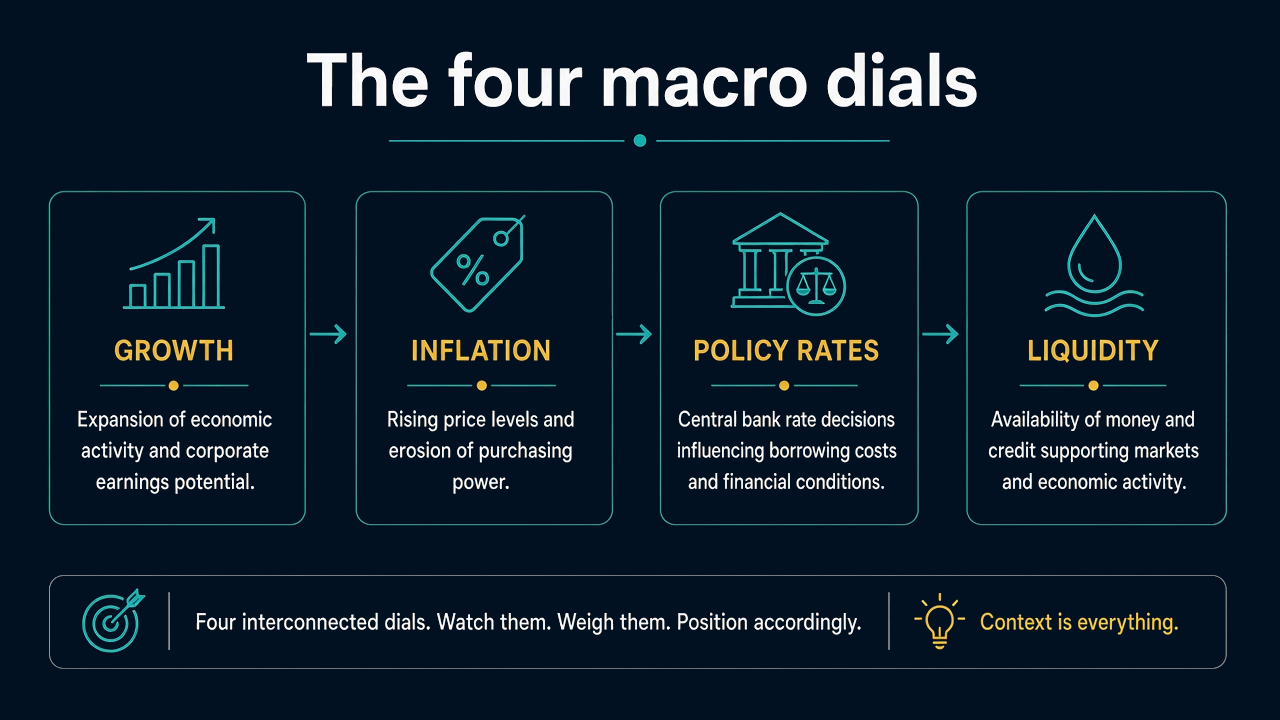
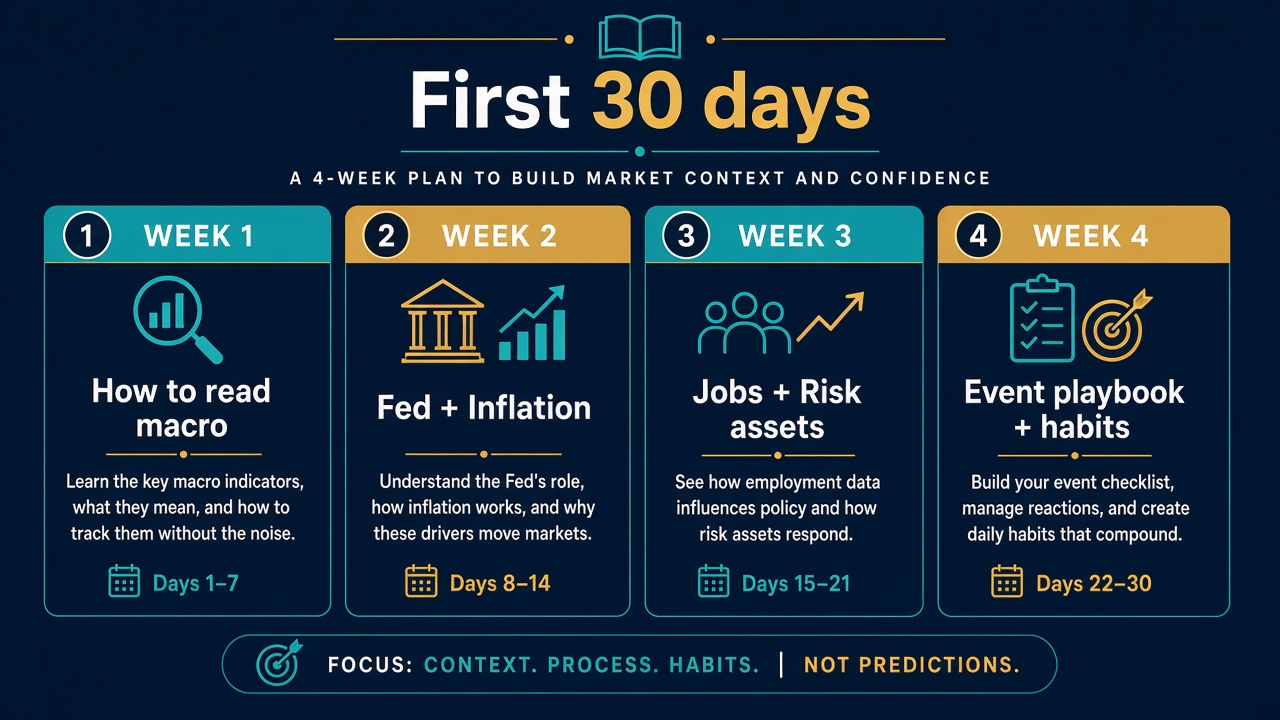
Foundations

About
Who this is for, site vs Telegram, and our educational-only promise.
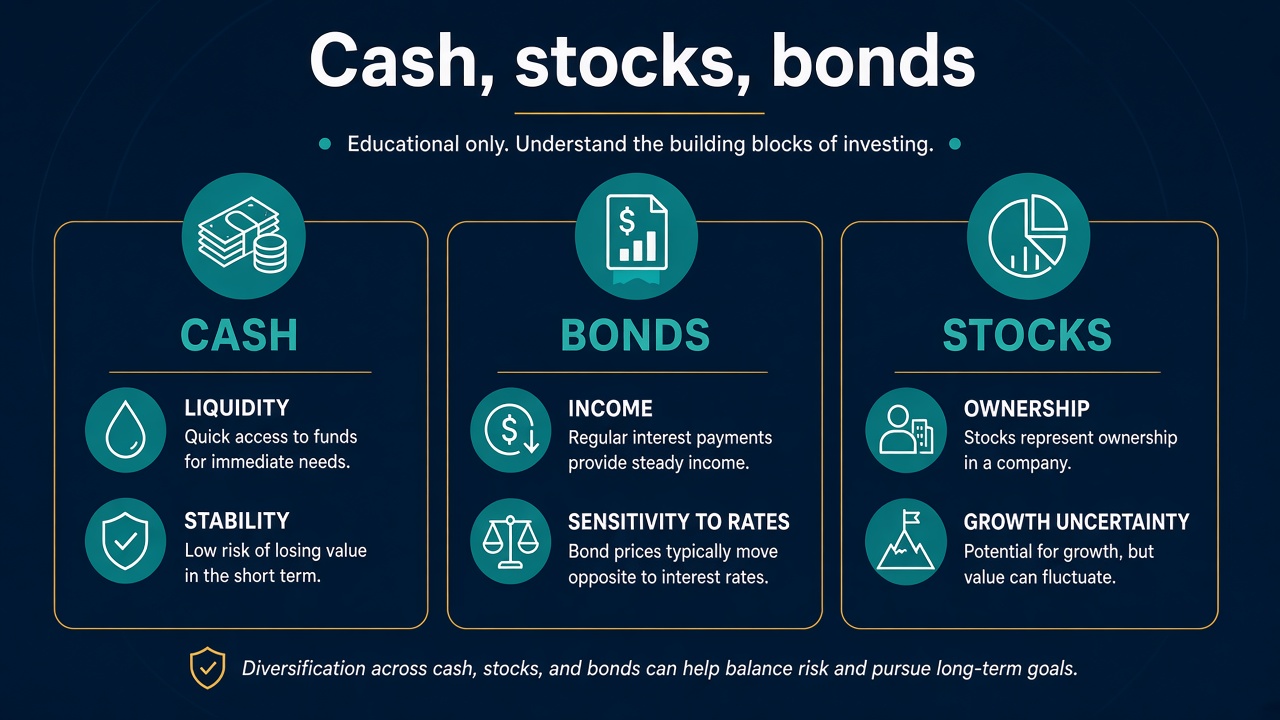
Cash, stocks, and bonds
Asset roles and the rates/inflation/growth backdrop—no allocation recipe.
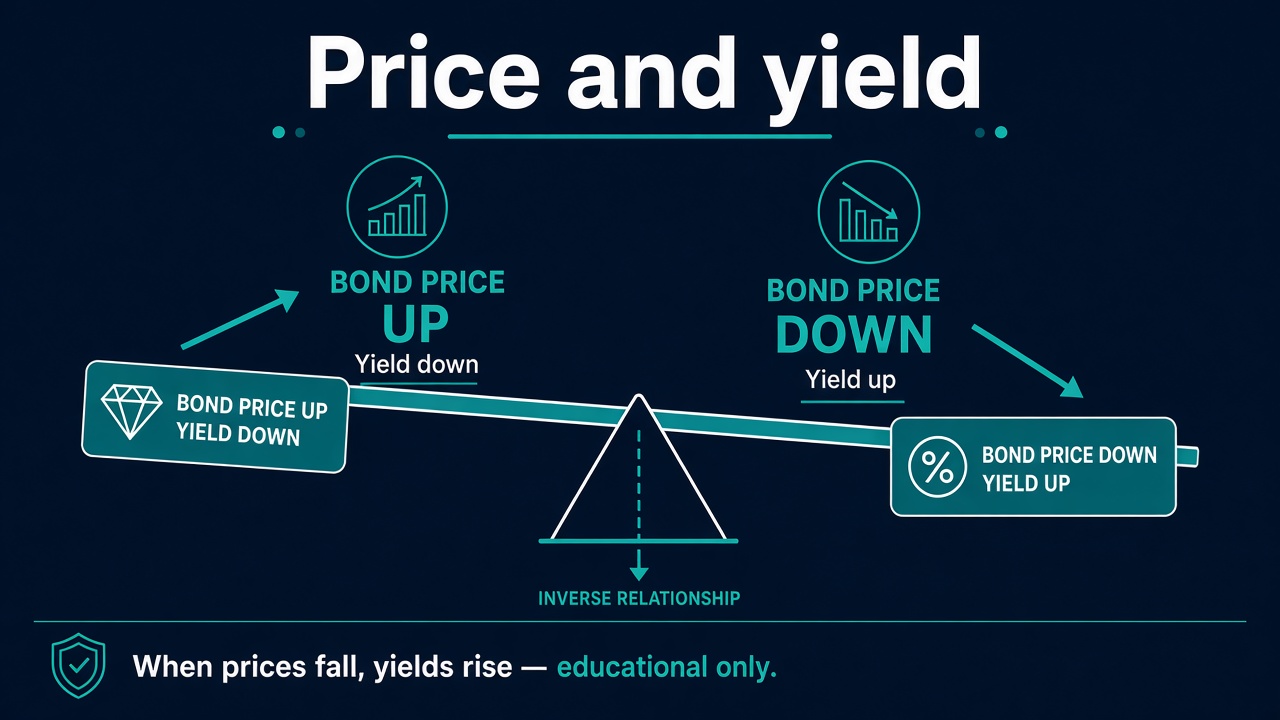
Bonds for beginners
Price vs yield intuition and duration light—no bond picks.
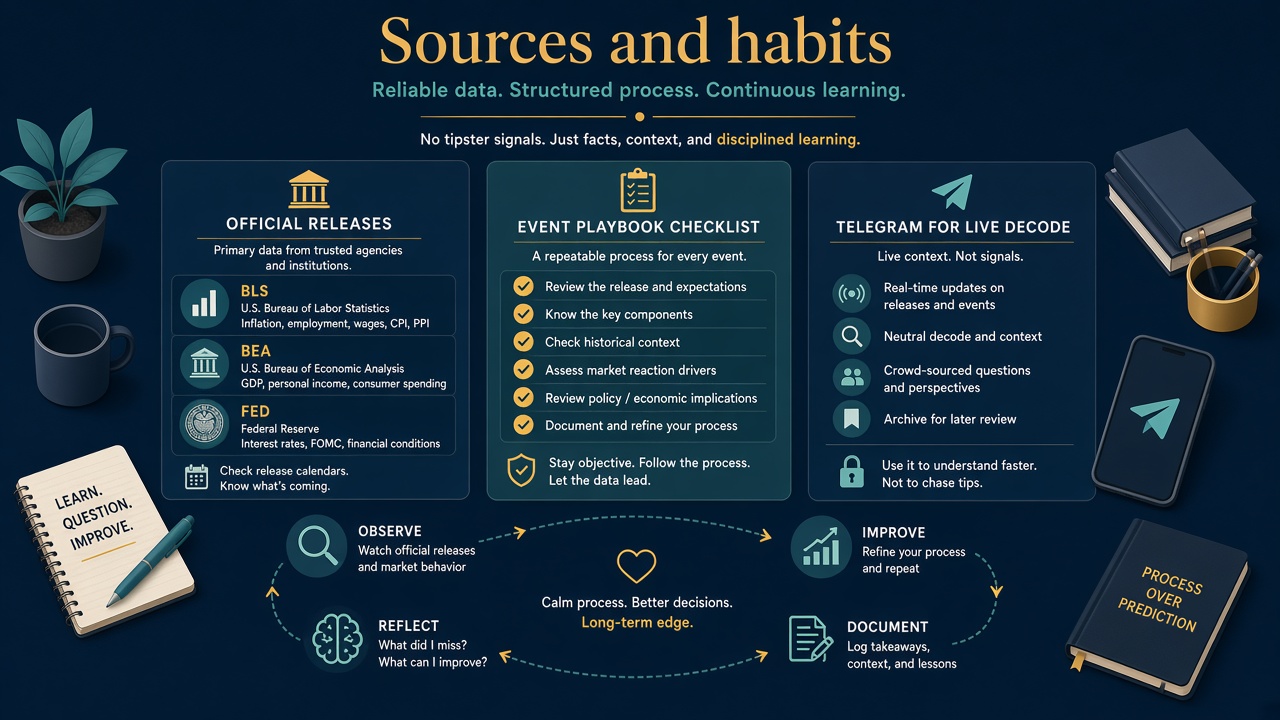
Sources and habits
BLS, BEA, Fed—and a calm habit for reading releases.
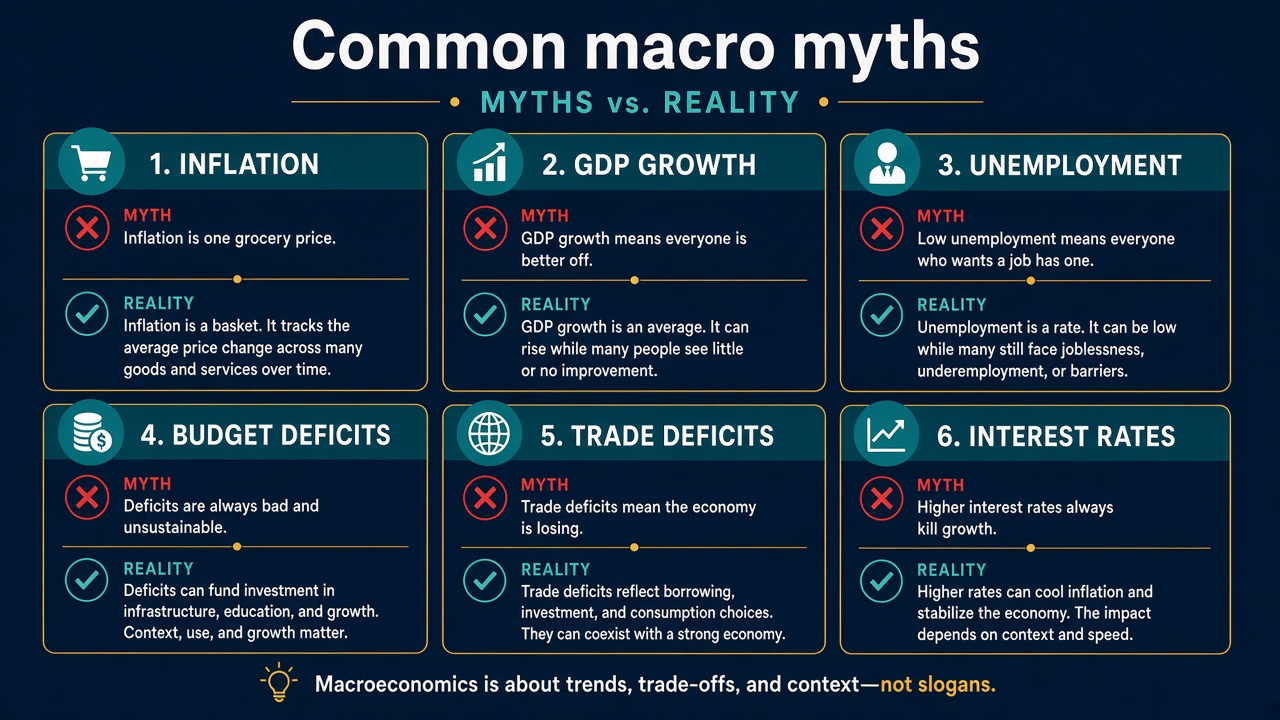
Common macro myths
Popular slogans with plain-English corrections.

Risk, luck, and narratives
Randomness, survivorship, and storytelling traps when reading macro and markets.
Core economics
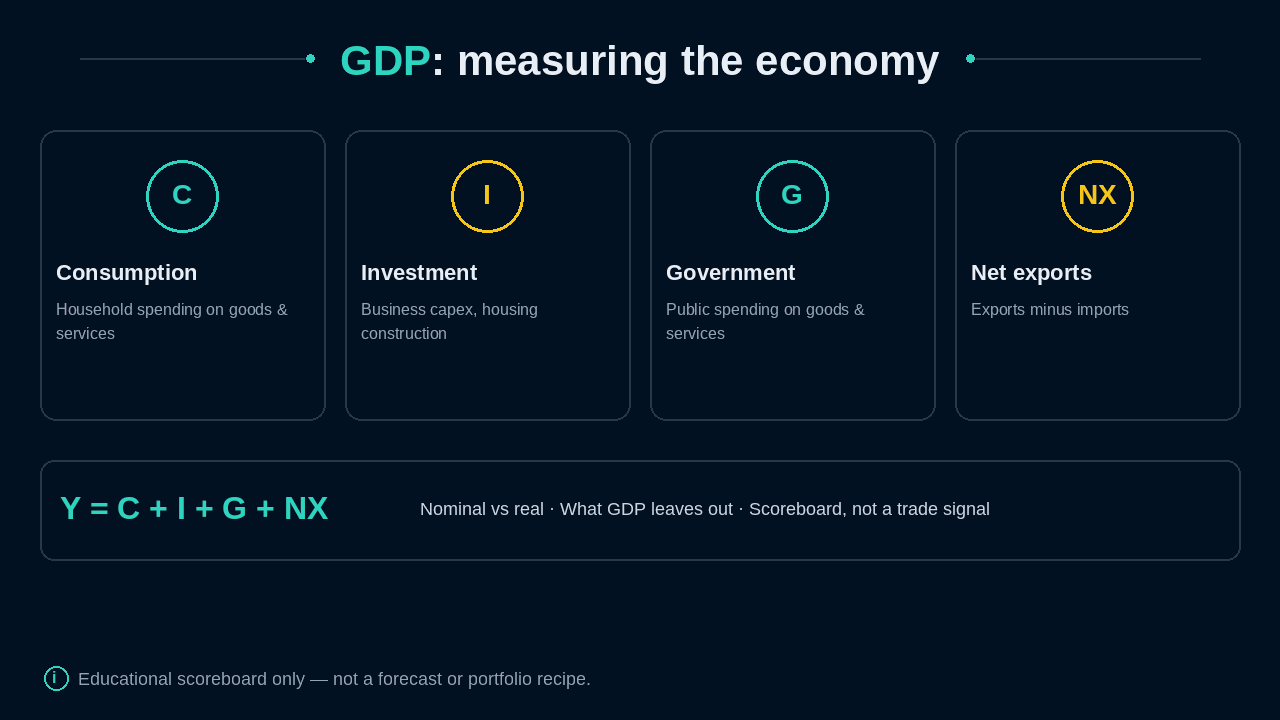
GDP and measurement
Nominal vs real GDP, C+I+G+NX intuition, and what GDP leaves out.
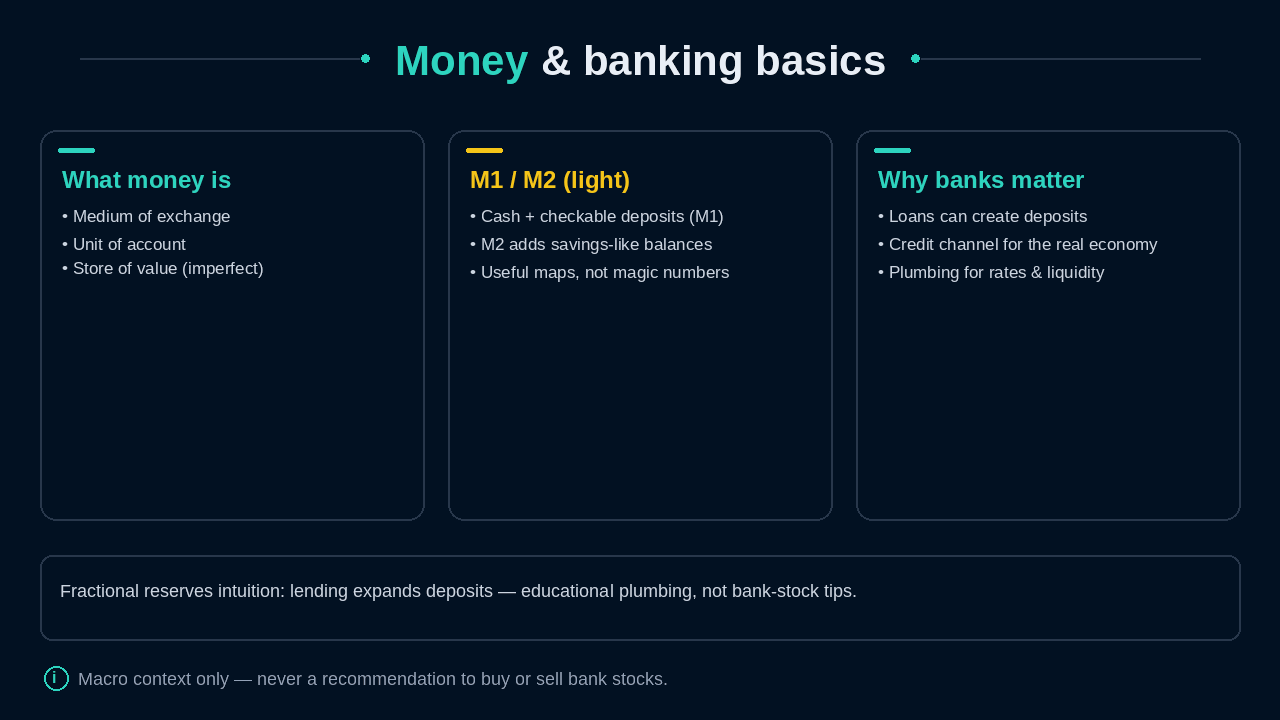
Money and banking
What money is, M1/M2 light, and why banks matter for macro.
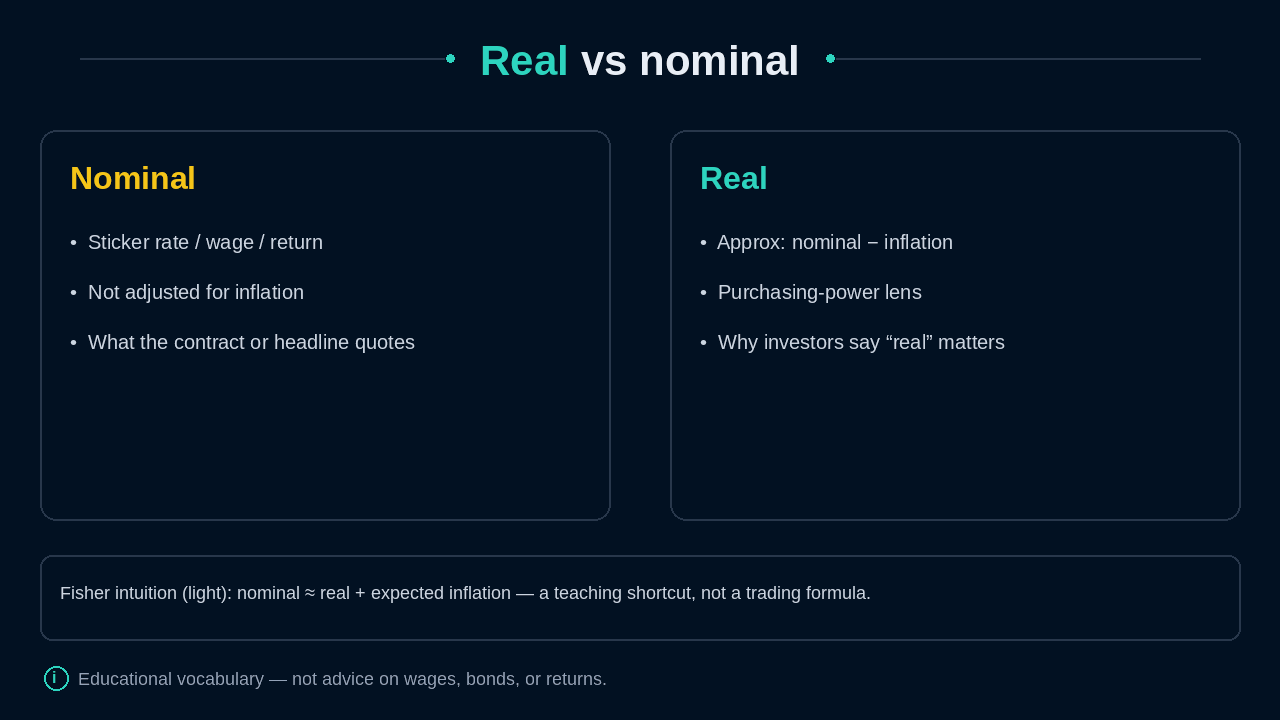
Real vs nominal
Purchasing-power lens for rates, wages, and returns.
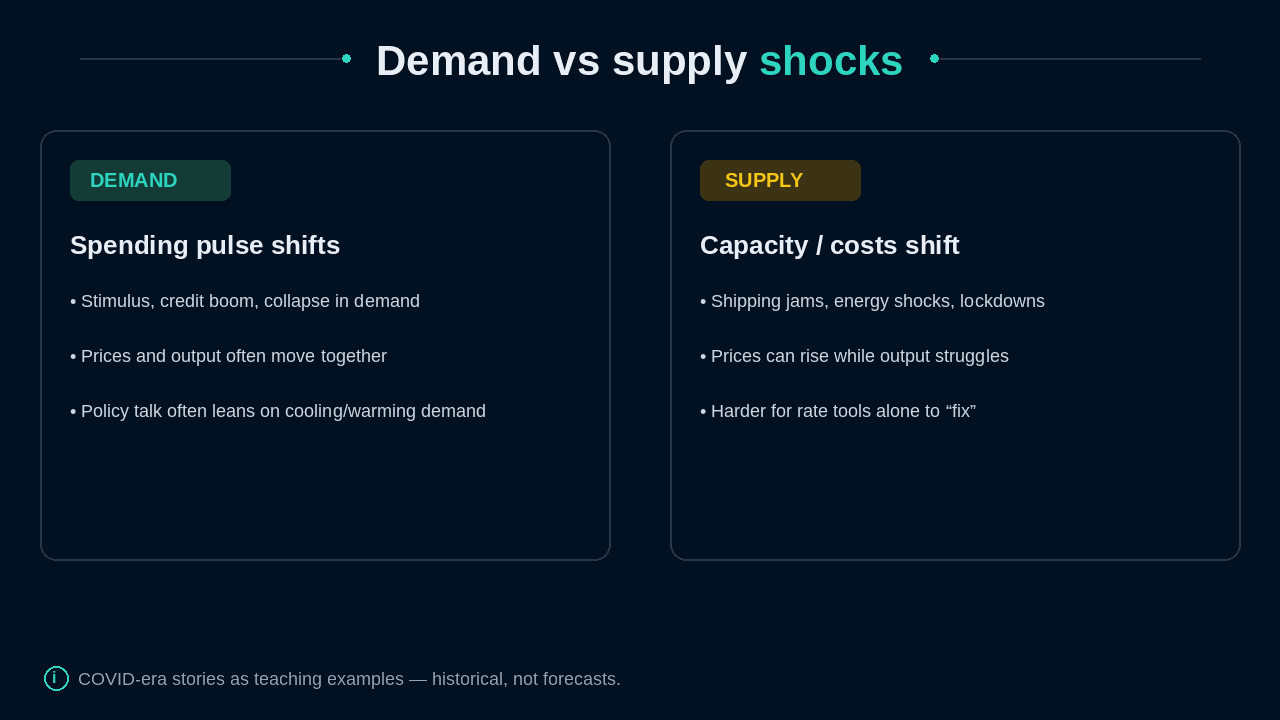
Demand & supply shocks
AD/AS vocabulary and historical shock stories—not forecasts.
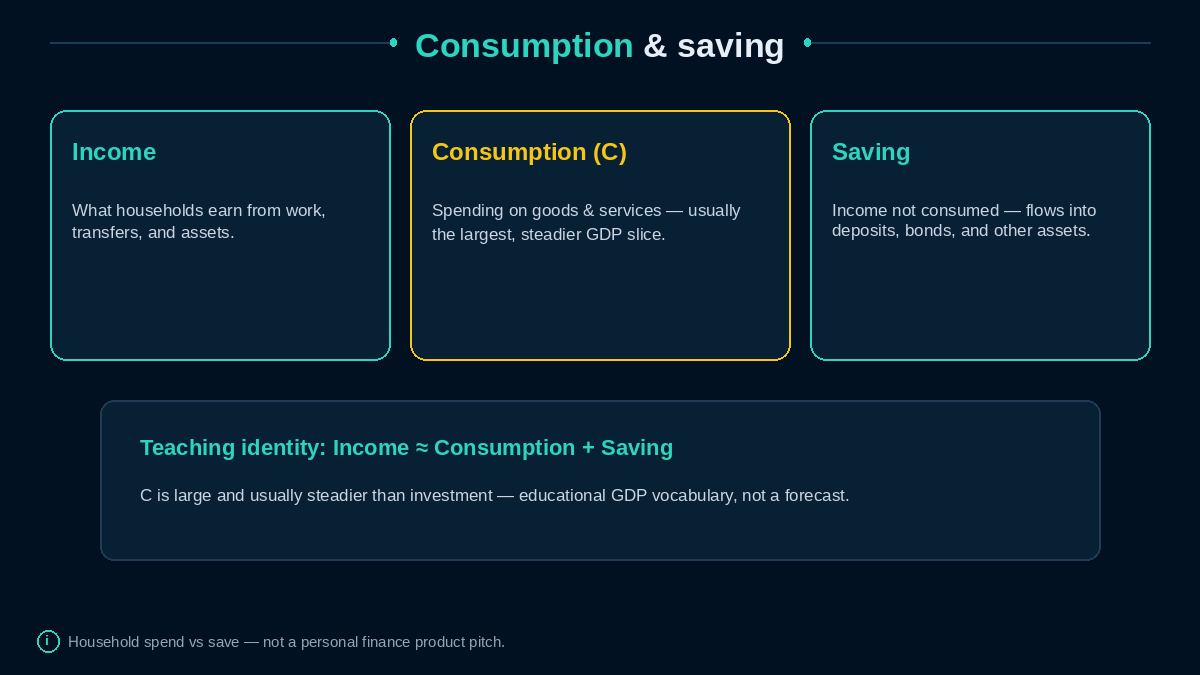
Consumption and saving
How households spend vs save—and why consumption is usually the big, steadier slice of GDP.
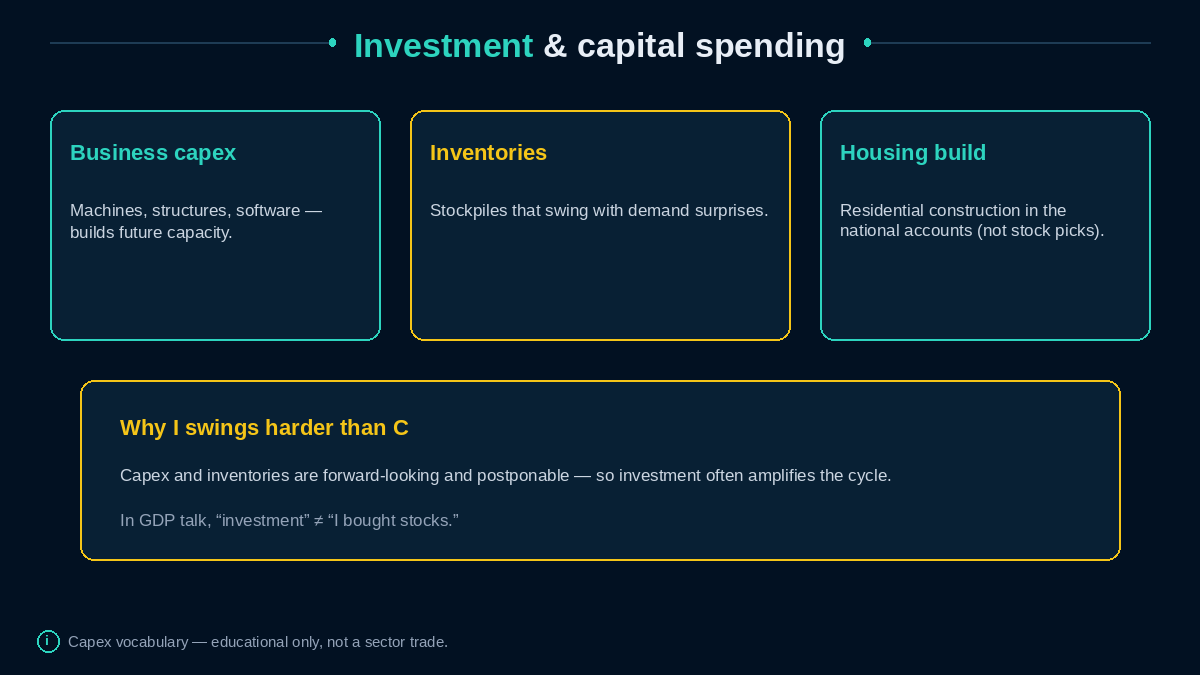
Investment and capital spending
Business investment, inventories, and capex—why investment swings harder than consumption.
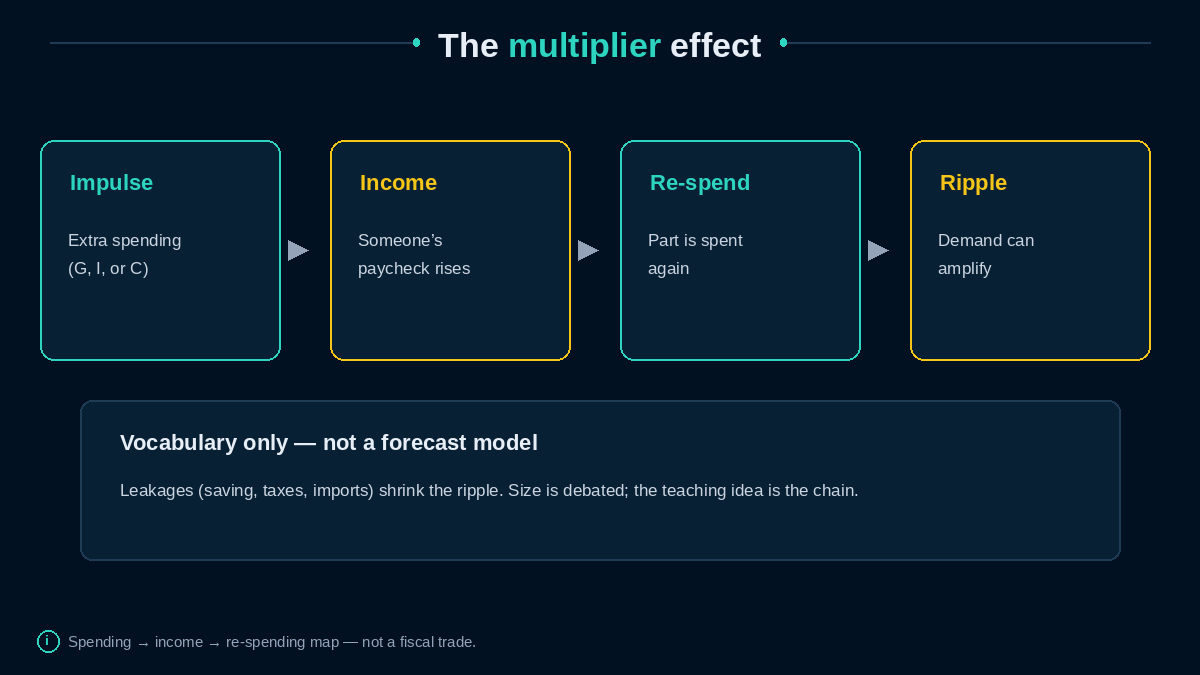
The multiplier effect
Why a spending impulse can ripple through income and demand—vocabulary only, not a forecast model.
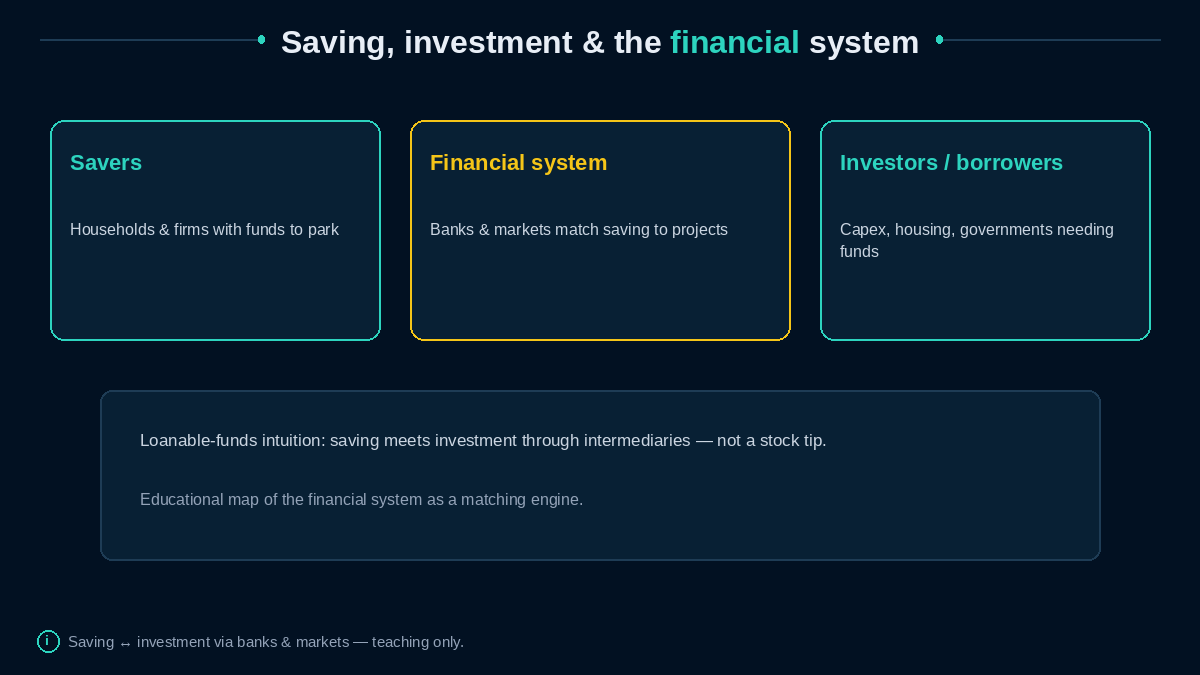
Saving, investment & financial system
How saving meets investment through banks and markets—loanable-funds intuition without jargon overload.
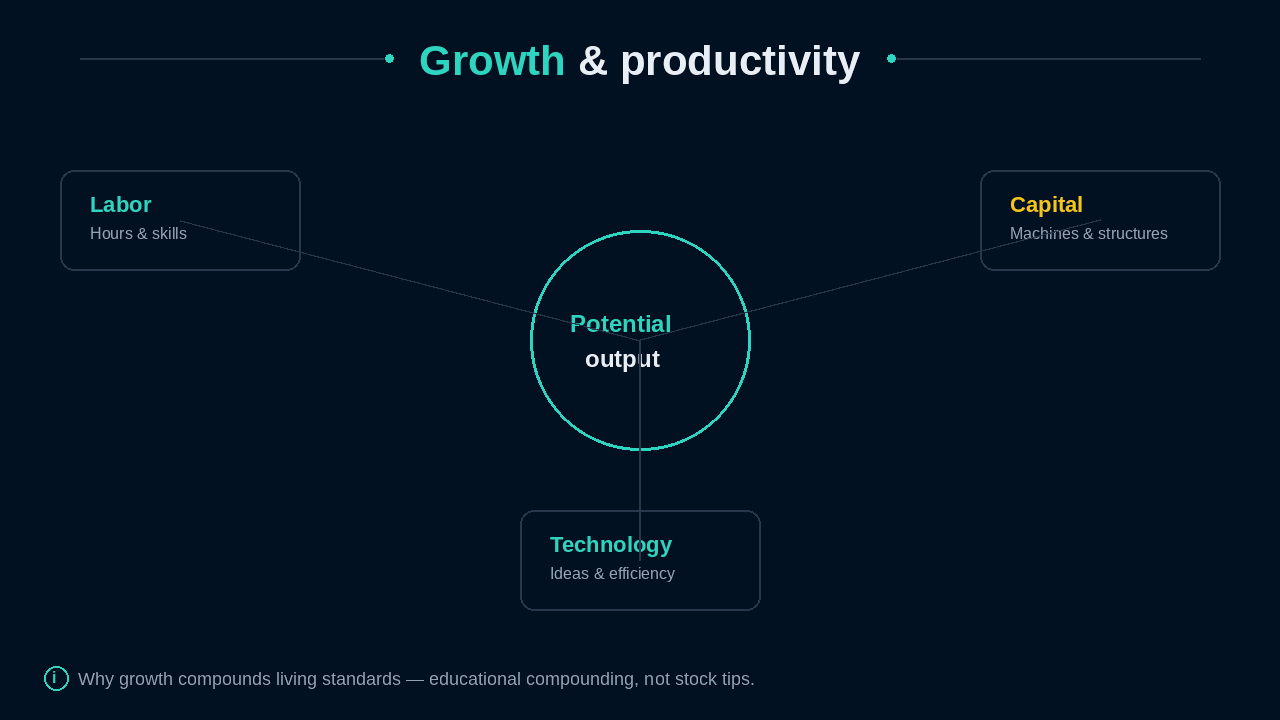
Growth & productivity
Potential output, productivity, and why growth compounds living standards.
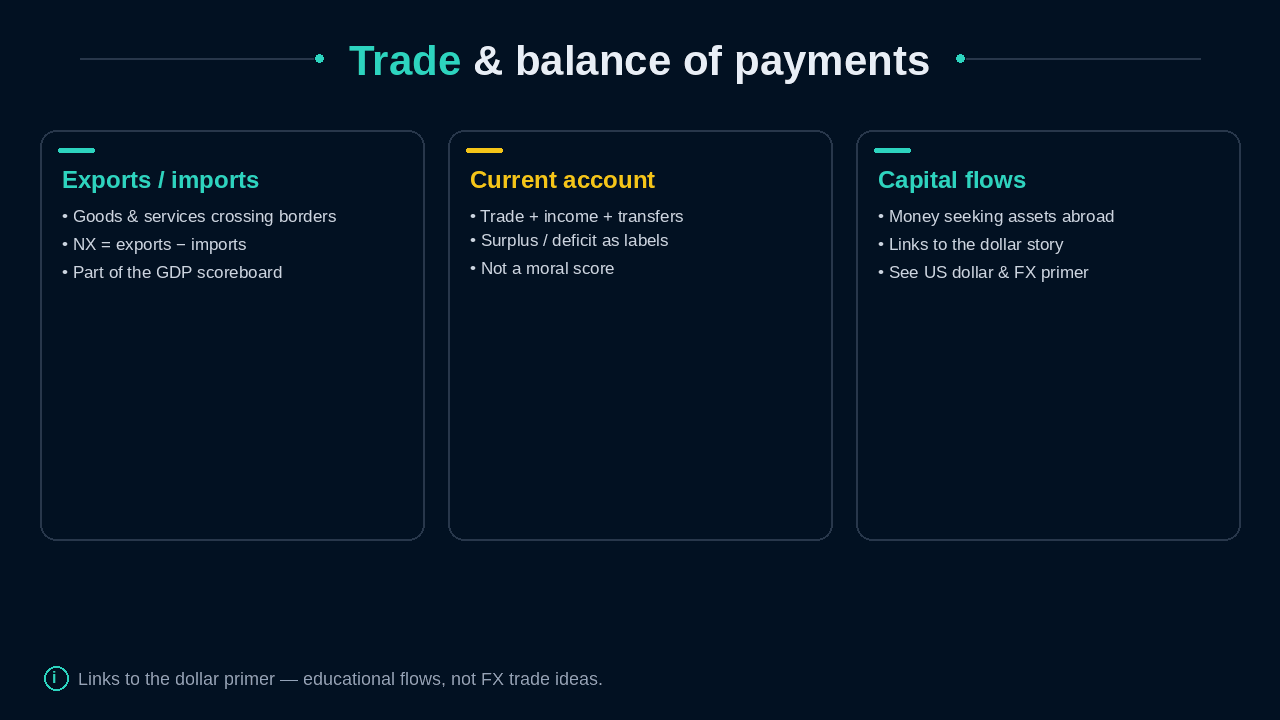
Trade & balance of payments
Exports, imports, current account, and capital-flows intuition.
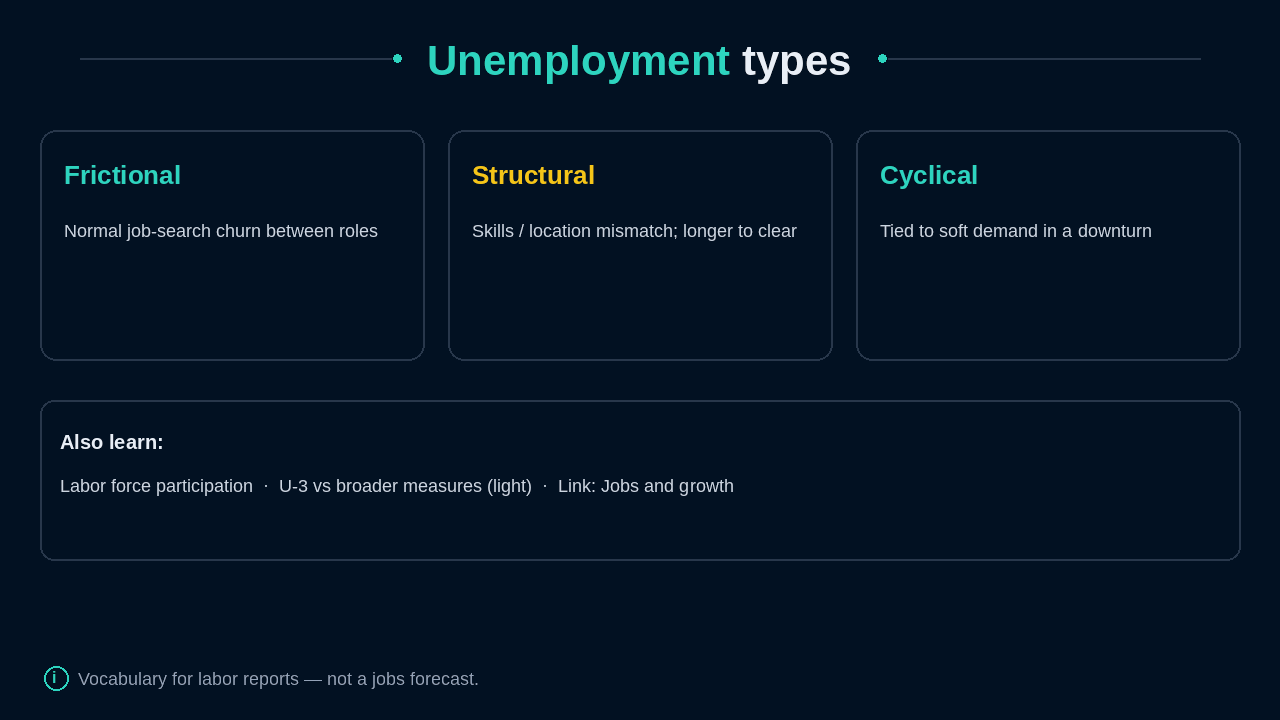
Unemployment types
Frictional, structural, cyclical—plus participation and U-3 light.
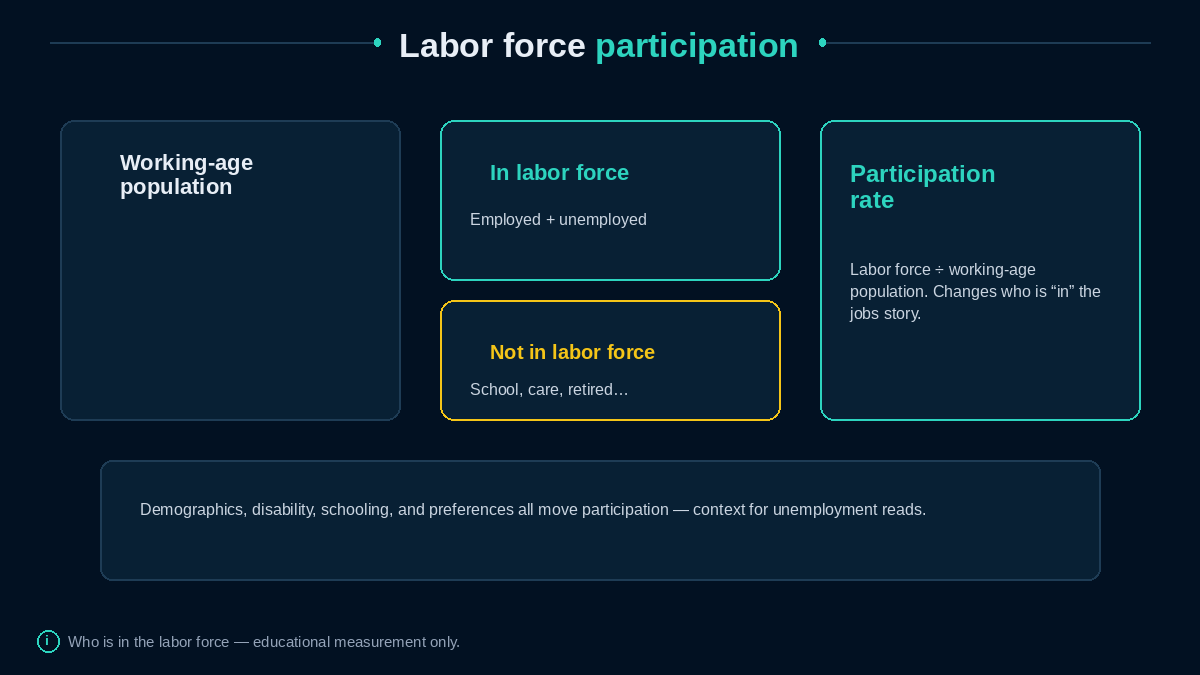
Labor force participation
Who is in the labor force, why participation moves, and how it changes the jobs story.
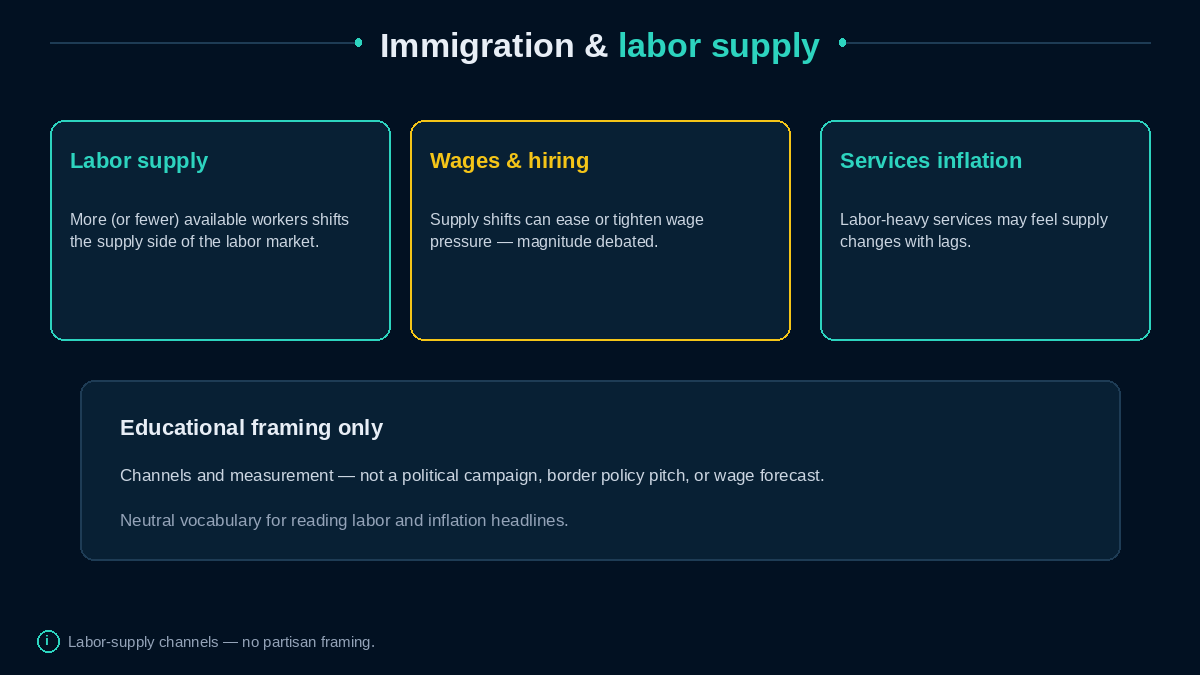
Immigration and labor supply
How labor-supply shifts can affect wages, hiring, and services inflation—educational framing only.
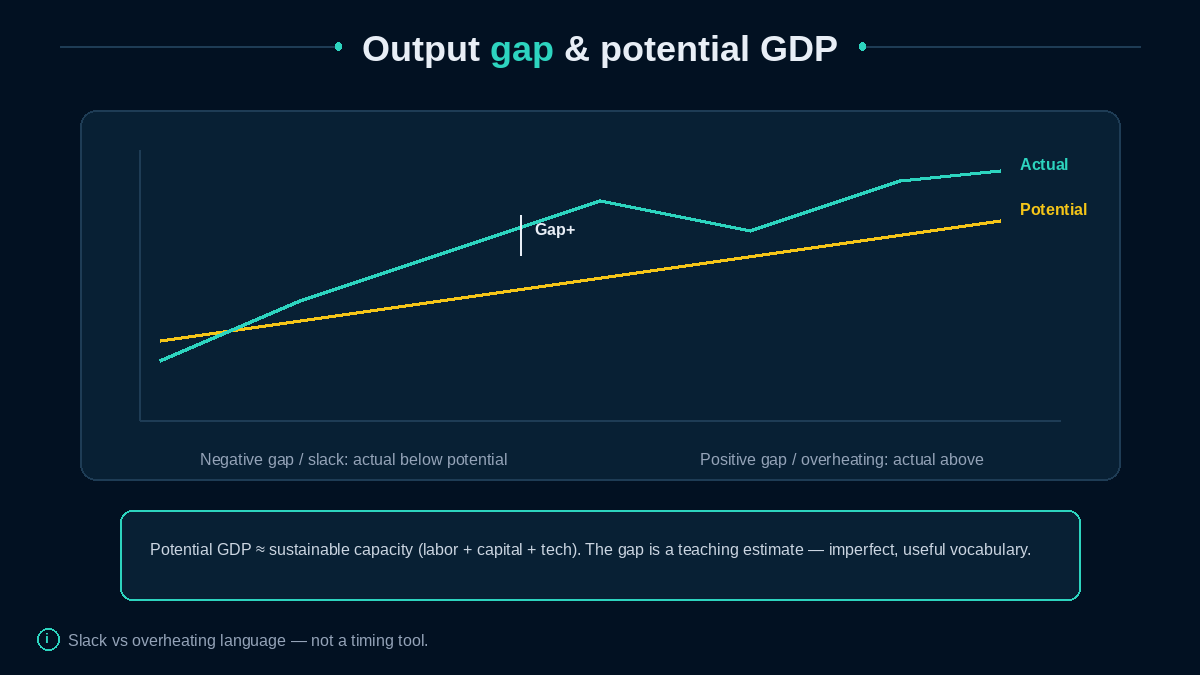
Output gap & potential GDP
Actual vs potential output—and what slack or overheating means in plain English.
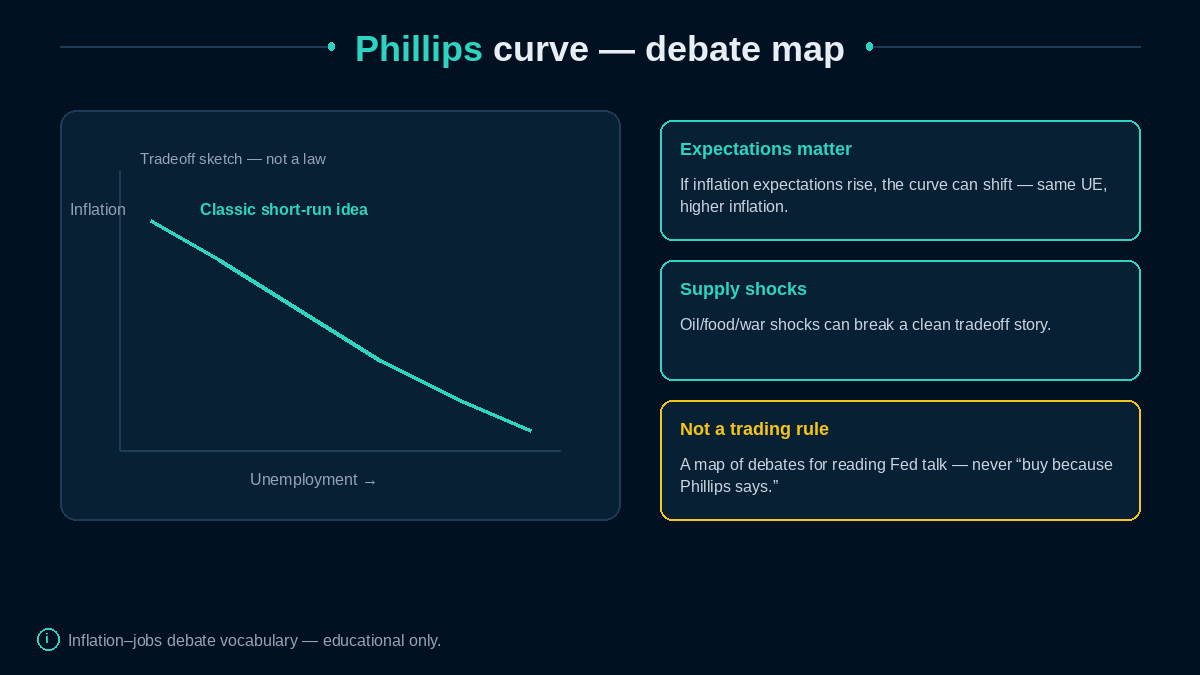
Phillips curve for beginners
The inflation–unemployment tradeoff as a map of debates—not a trading rule.
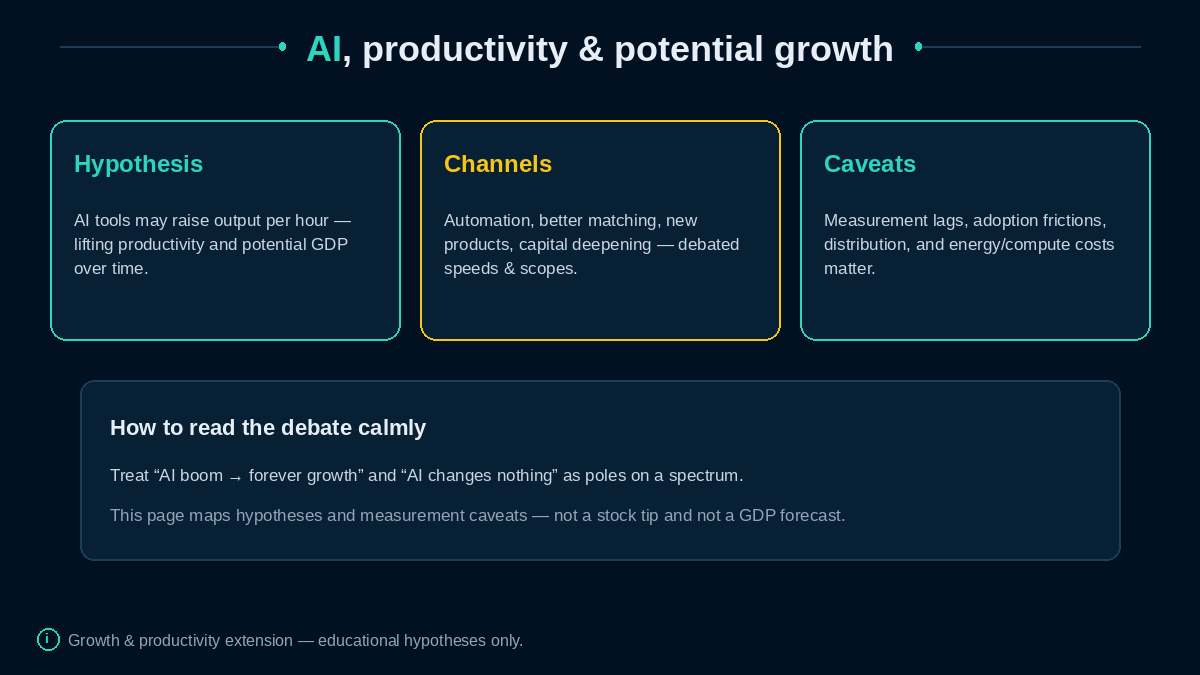
AI, productivity & potential growth
How people argue AI could lift productivity and potential GDP—hypotheses and caveats.
Policy & prices
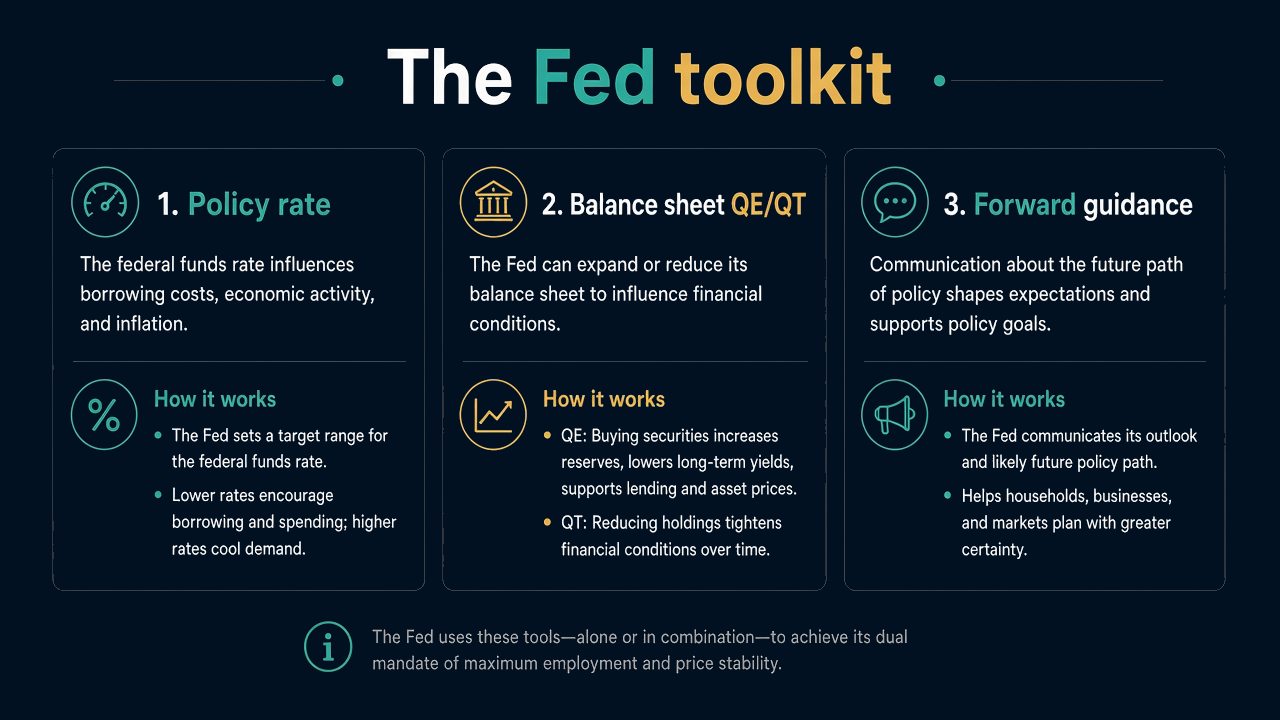
Fed toolkit
Rates, balance sheet, and forward guidance in everyday language.
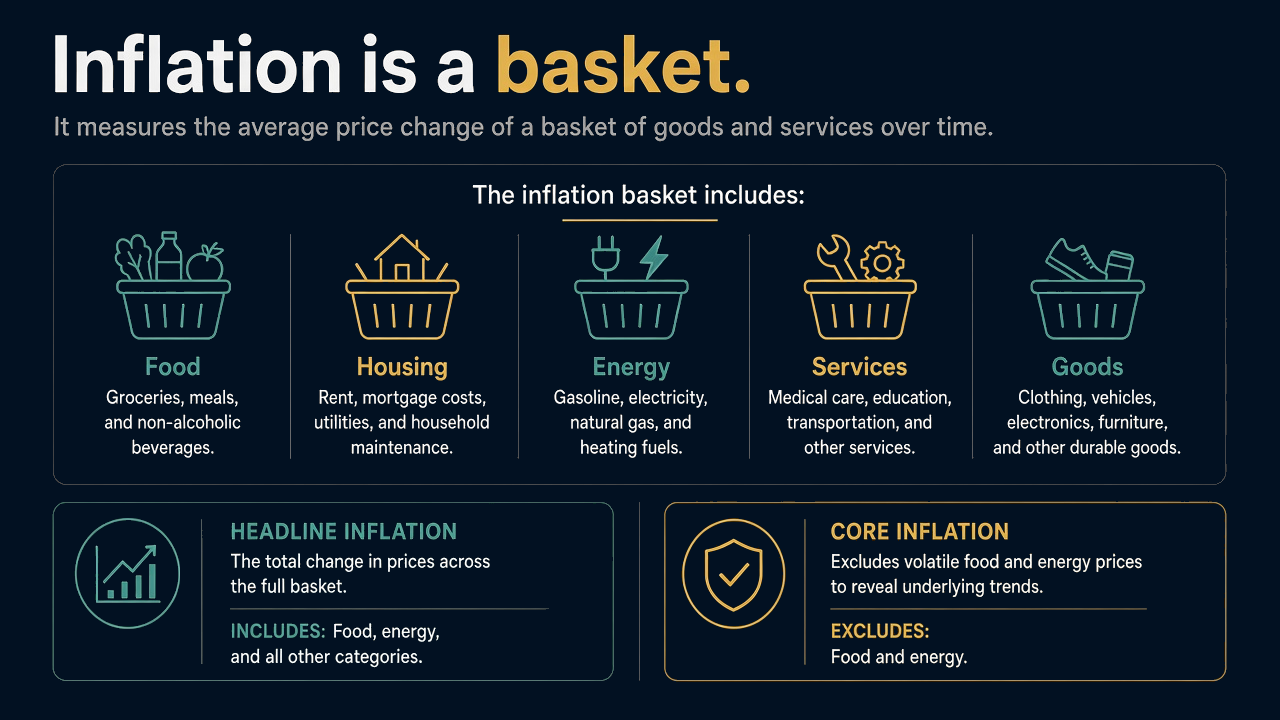
Inflation 101
CPI, core, and PCE — how to read a print without trading it.
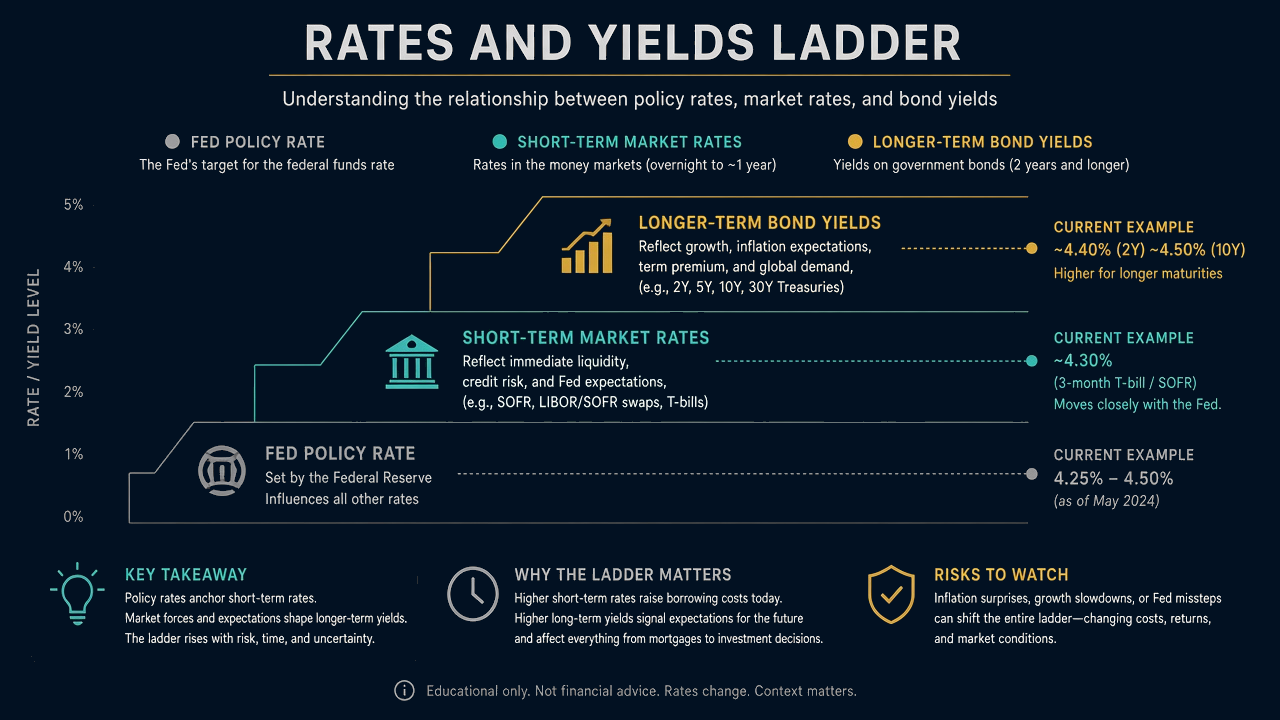
Interest rates & yields
Policy rate vs market yields, and the yield-curve idea.
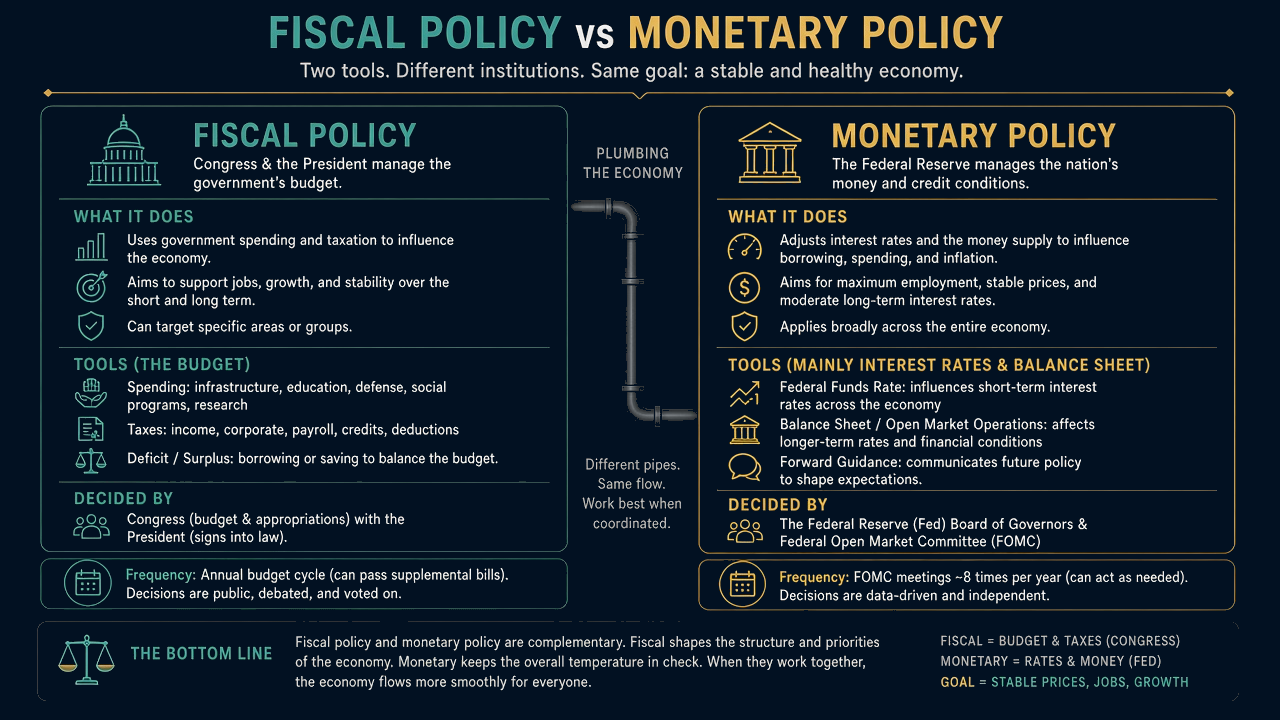
Fiscal policy basics
Spending, taxes, deficits — and how fiscal differs from the Fed.
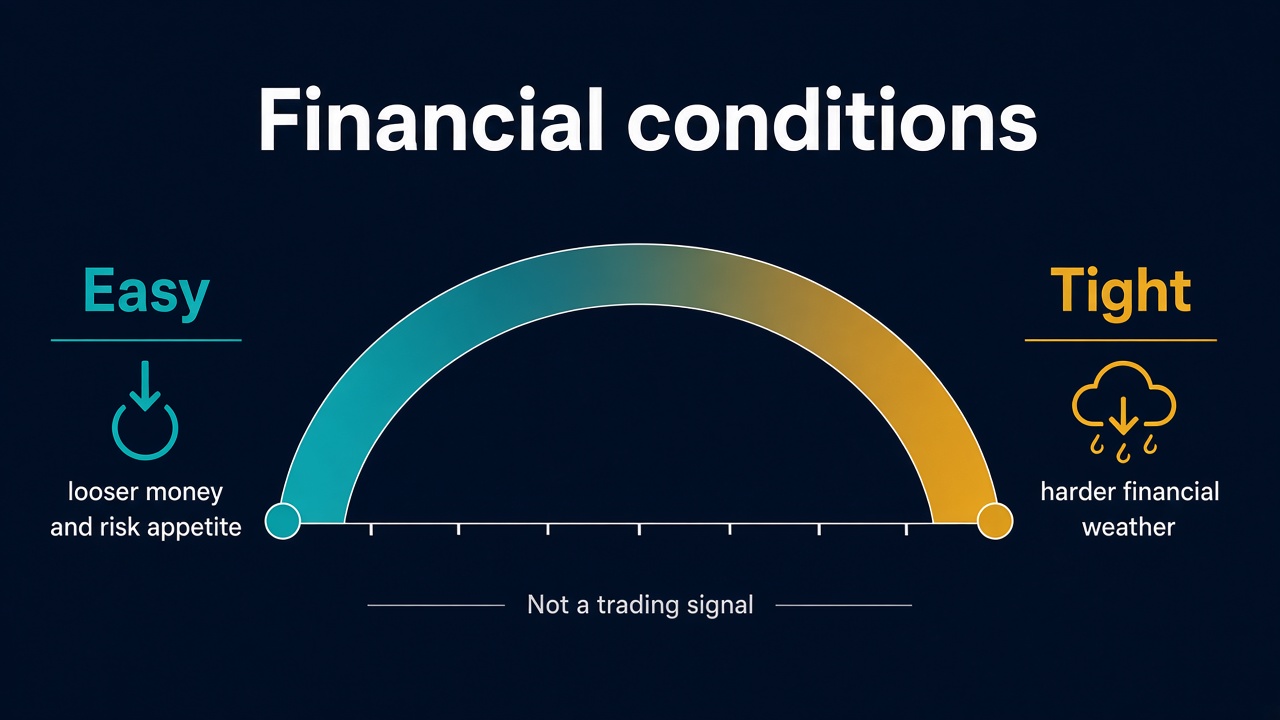
Financial conditions
Tight vs easy — rates, credit, dollar, and risk mood as context.
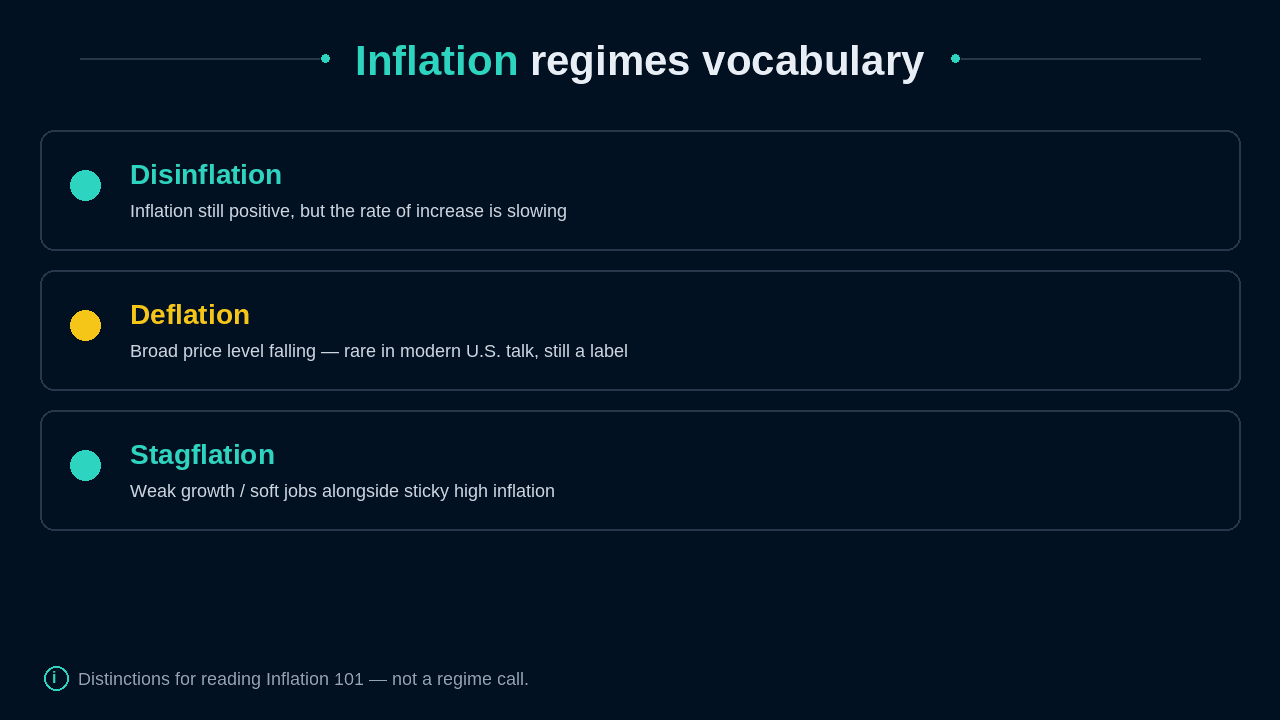
Inflation regimes
Disinflation, deflation, and stagflation as vocabulary distinctions.
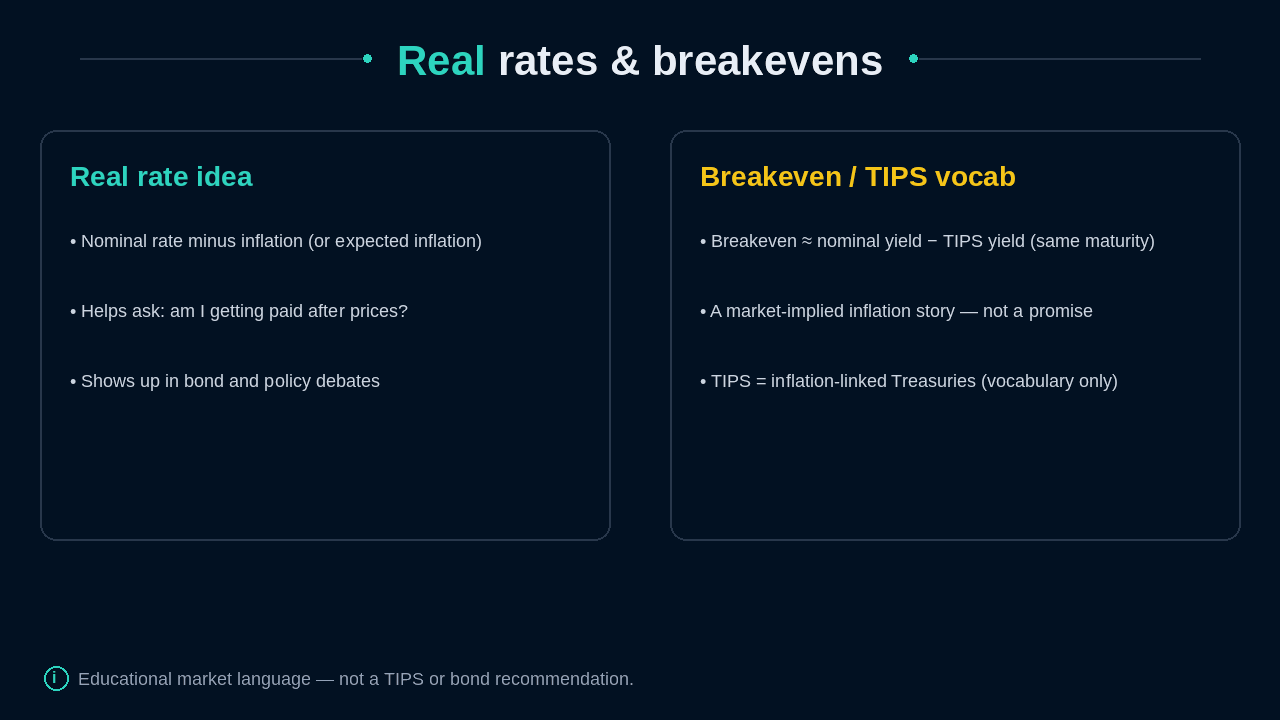
Real rates & breakevens
Real-rate idea plus breakeven/TIPS vocabulary—educational only.
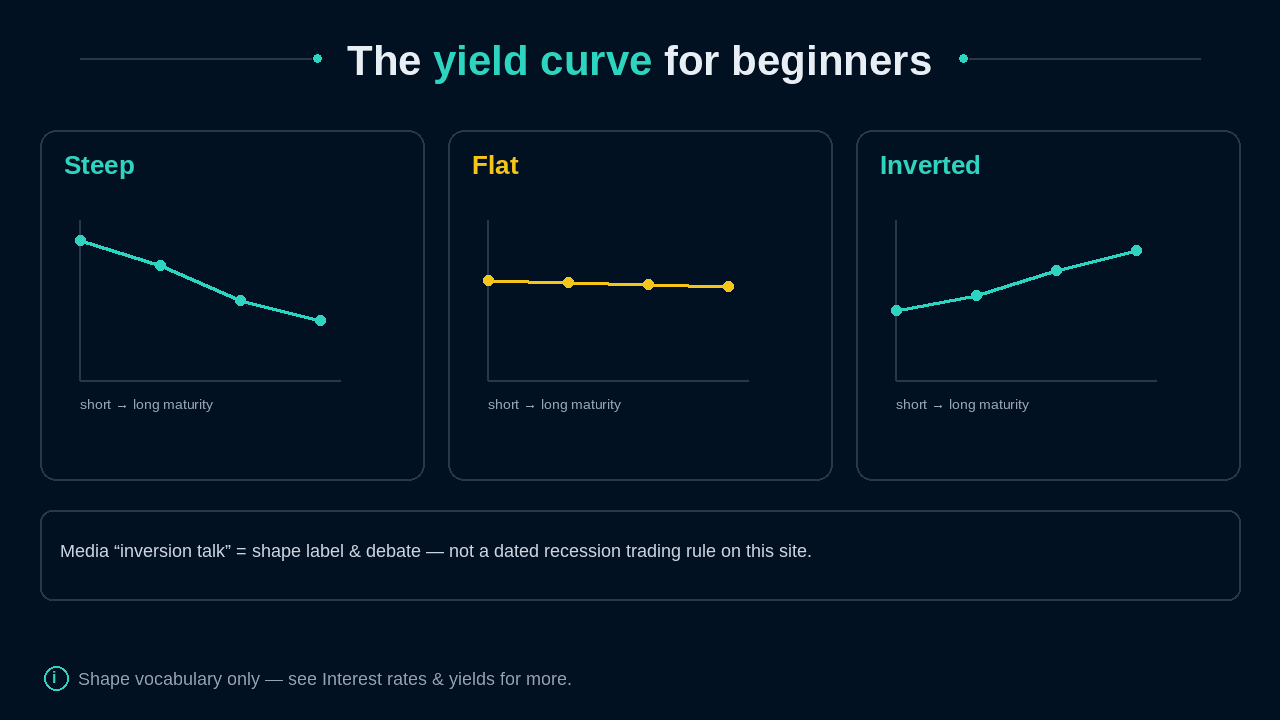
Yield curve
Steep, flat, inverted as labels—not a recession trading rule.
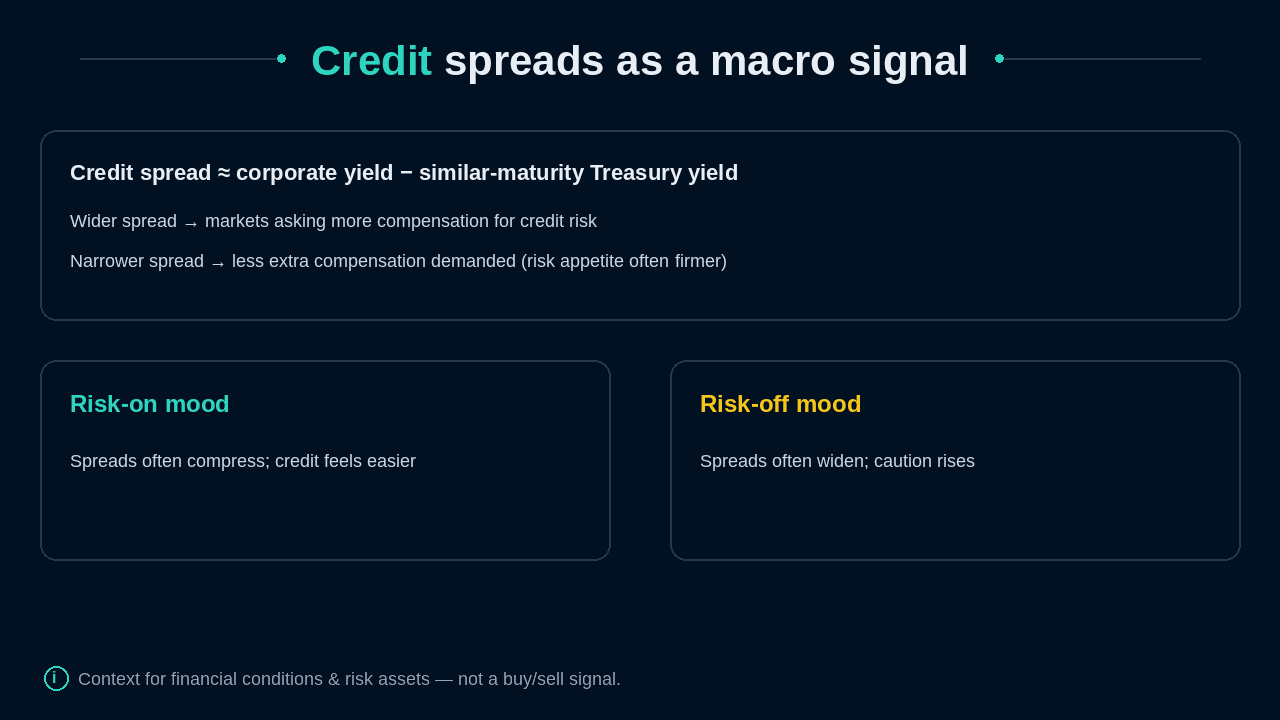
Credit spreads
What a credit spread is and how it ties to risk mood—context only.
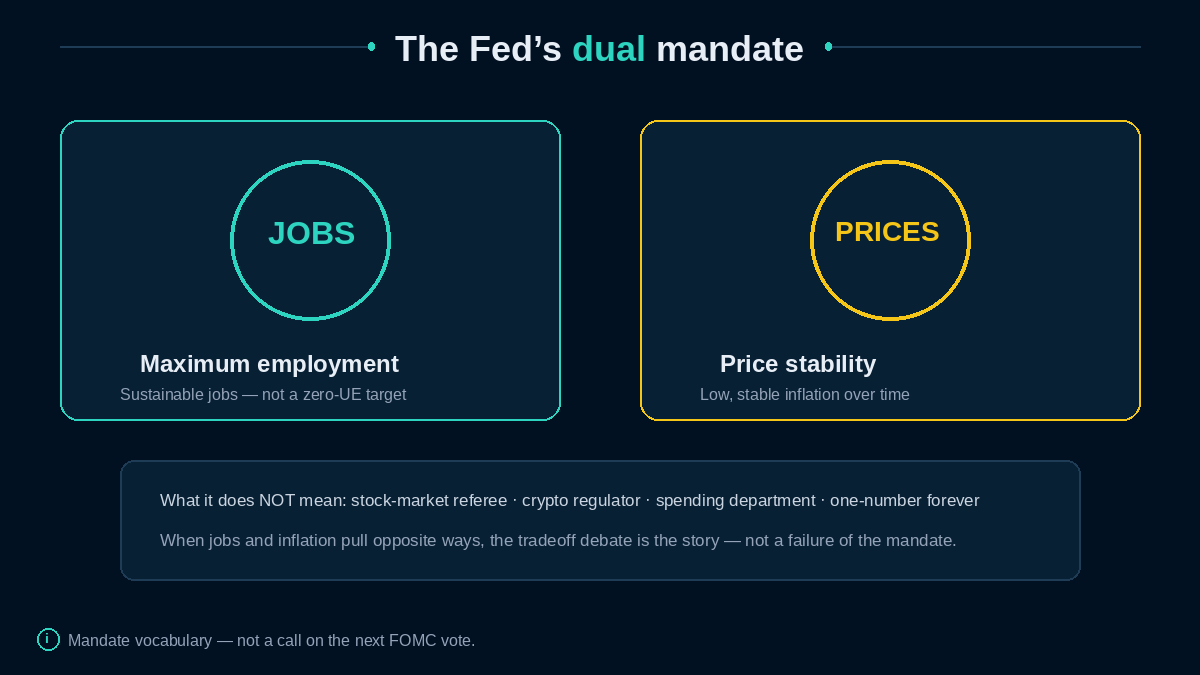
Dual mandate
Maximum employment and price stability—what the Fed aims at, and what that does not mean.
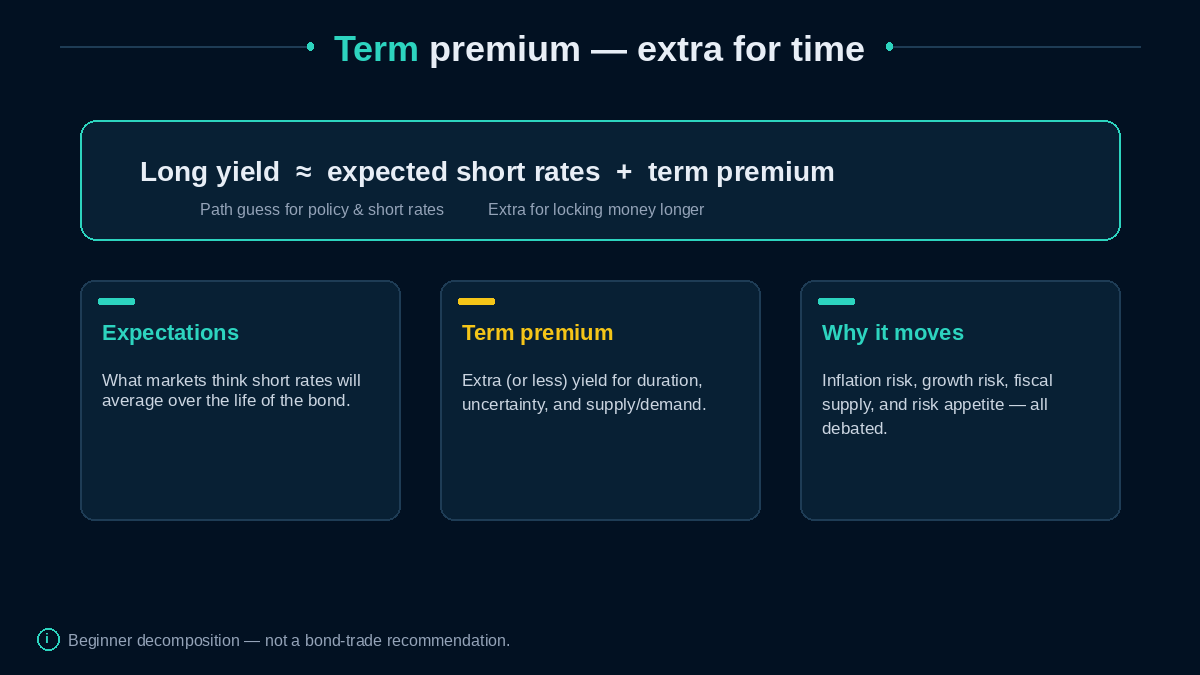
Term premium
Extra yield for locking money longer—expectations vs risk/uncertainty for beginners.
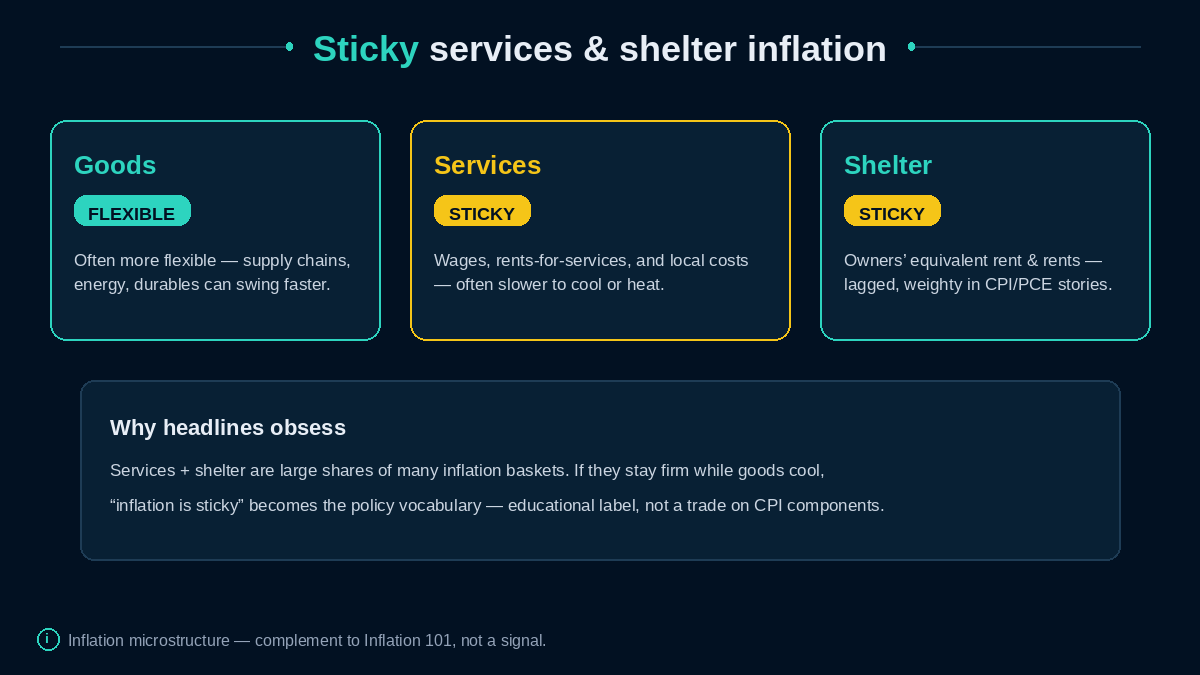
Sticky services & shelter
Why services and housing-related CPI/PCE pieces often move slowly—and why headlines obsess.
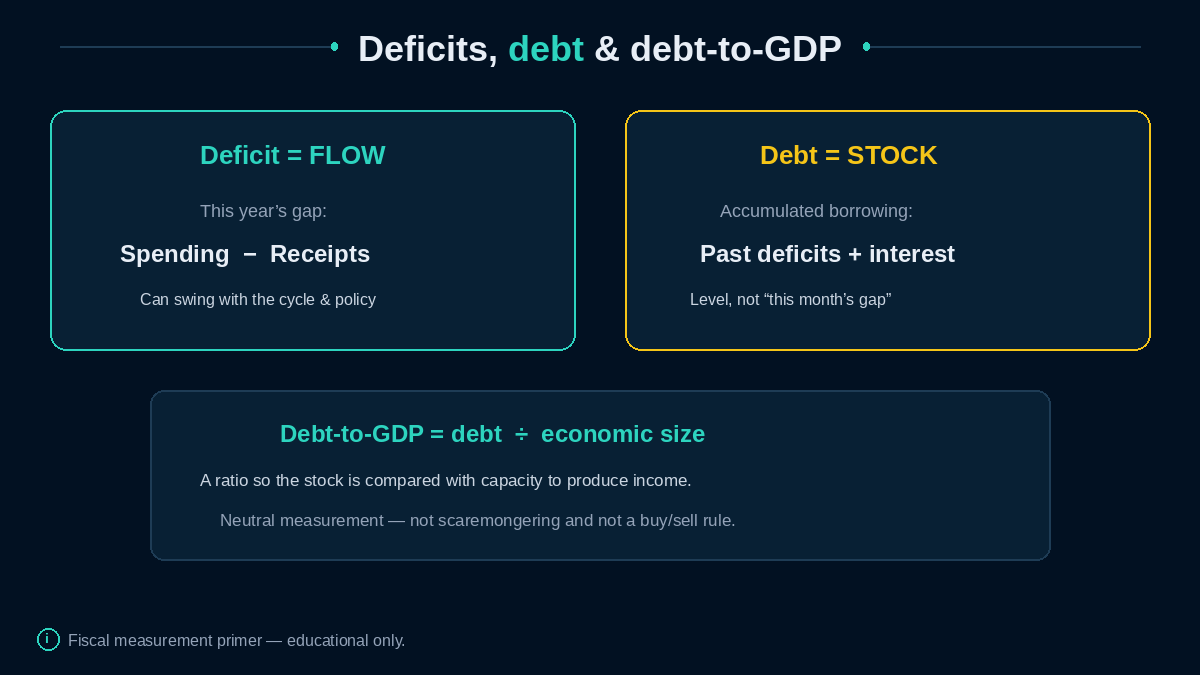
Deficits, debt & debt-to-GDP
Flow vs stock: deficit vs debt, and why people ratio debt to GDP—neutral measurement.
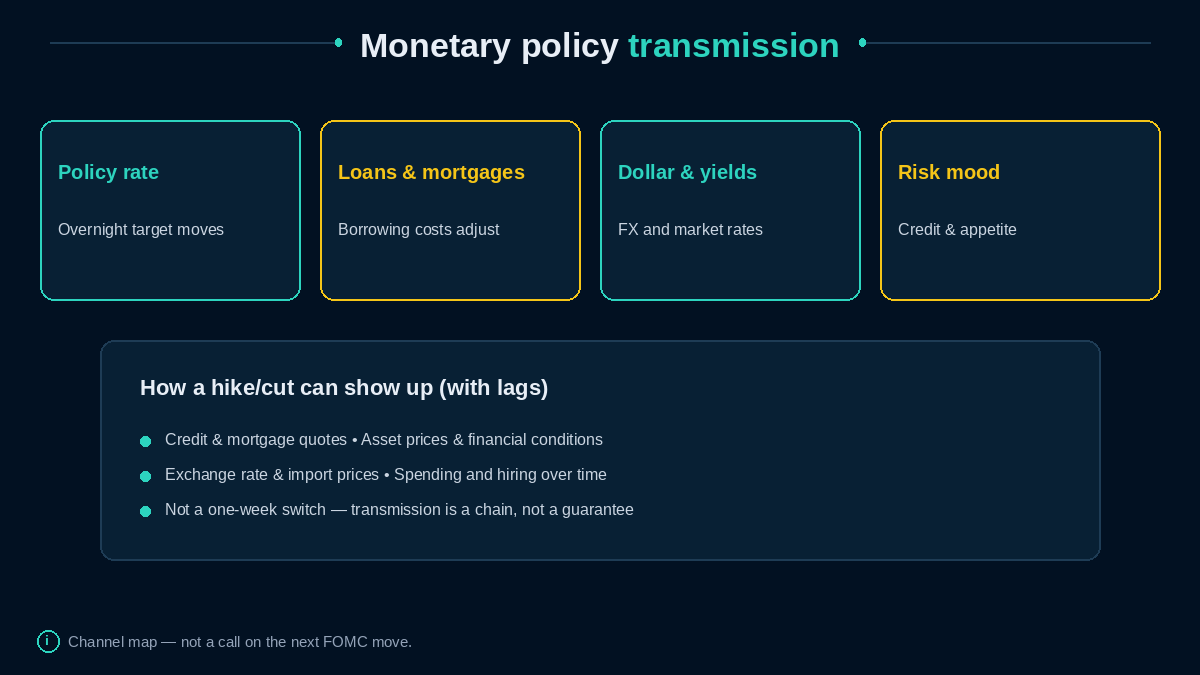
Monetary policy transmission
How a policy-rate change can show up in loans, mortgages, the dollar, and risk mood.
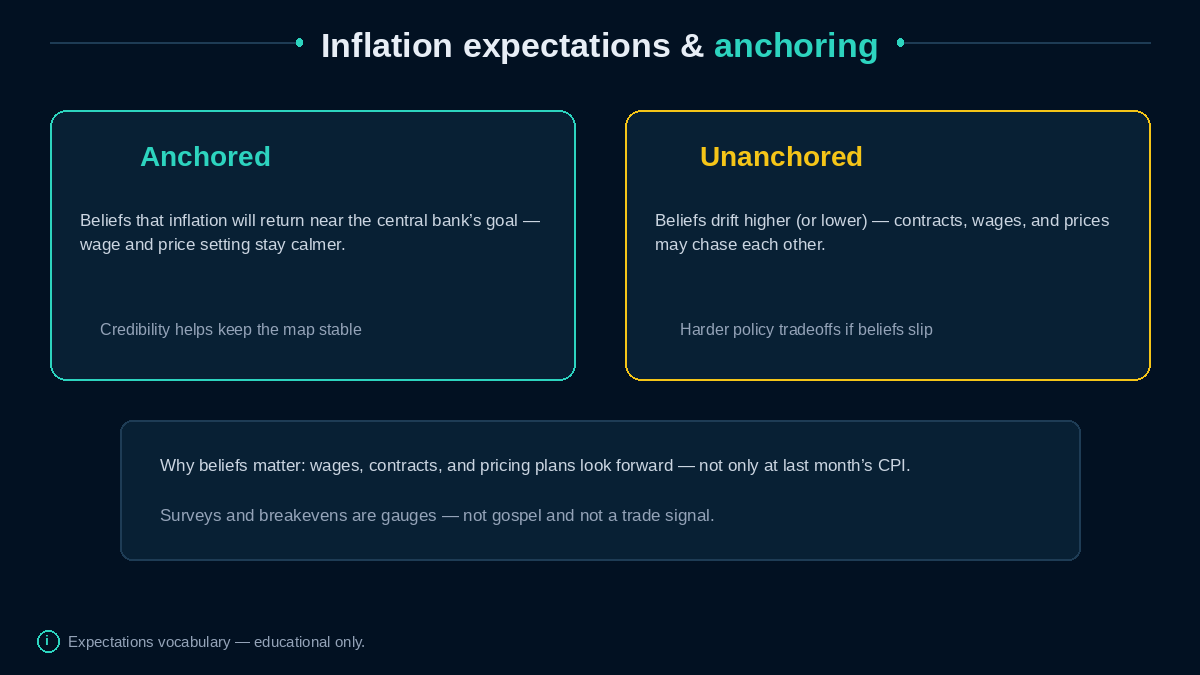
Inflation expectations & anchoring
Why beliefs about future inflation matter for wages, contracts, and policy credibility.
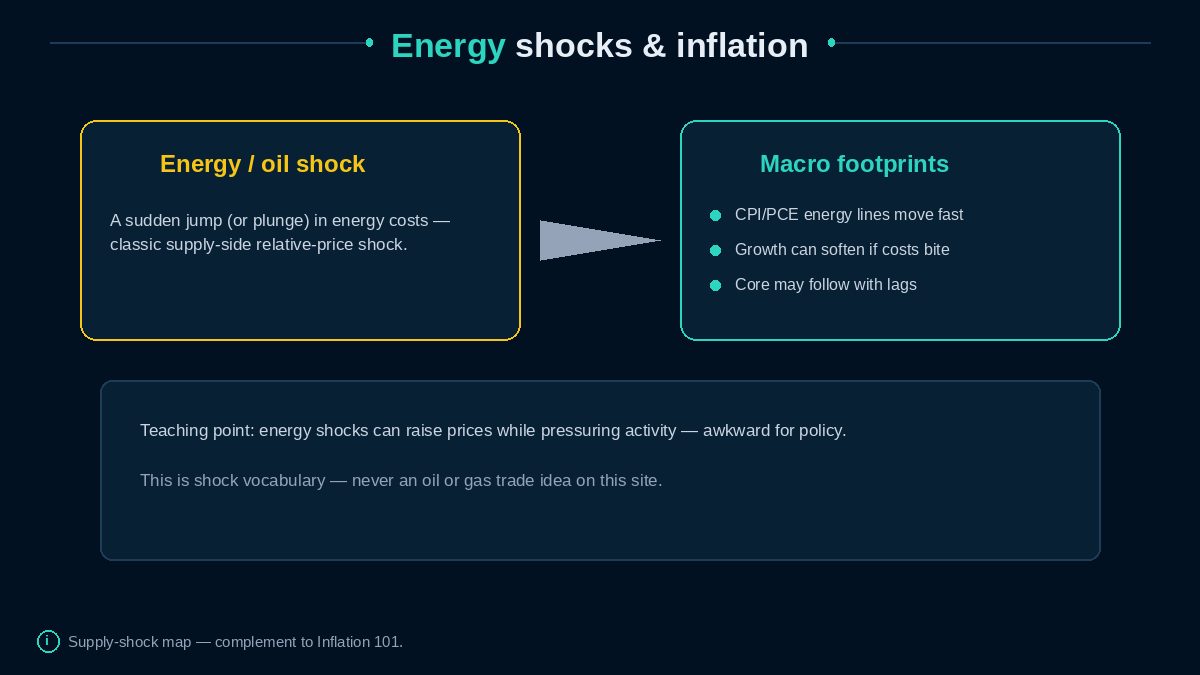
Energy shocks and inflation
Oil and energy as classic supply shocks—CPI and growth footprints, not a trade idea.
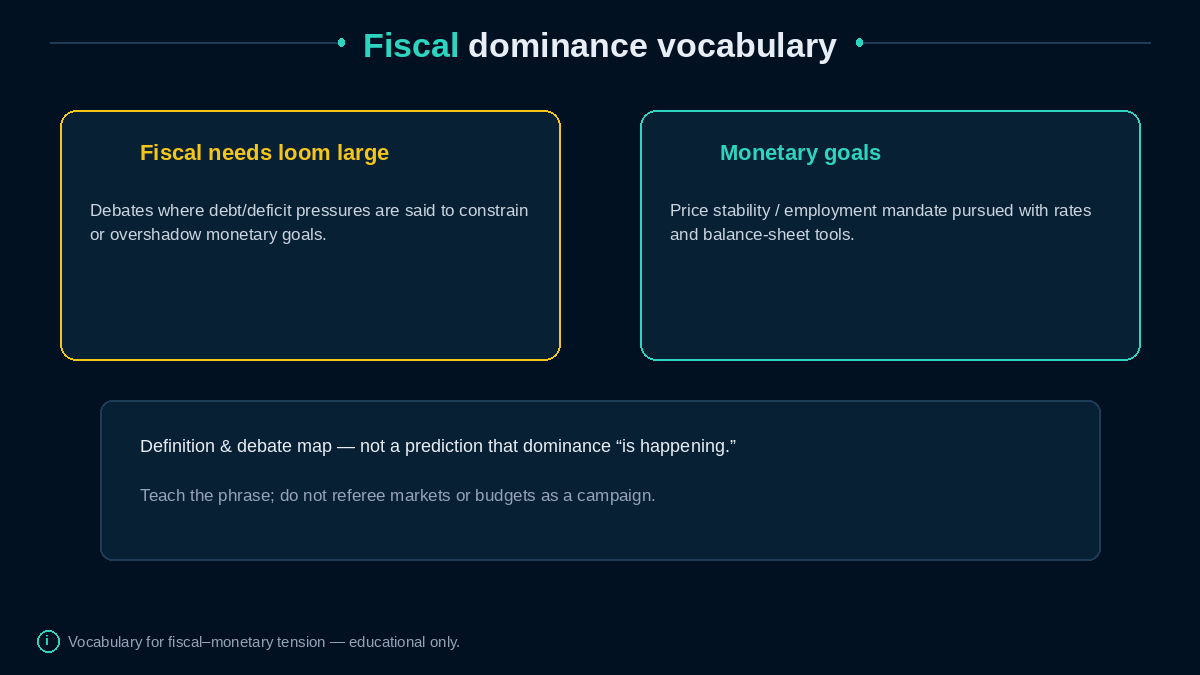
Fiscal dominance vocabulary
What people mean when fiscal needs “dominate” monetary policy—definitions, not a prediction.
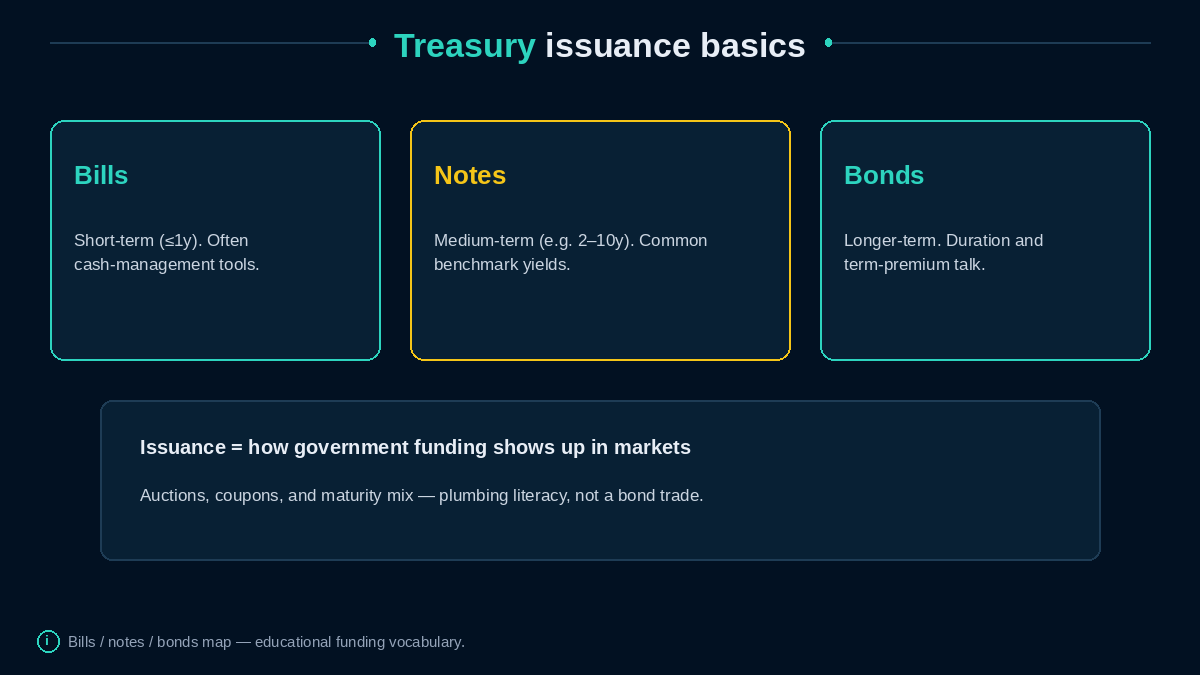
Treasury issuance basics
Bills, notes, bonds, and how government funding shows up in markets—plumbing, not a bond trade.
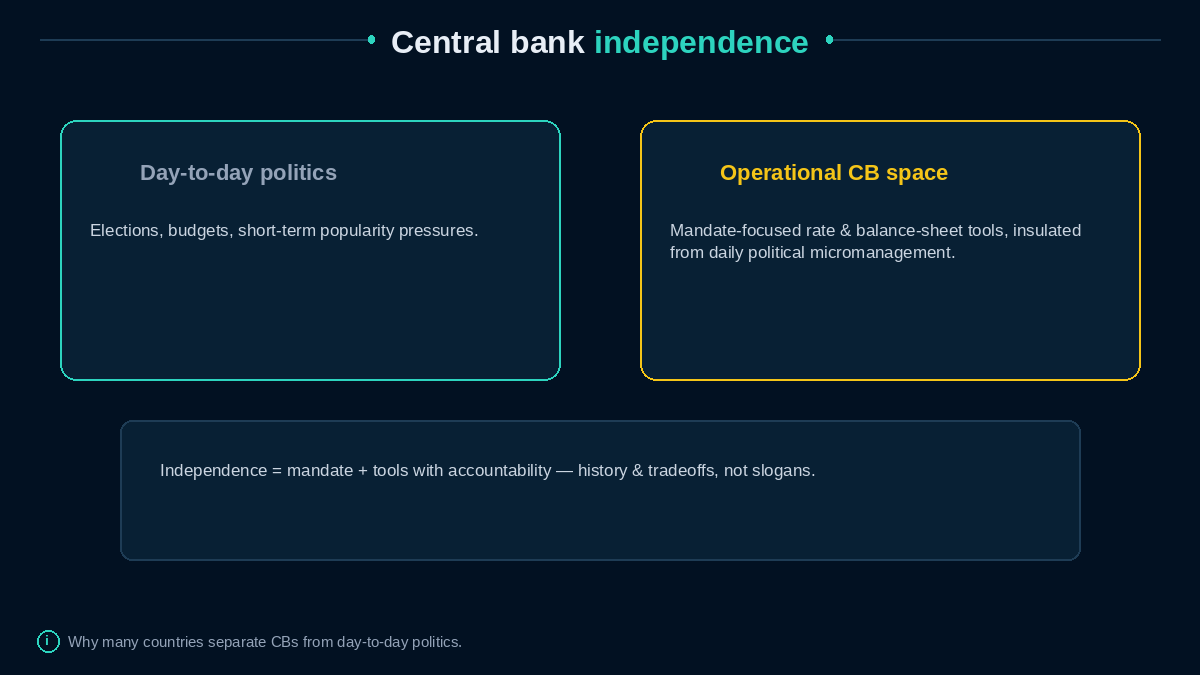
Central bank independence
Why many countries separate the central bank from day-to-day politics—history and tradeoffs.
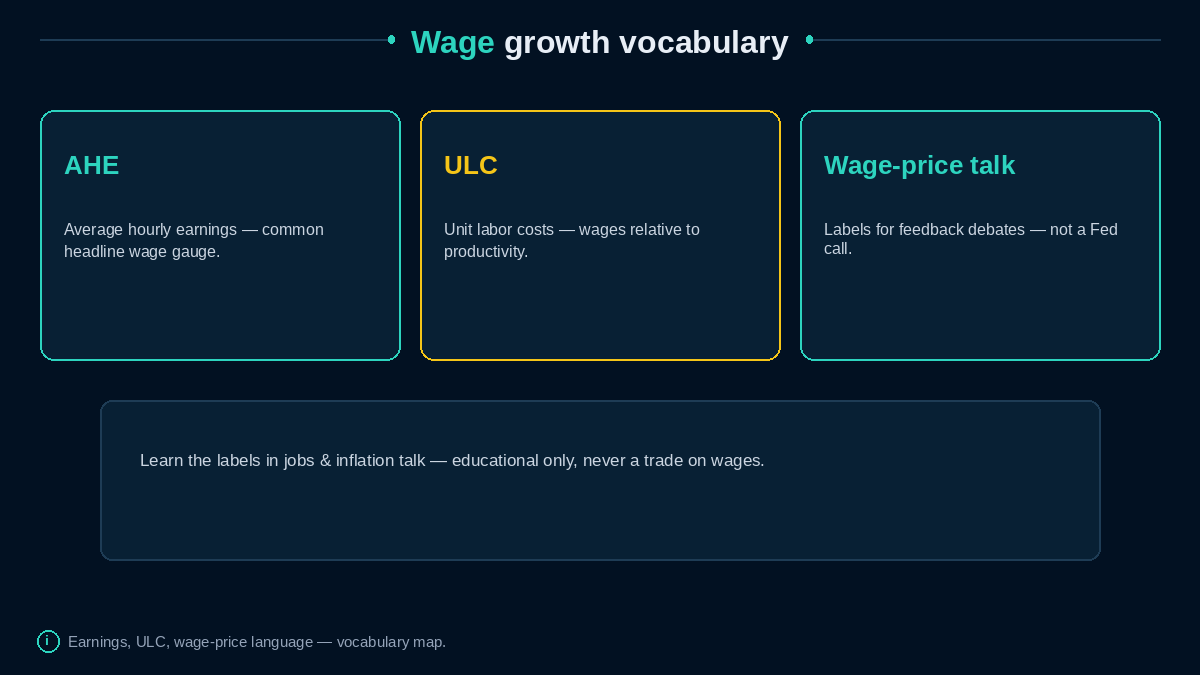
Wage growth vocabulary
Average hourly earnings, unit labor costs, and wage-price language as labels—not a Fed call.
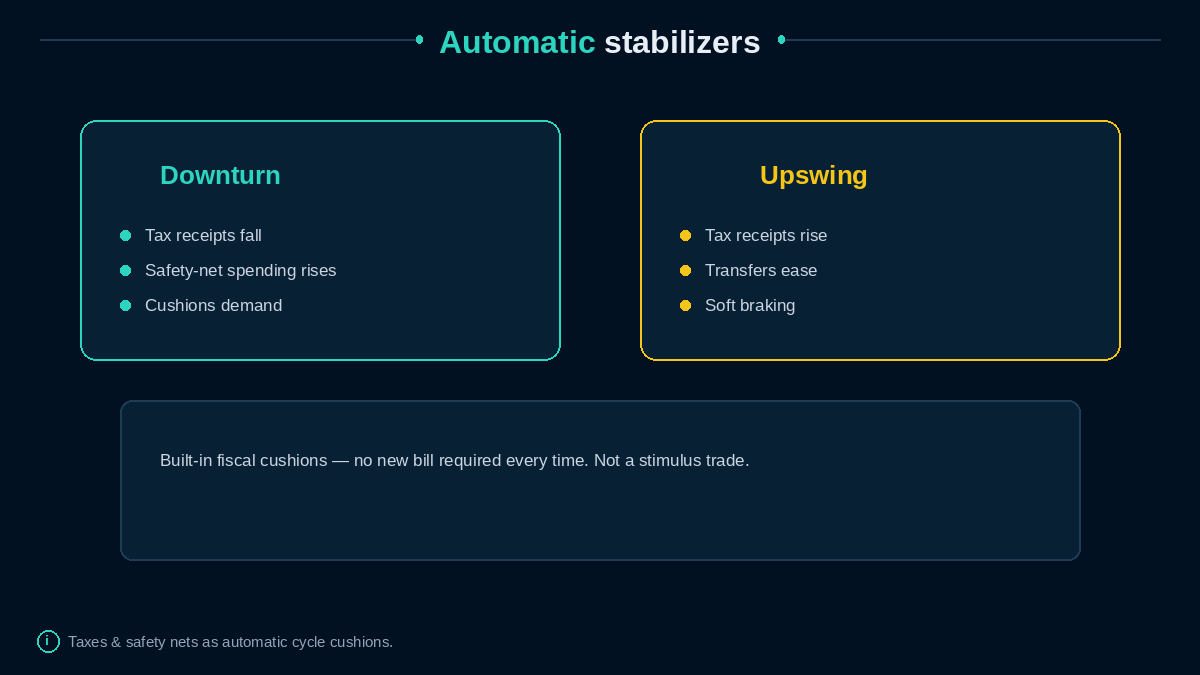
Automatic stabilizers
How taxes and safety-net spending can cushion a downturn without a new bill every time.
Money markets & plumbing
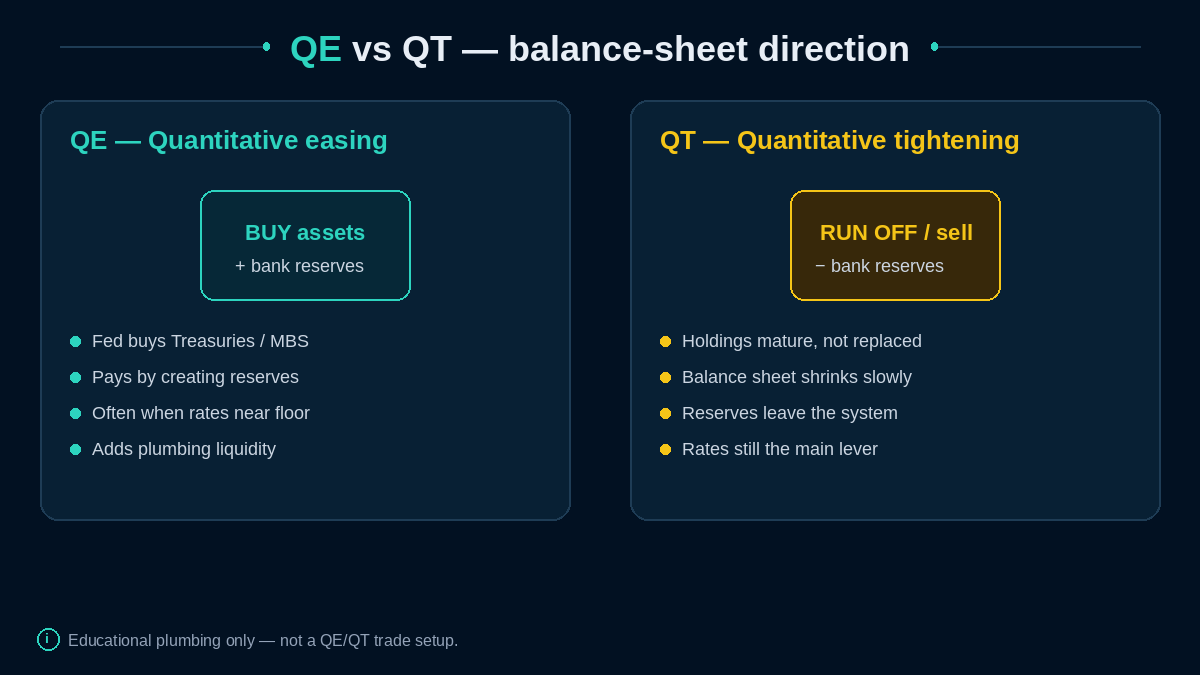
QE and QT explained
Large-scale asset purchases vs runoff—what the balance sheet is doing in everyday language.
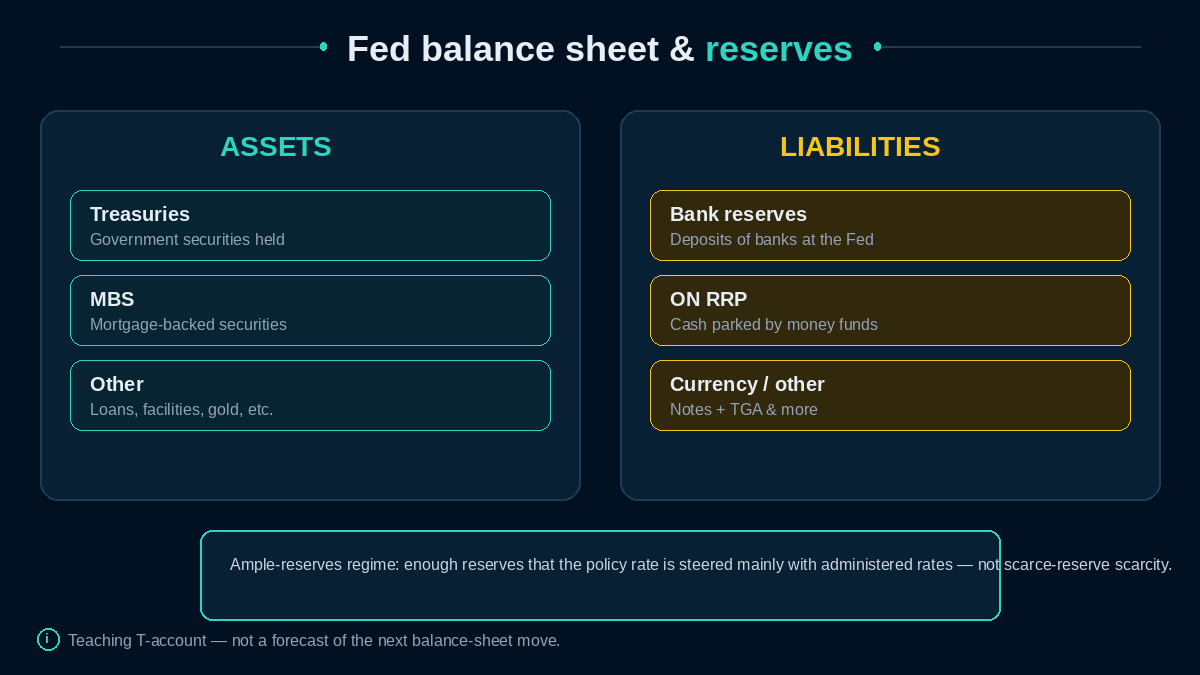
Fed balance sheet & reserves
Assets vs liabilities, bank reserves, and the idea of an ample-reserves regime.
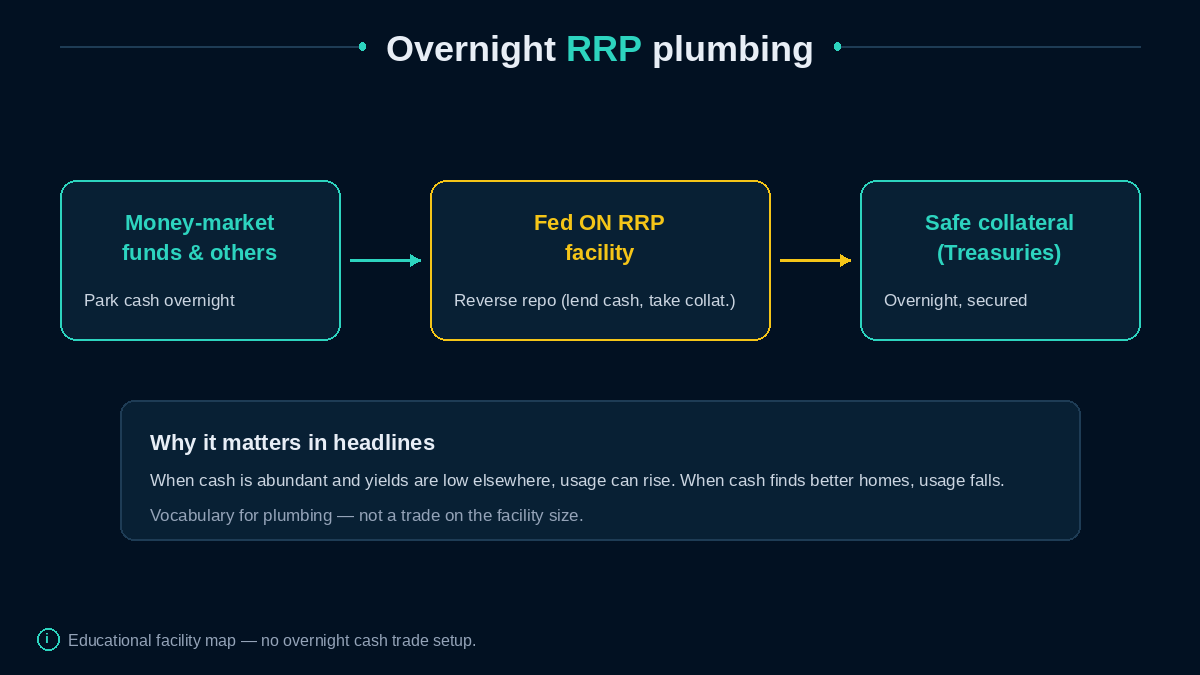
Overnight RRP plumbing
What the overnight reverse repo facility is and why nonbank cash parks there—no trade setup.
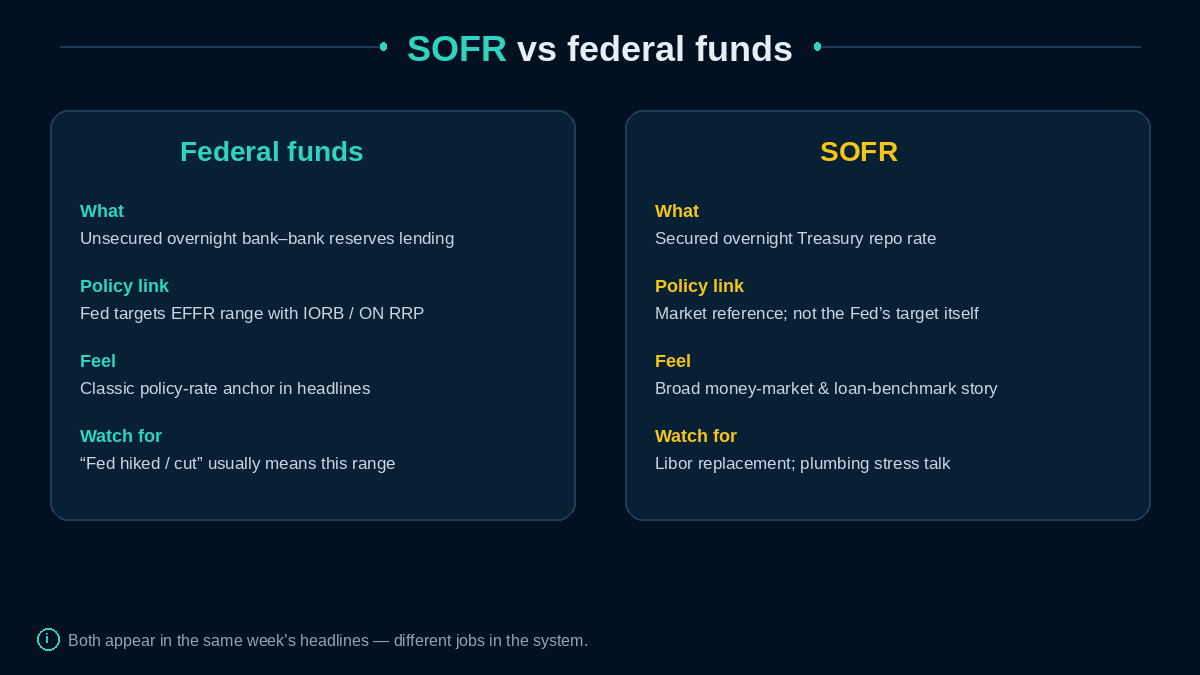
SOFR vs federal funds
Secured overnight repo rate vs the fed funds policy anchor—why both appear in headlines.
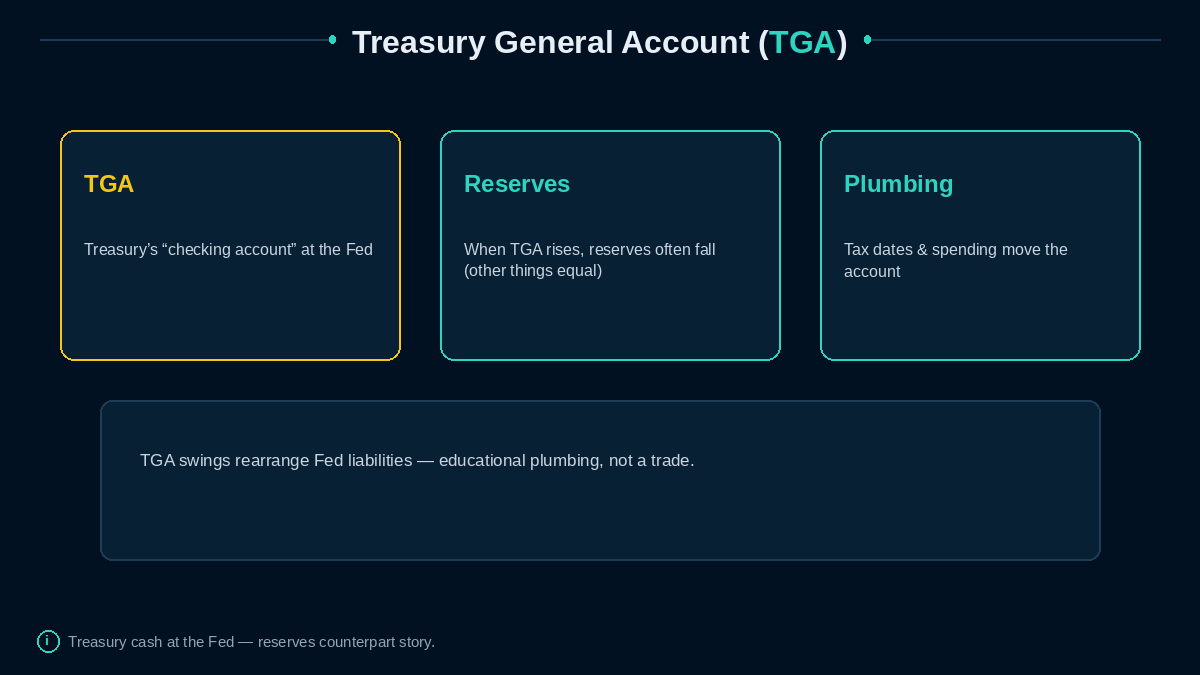
Treasury General Account (TGA)
The Treasury’s checking account at the Fed—and how TGA swings can move reserves.
Global macro
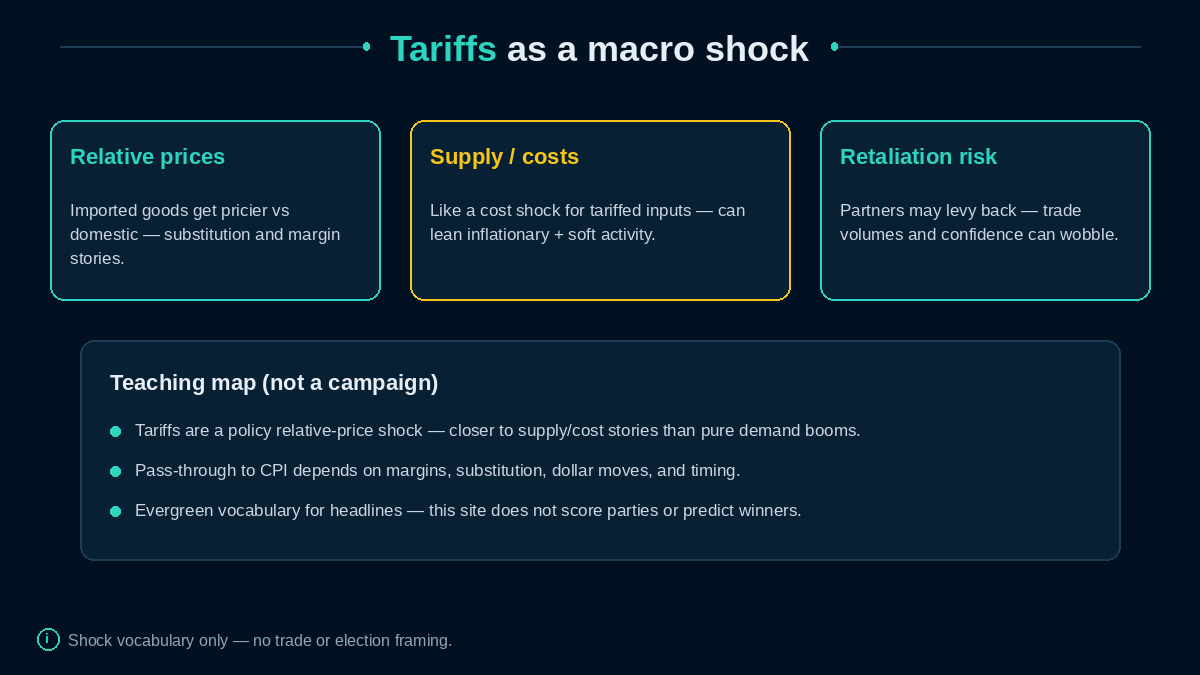
Tariffs as a macro shock
Tariffs as a relative-price / supply-and-demand shock story—costs, retaliation, vocabulary.
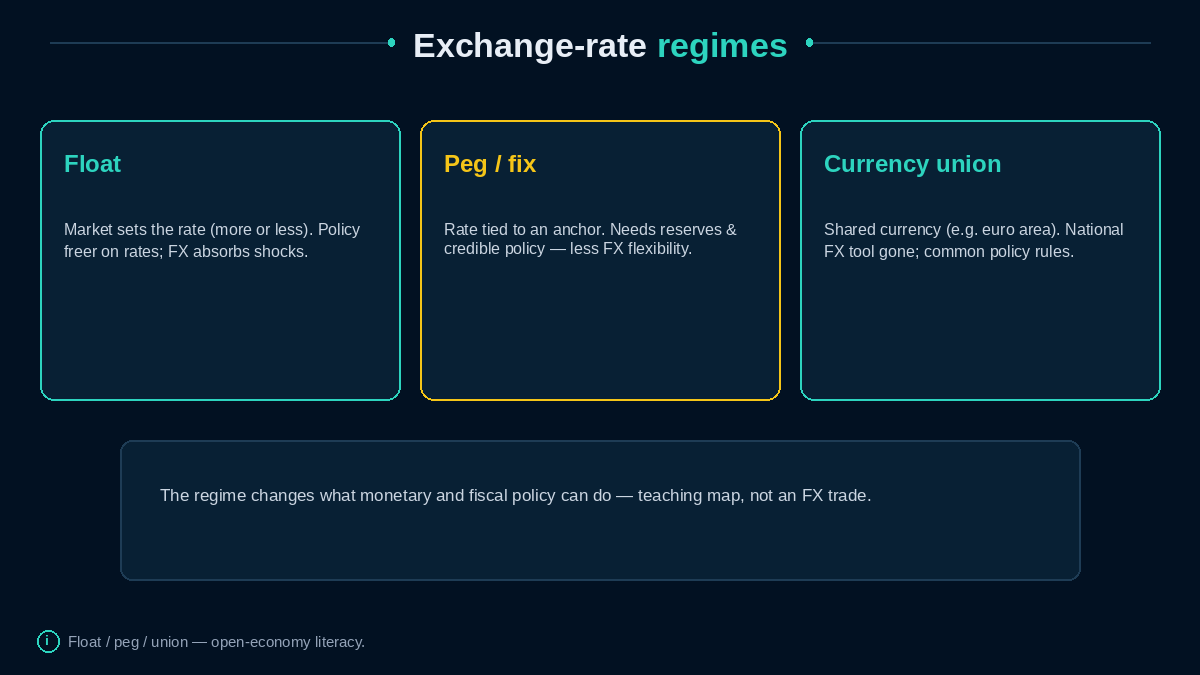
Exchange-rate regimes
Float, peg, and currency-union ideas—why the regime changes what policy can do.
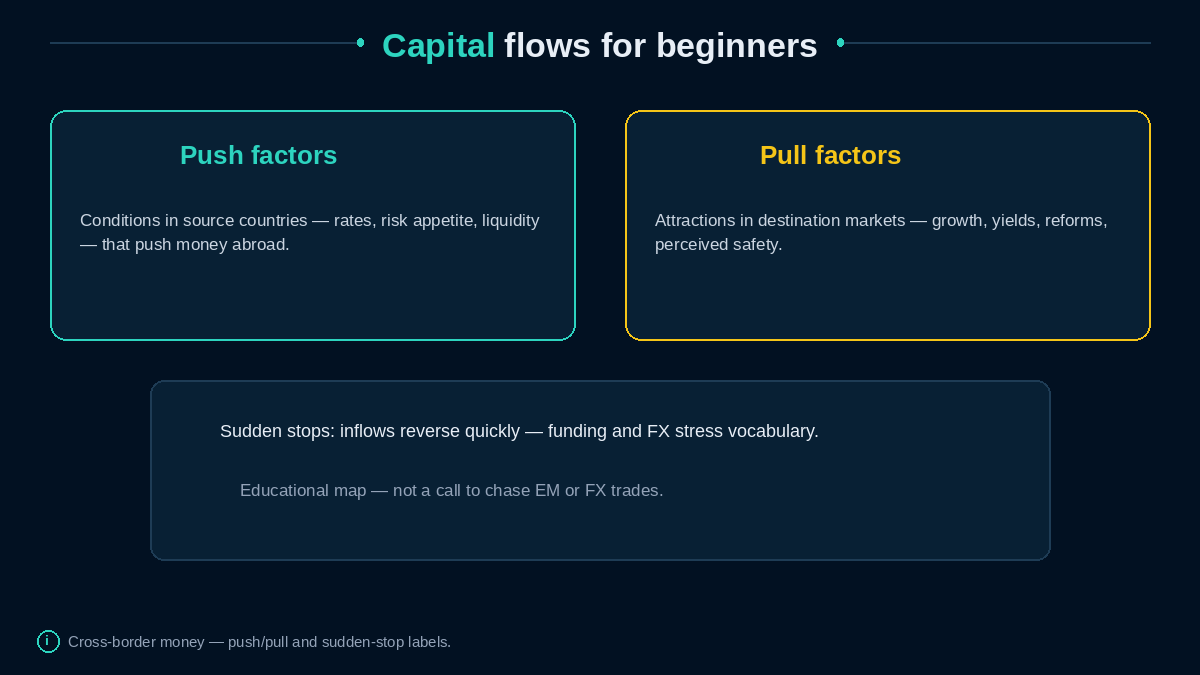
Capital flows for beginners
Money moving across borders—push/pull factors and why sudden stops matter.
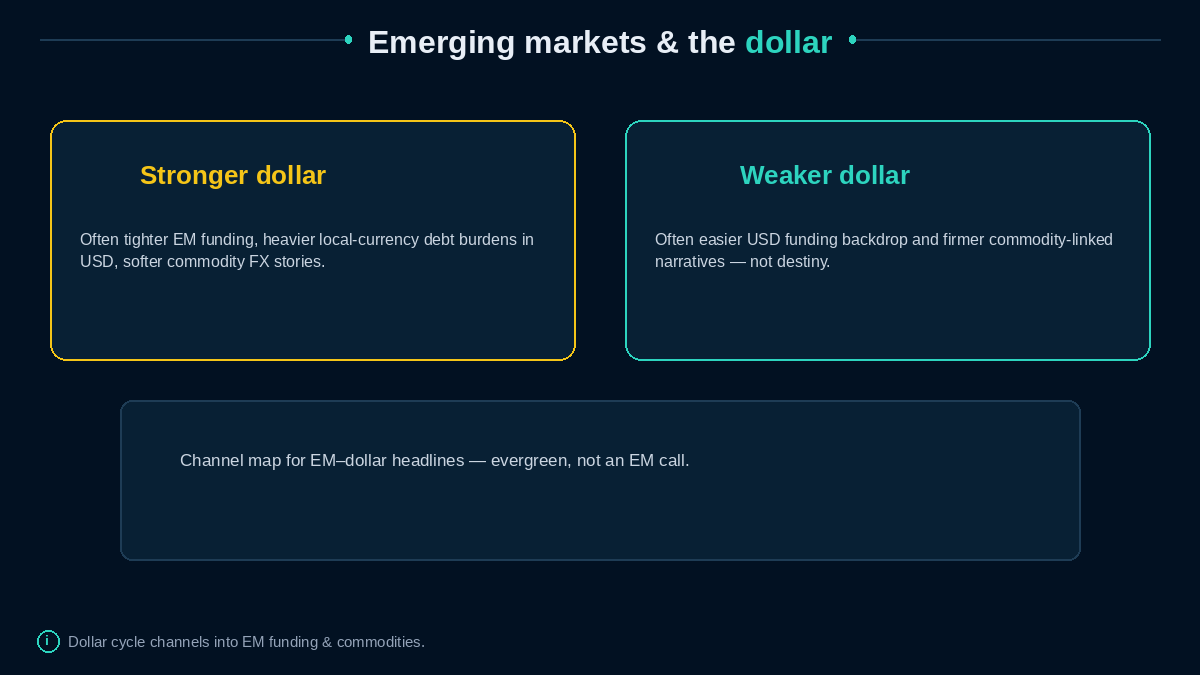
Emerging markets and the dollar
How a strong or weak dollar often shows up in EM funding and commodity stories.
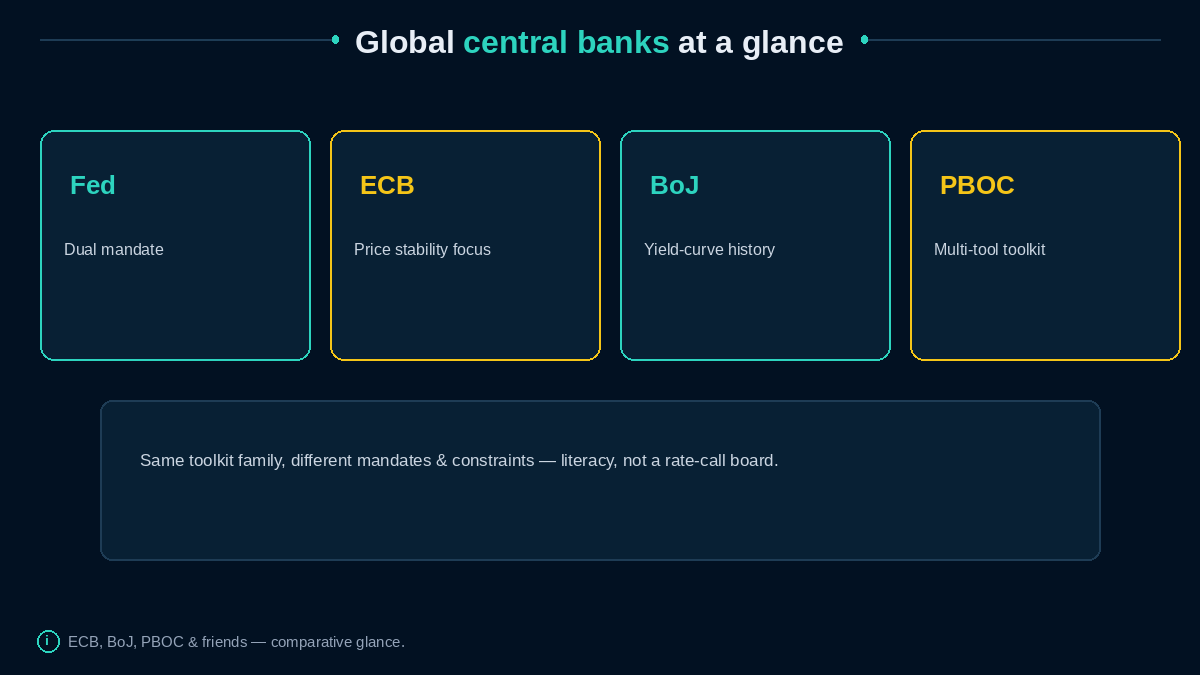
Global central banks at a glance
ECB, BoJ, PBOC, and friends—same toolkit family, different mandates and constraints.
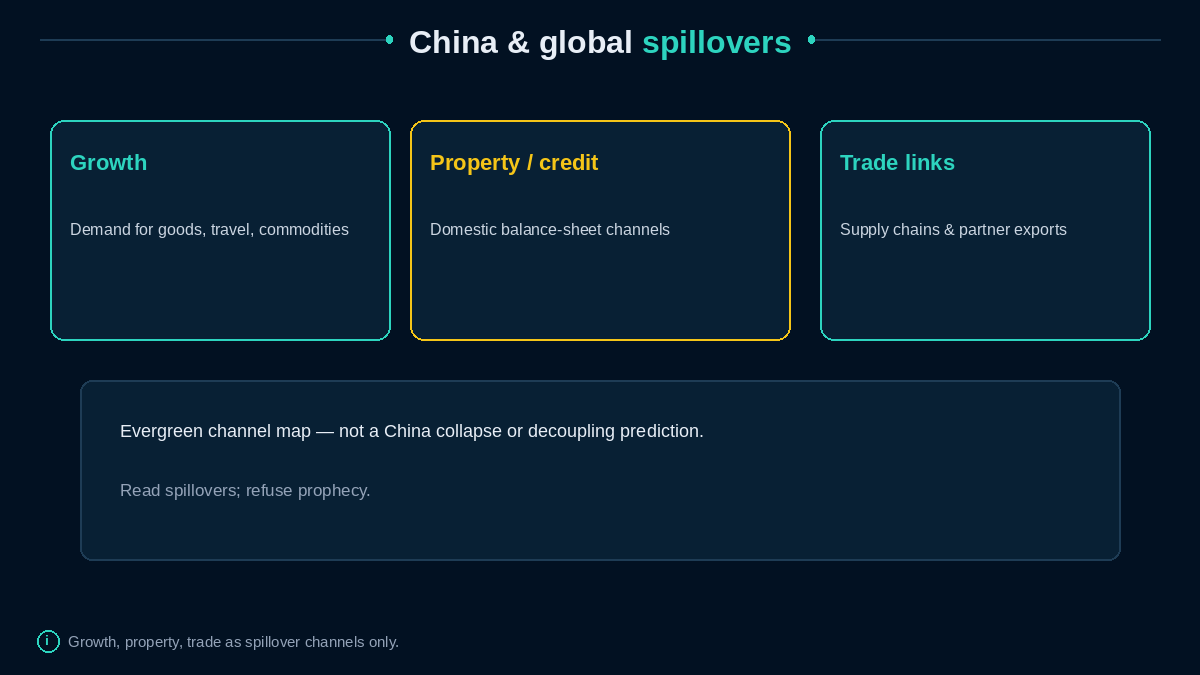
China and global spillovers
Growth, property stress, and trade links as channels—evergreen map, not a China call.
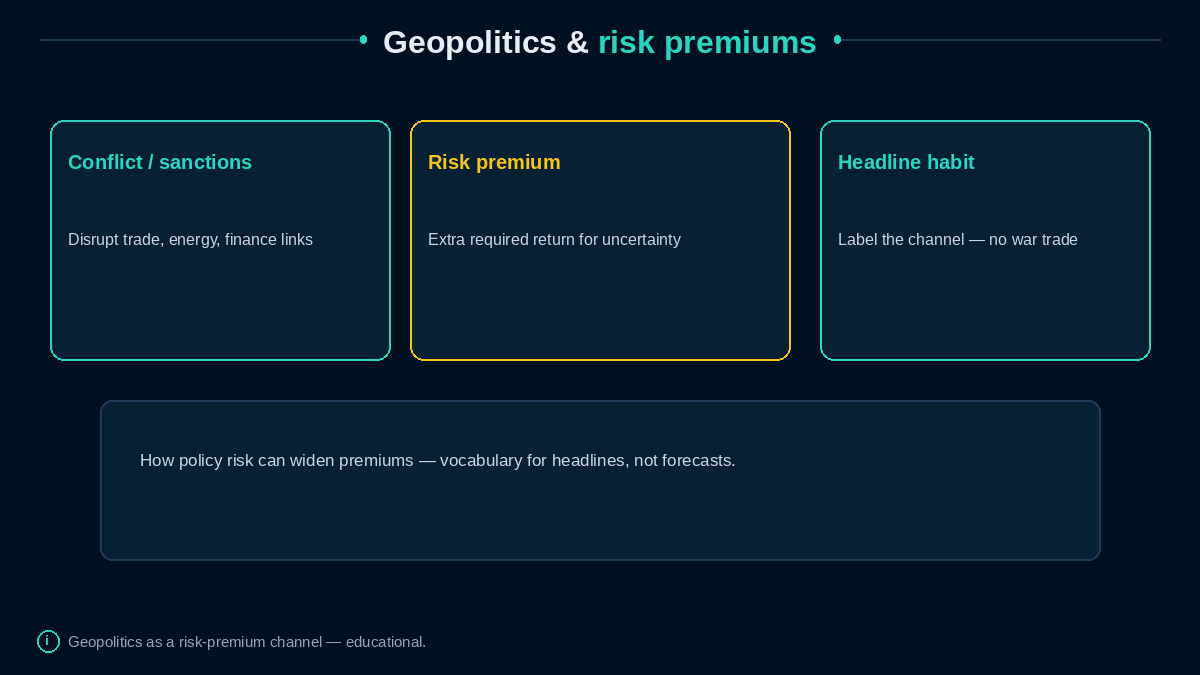
Geopolitics and risk premiums
How conflict, sanctions, and policy risk can widen risk premiums—headline vocabulary.
Economy & markets
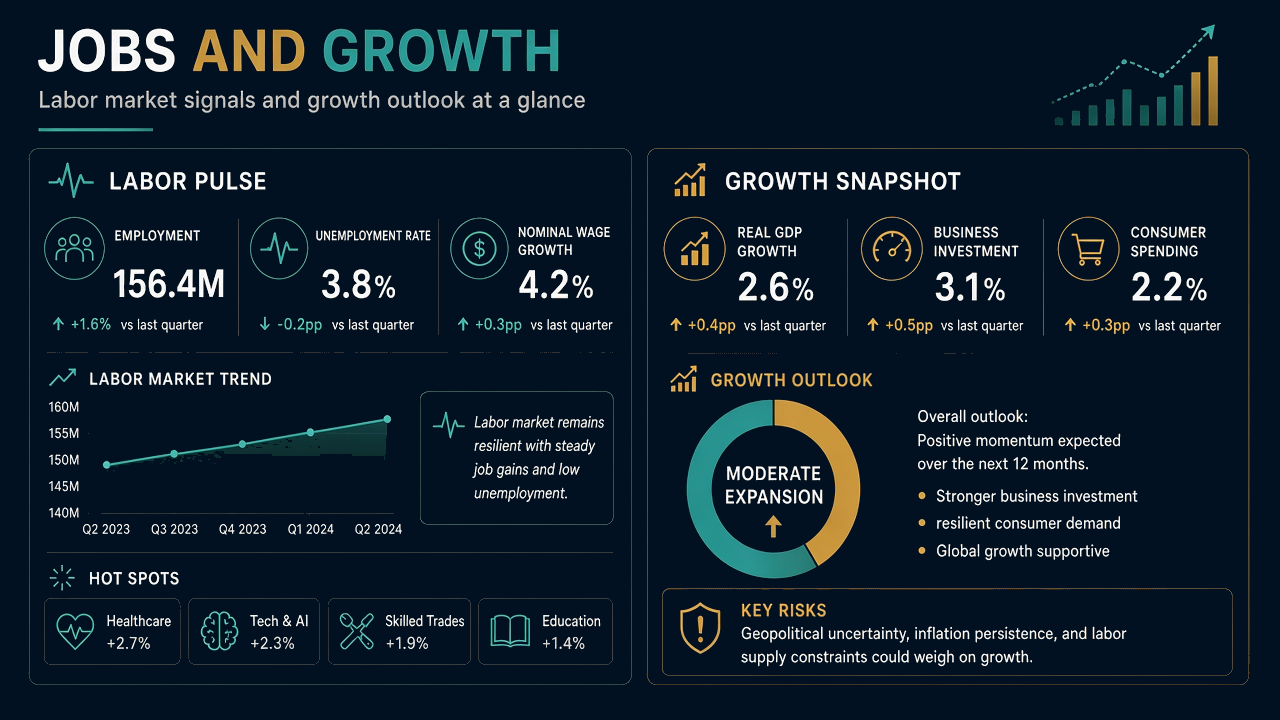
Jobs and growth
Labor data, GDP light, and landing scenarios as vocabulary.
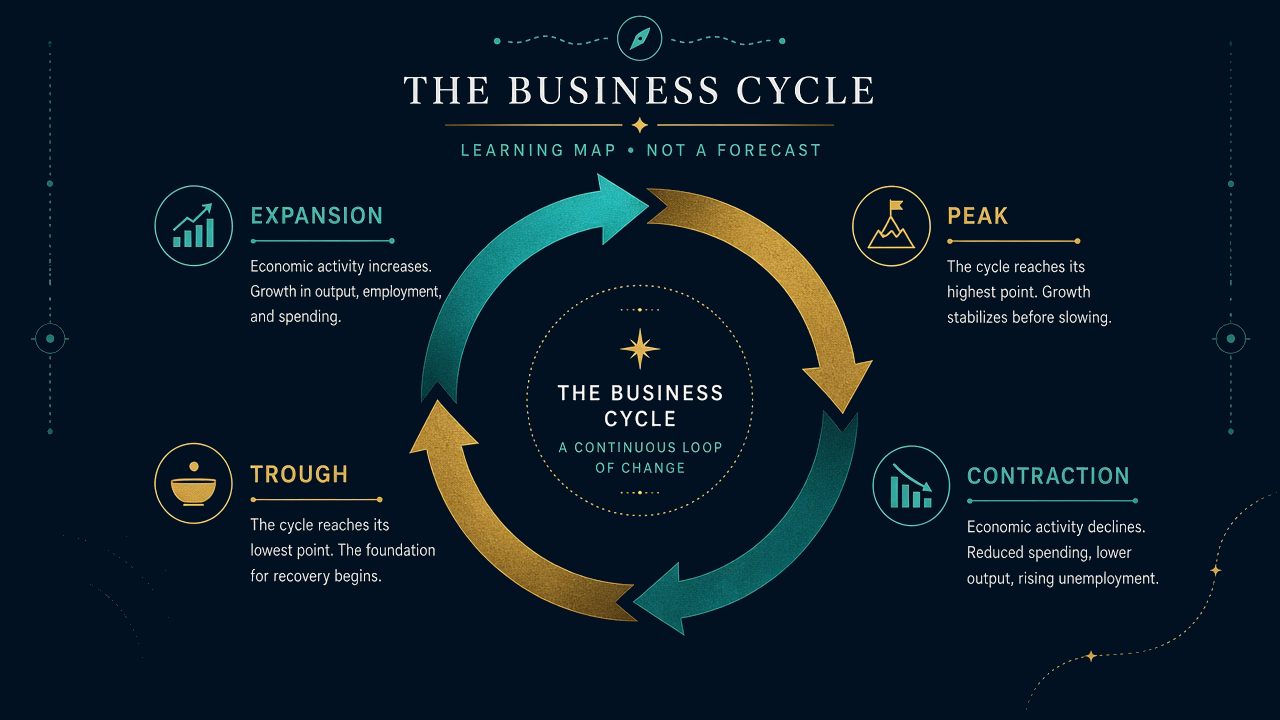
Business cycle
Expansion–peak–contraction–trough as a learning map.
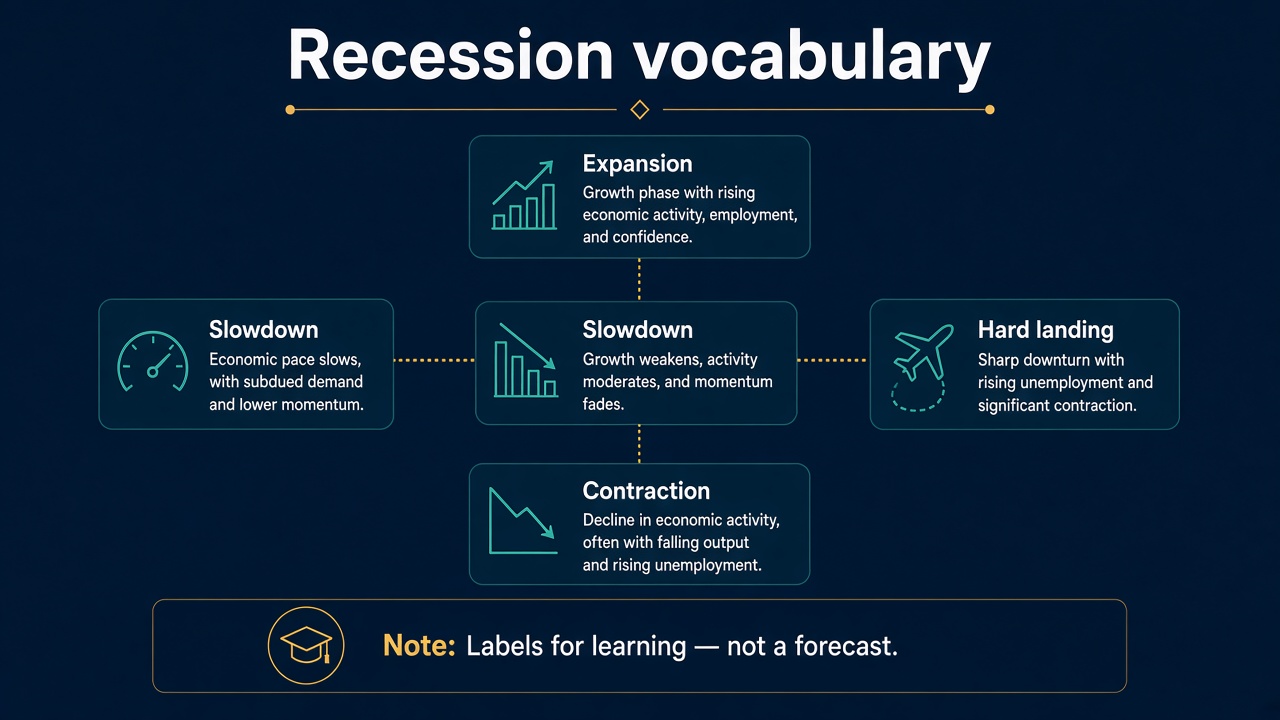
Recession vocabulary
Contraction language and soft/hard landing as labels—not forecasts.
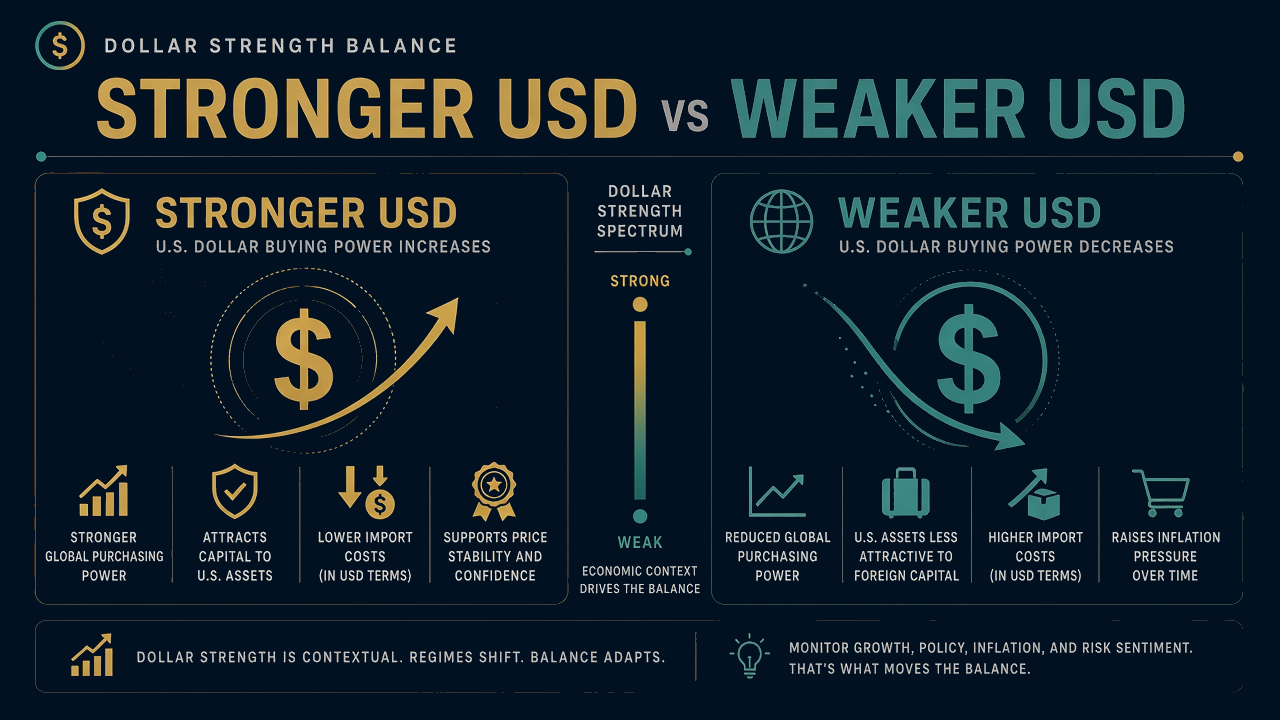
US dollar & FX
Stronger/weaker dollar, DXY shorthand, rates and risk links.
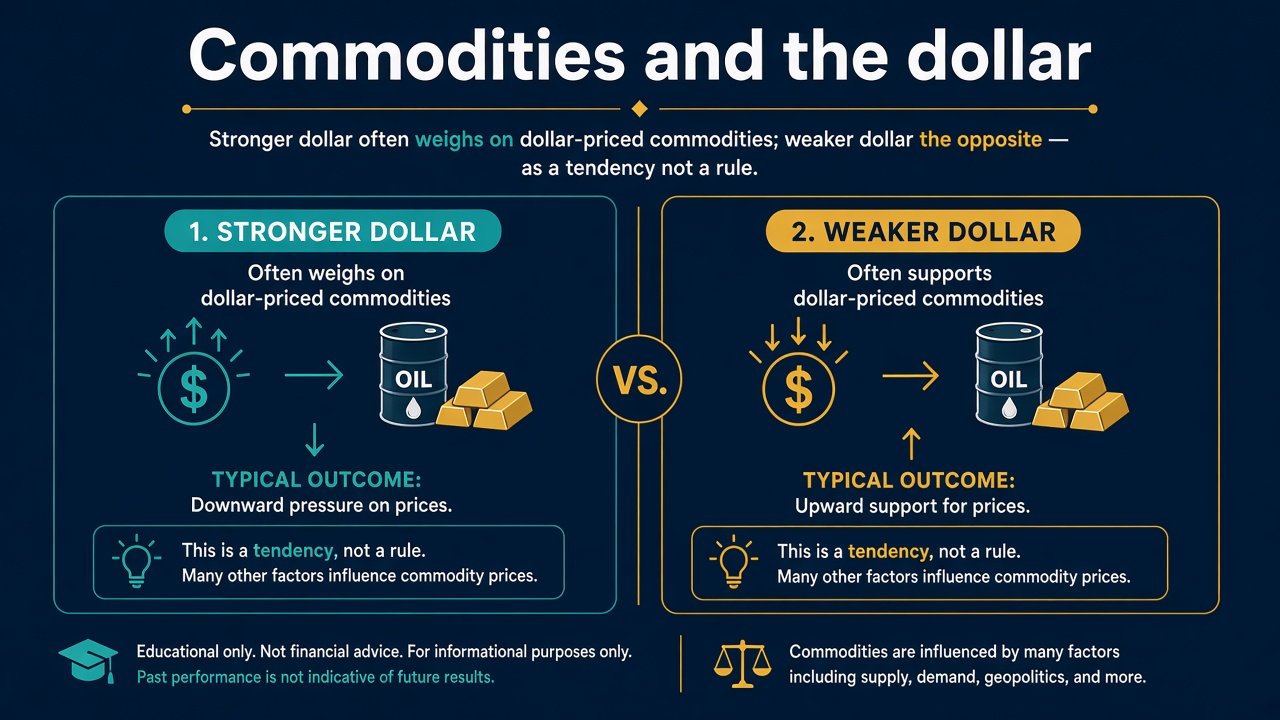
Commodities and the dollar
Oil, gold, and dollar headlines as context—not trade ideas.
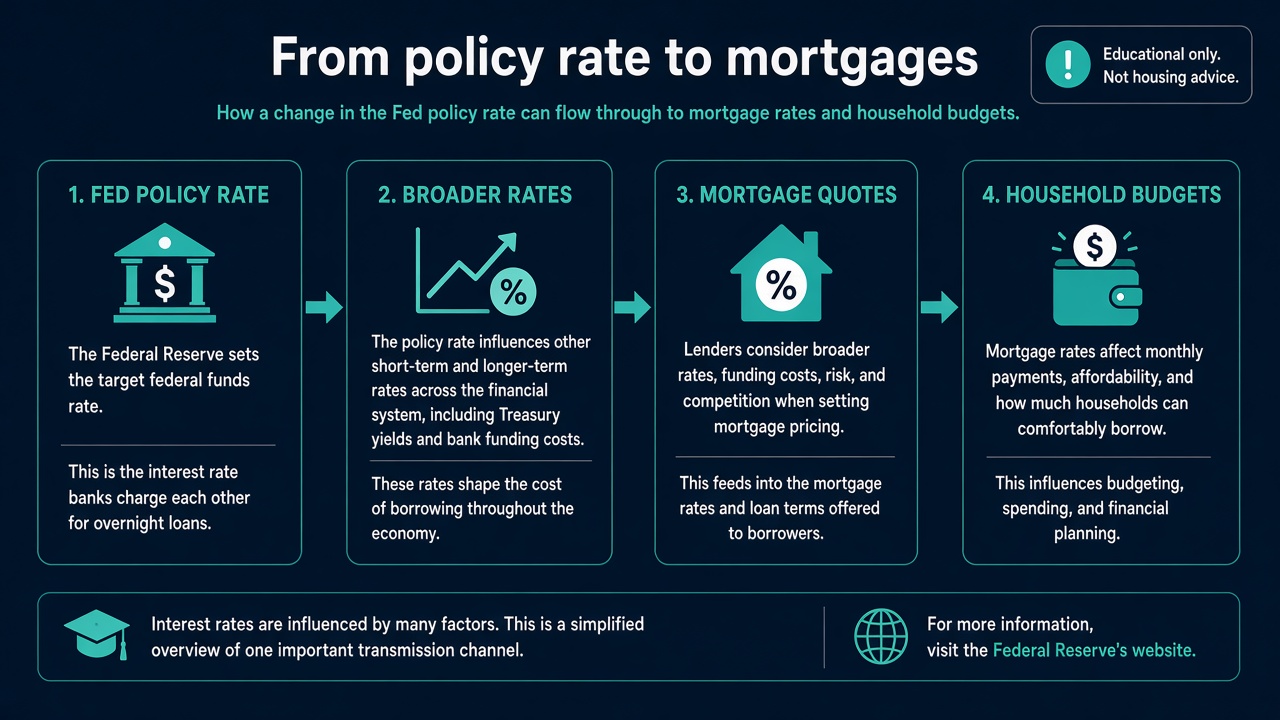
Housing, mortgages, and rates
How policy and yields show up in mortgage quotes—not RE advice.
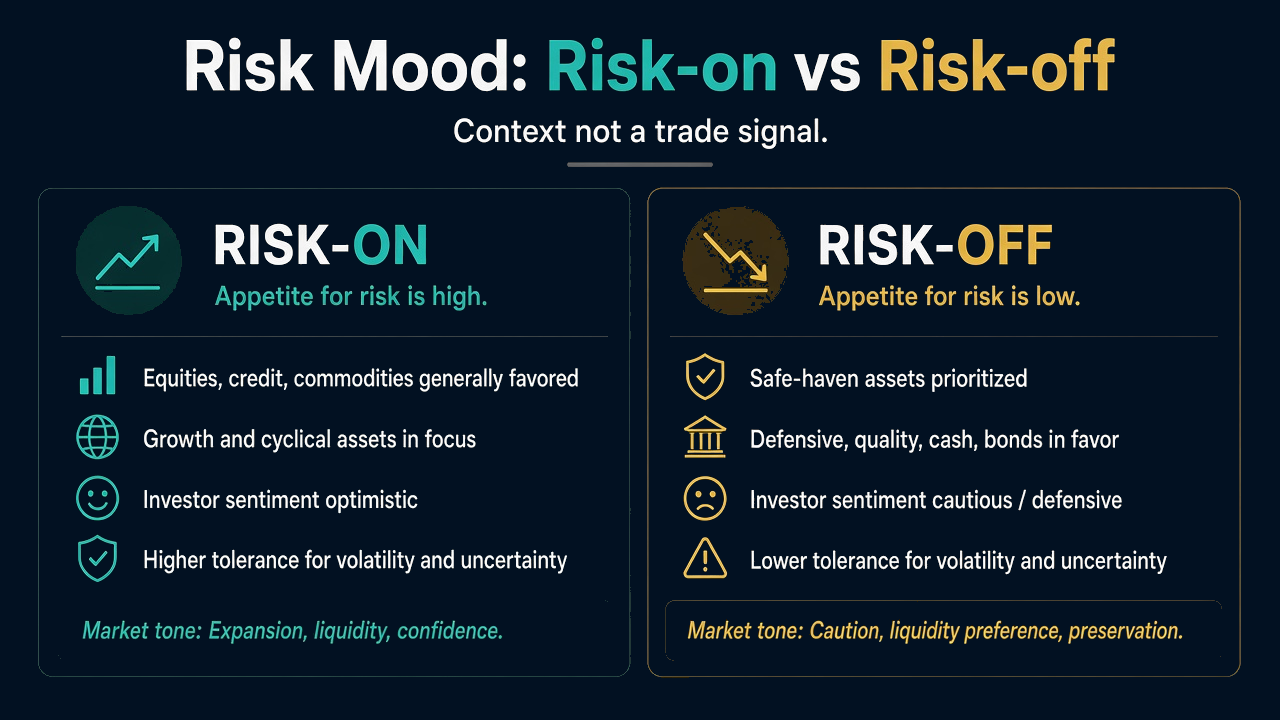
Risk assets 101
Rates, liquidity, and risk mood — with explicit anti-signal framing.
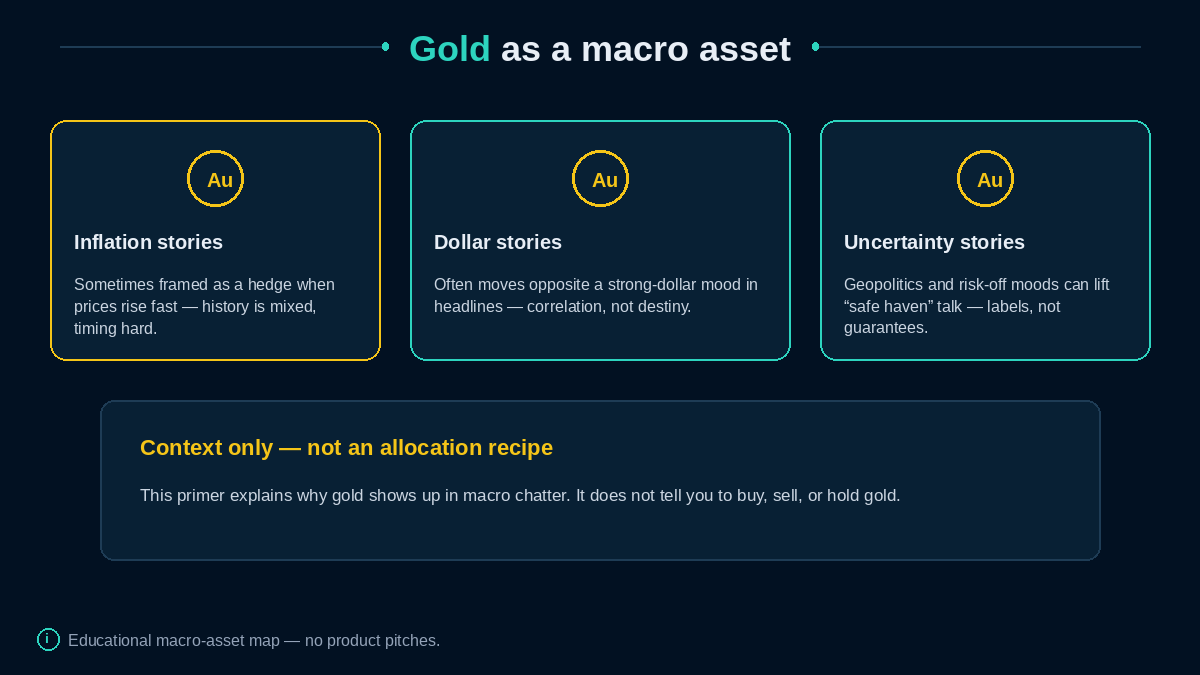
Gold as a macro asset
Why gold shows up in inflation, dollar, and uncertainty stories—context only, no allocation recipe.
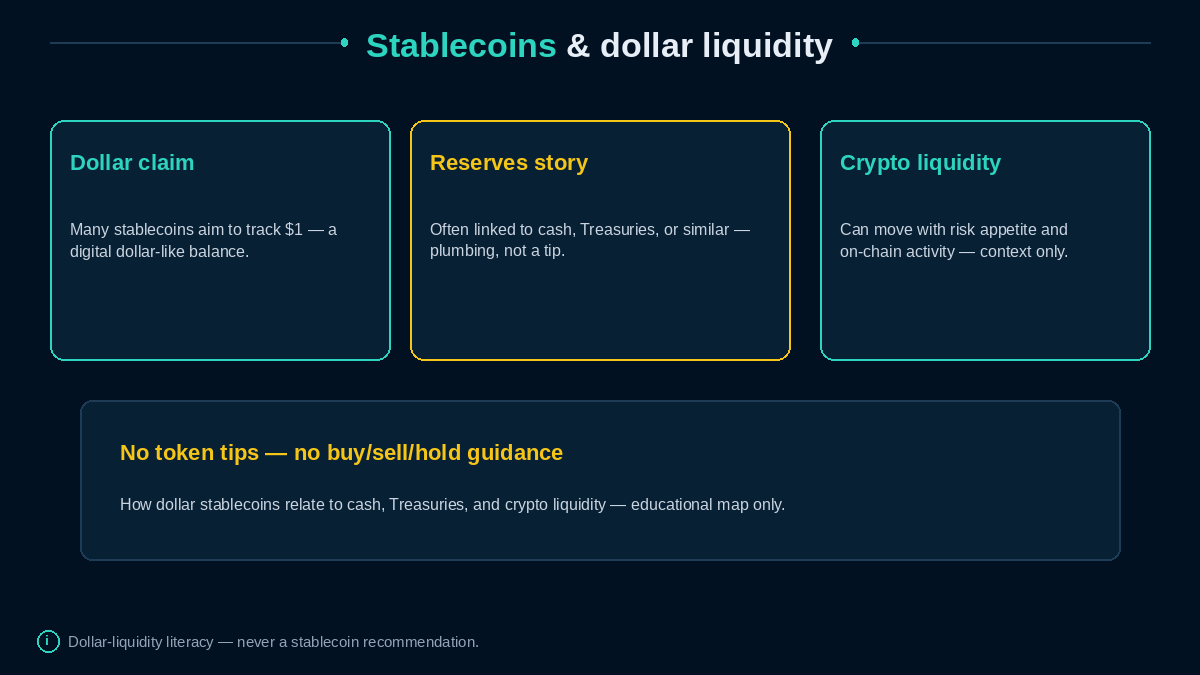
Stablecoins and dollar liquidity
How dollar stablecoins relate to cash, Treasuries, and crypto liquidity—no token tips.
Cycles & risk
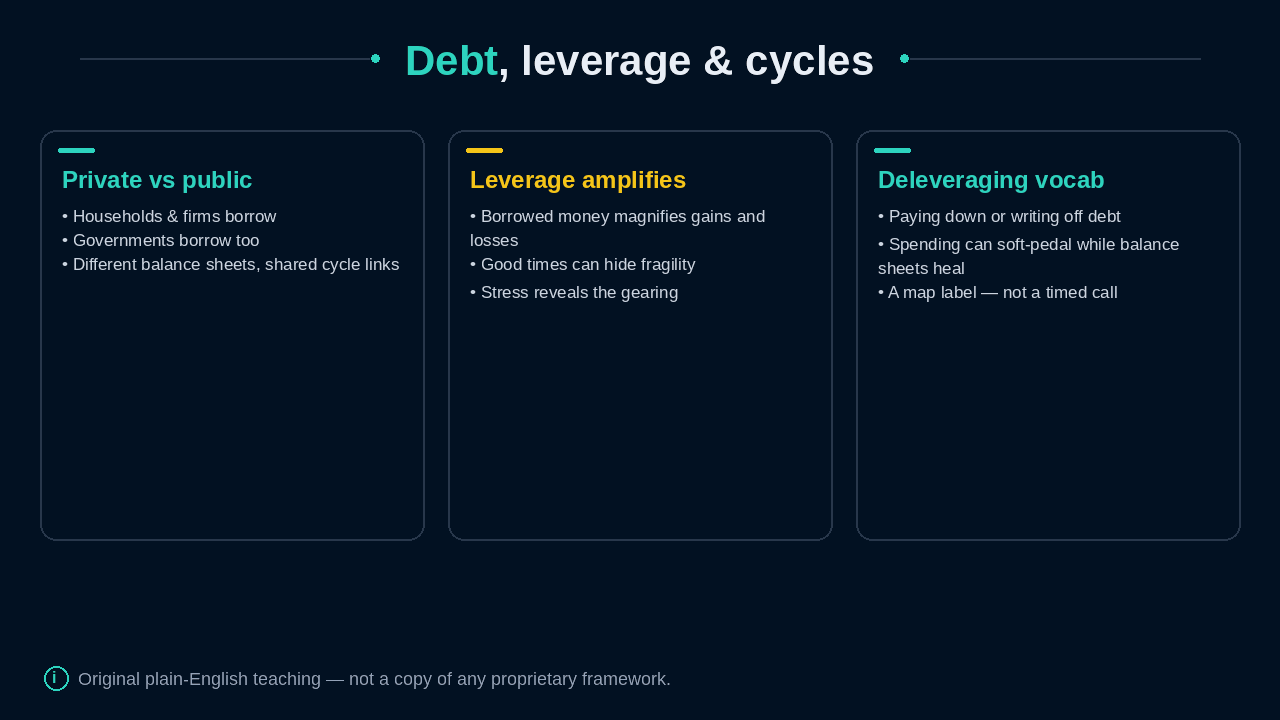
Debt and leverage
Private vs public debt, deleveraging vocab, why debt amplifies cycles.
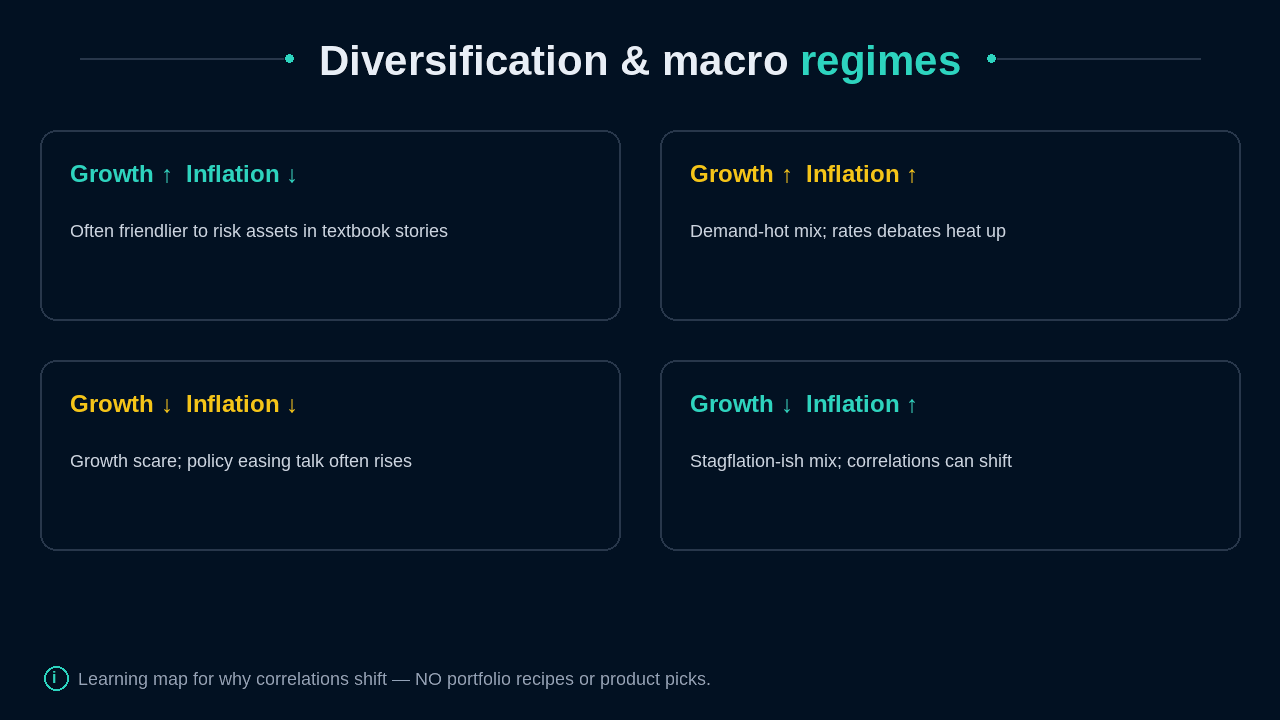
Diversification & regimes
Why correlations shift—regime map only, no portfolio recipes.
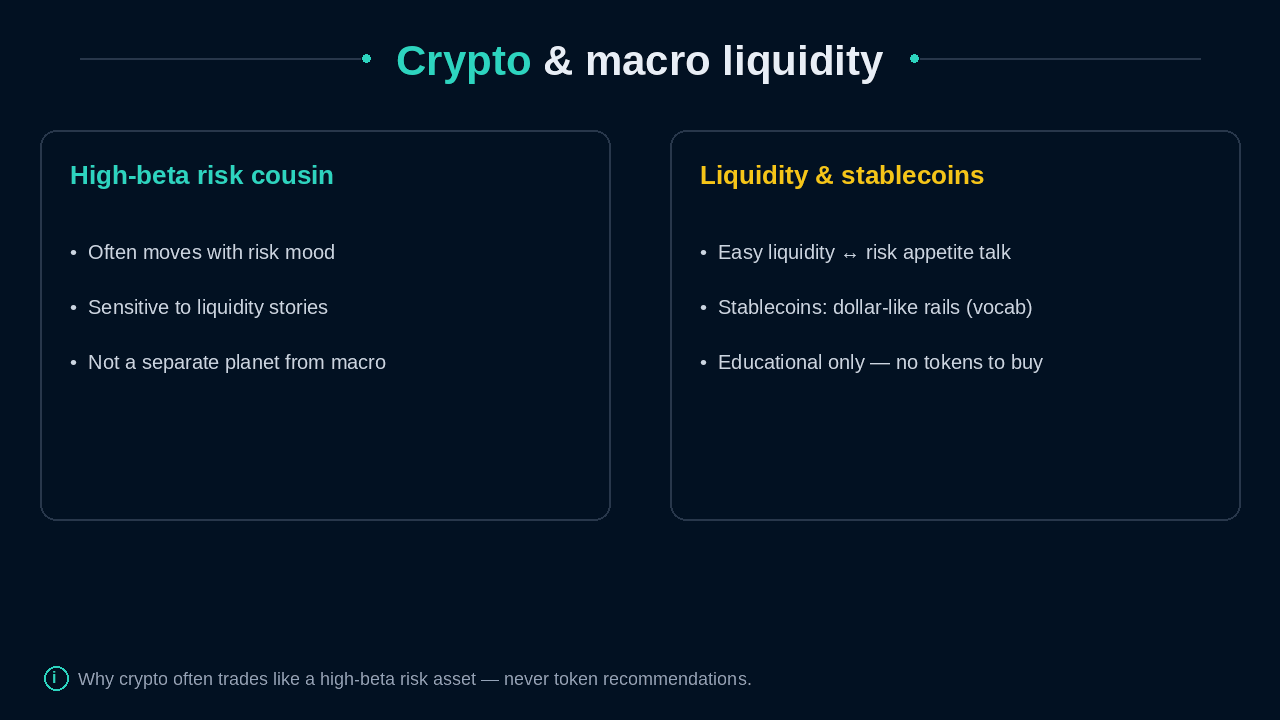
Crypto & macro liquidity
Why crypto often trades like a high-beta risk asset—no token tips.
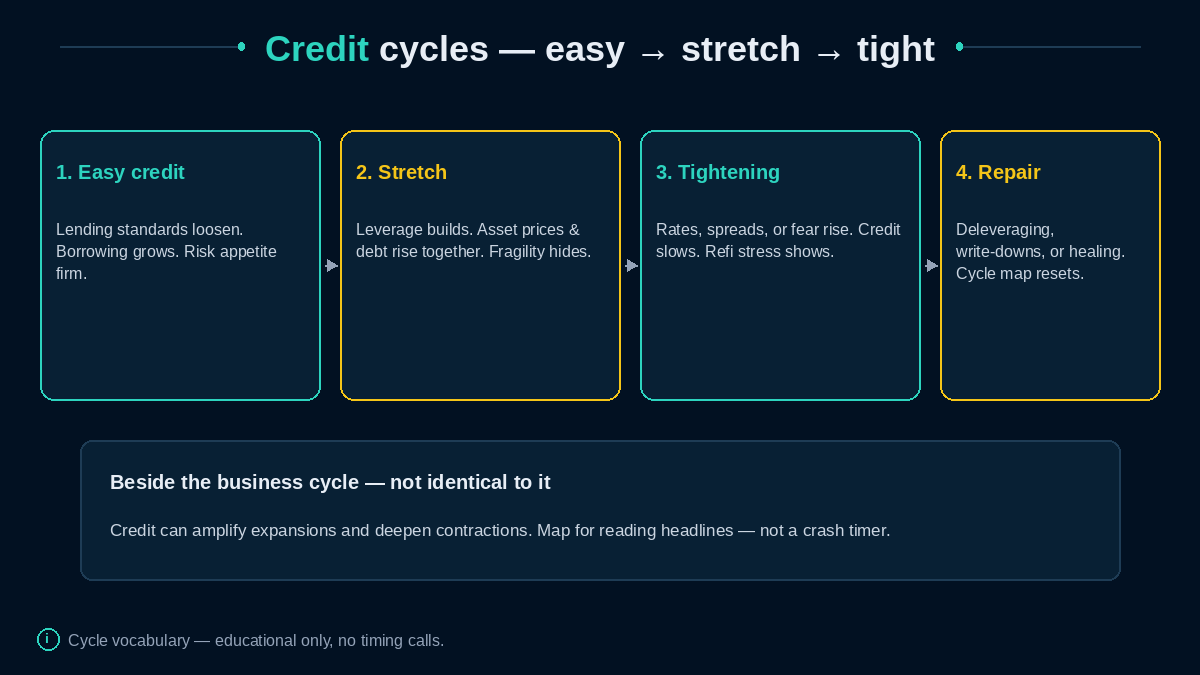
Credit cycles
Easy credit → stretch → tightening as a cycle map alongside the business cycle.
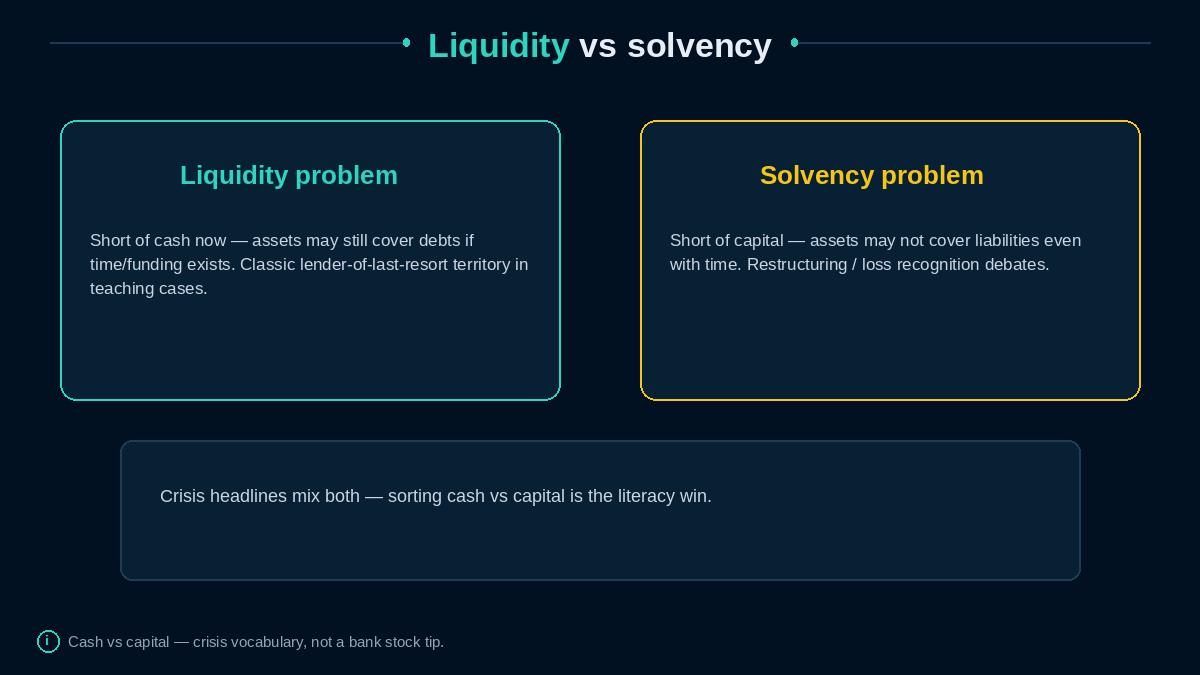
Liquidity vs solvency
Short of cash vs short of capital—why the distinction matters in crisis headlines.
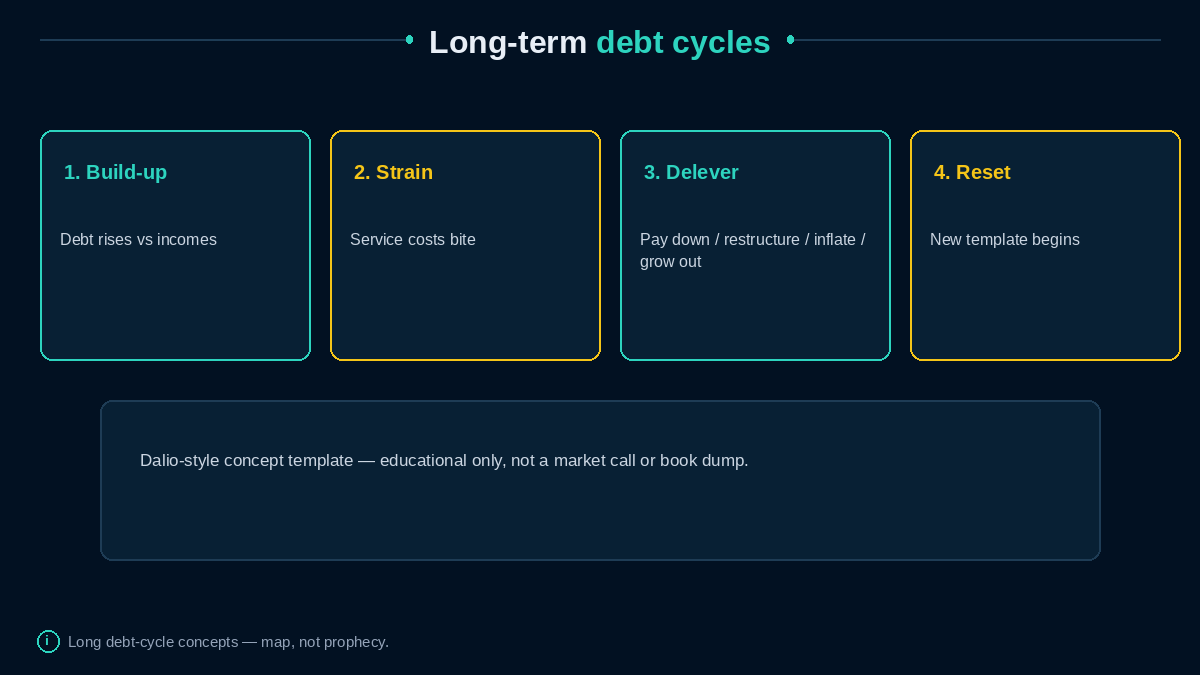
Long-term debt cycles
Long debt-cycle concepts—build-up and deleveraging levers as a template, not a market call.
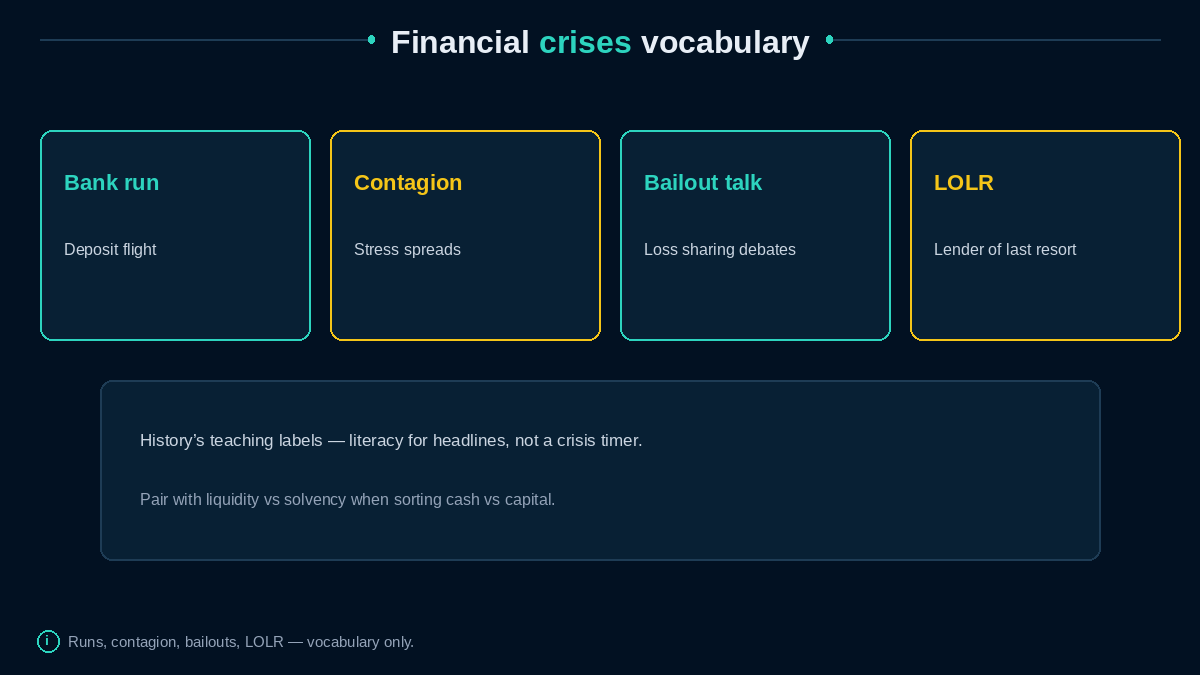
Financial crises vocabulary
Bank runs, contagion, bailouts, and lender-of-last-resort language from teaching cases.
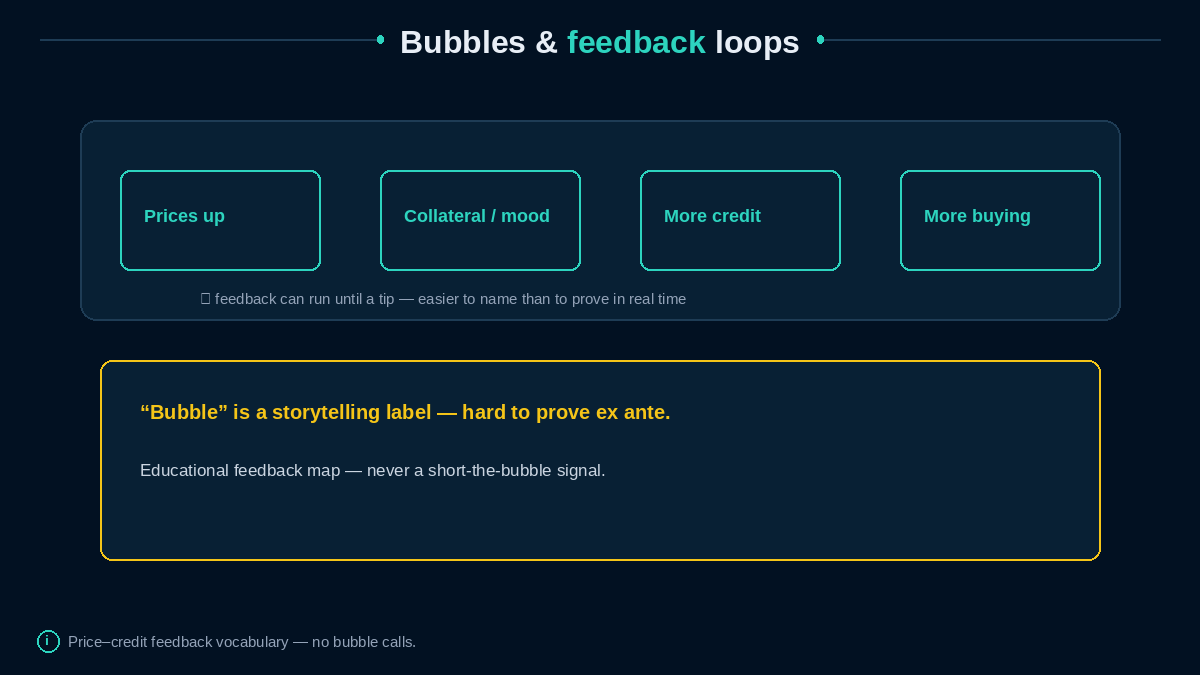
Bubbles and feedback loops
Price–credit feedback and why “bubble” is easier to say than to prove.
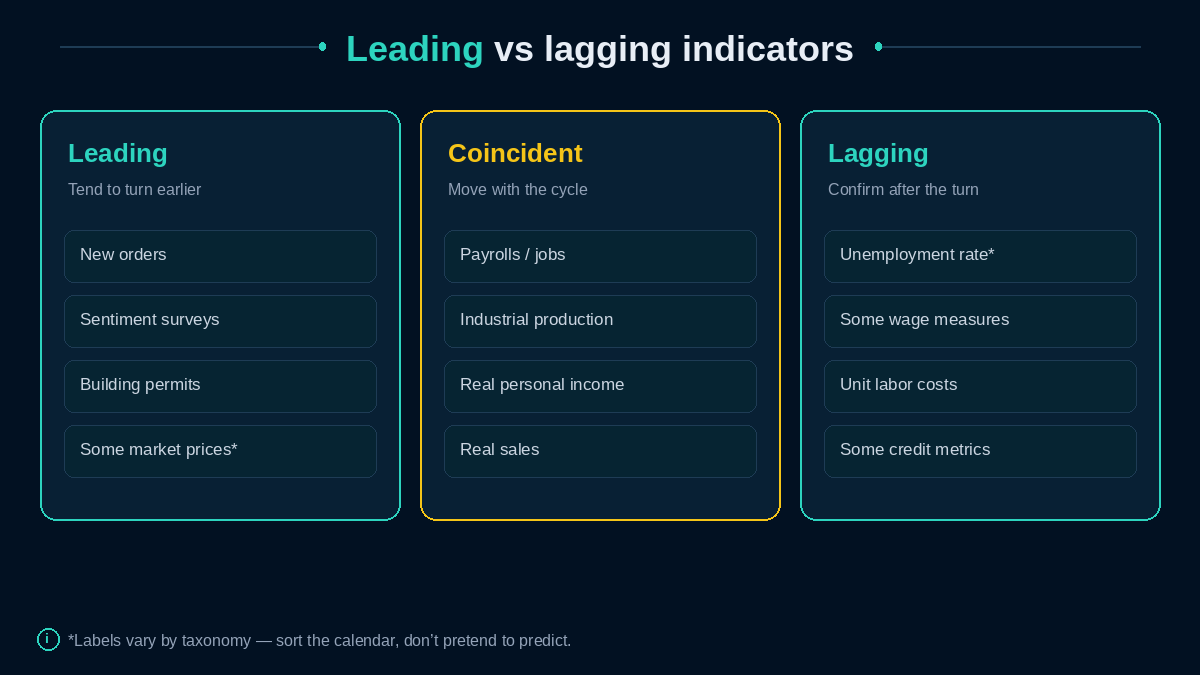
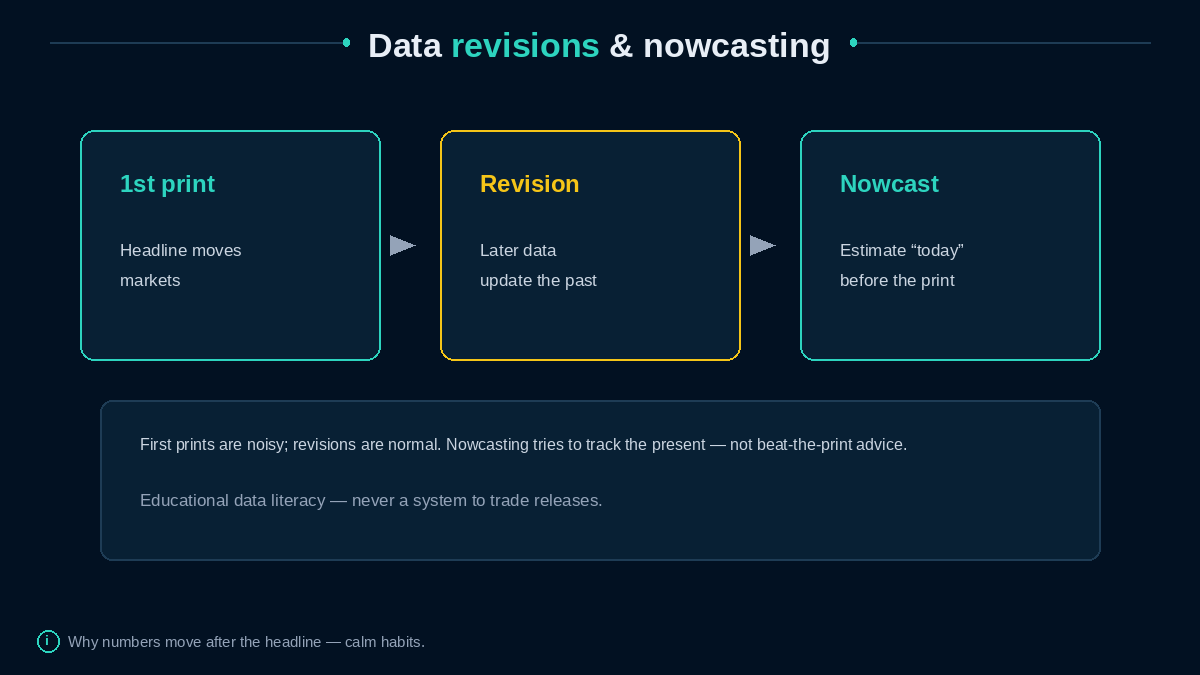
Event skills

Event playbook
A calm before / during / after process for FOMC, CPI, and NFP.
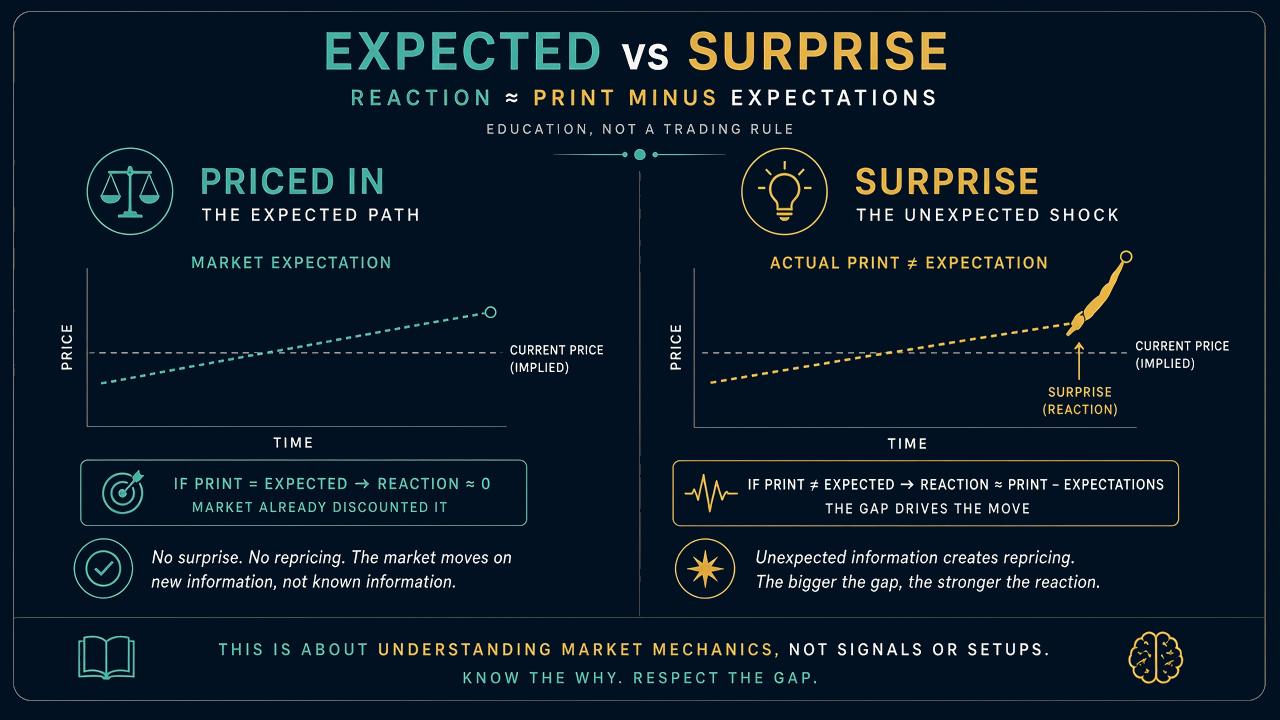
Priced in / expectations
Why surprise vs level makes the same print feel calm or chaotic.
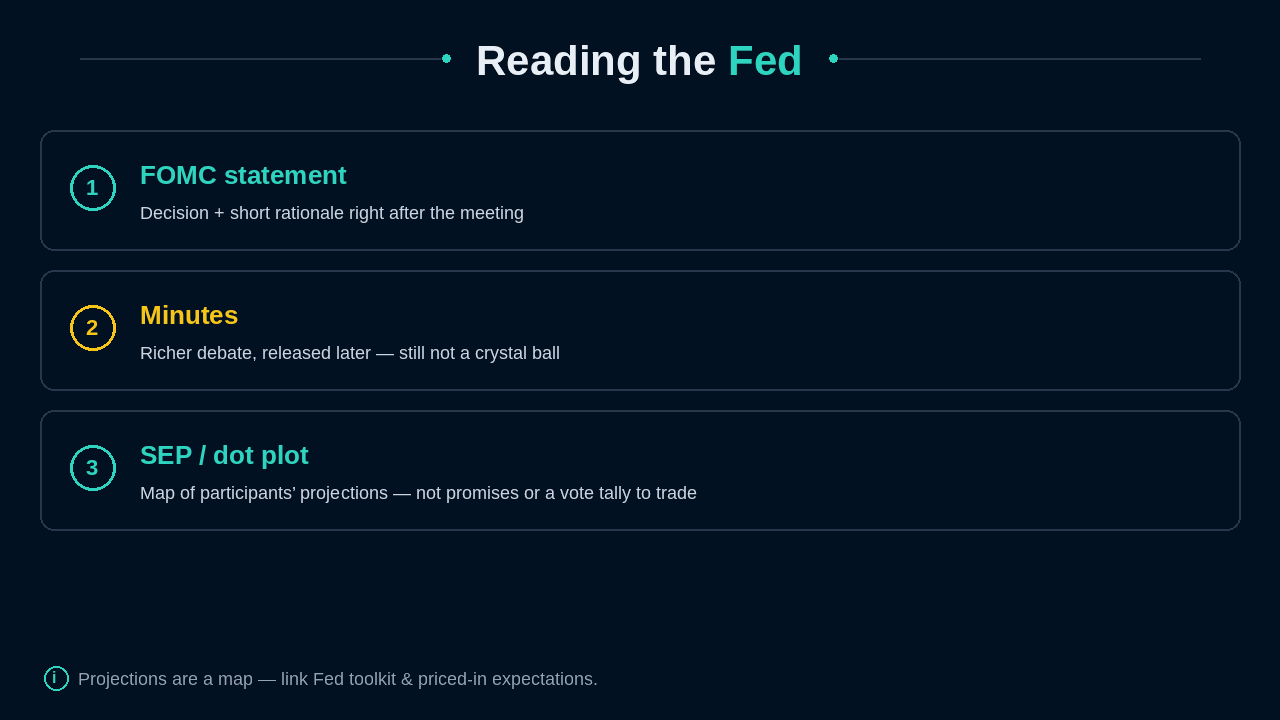
Reading the Fed
Statement, minutes, and dot plot as projections—not promises.
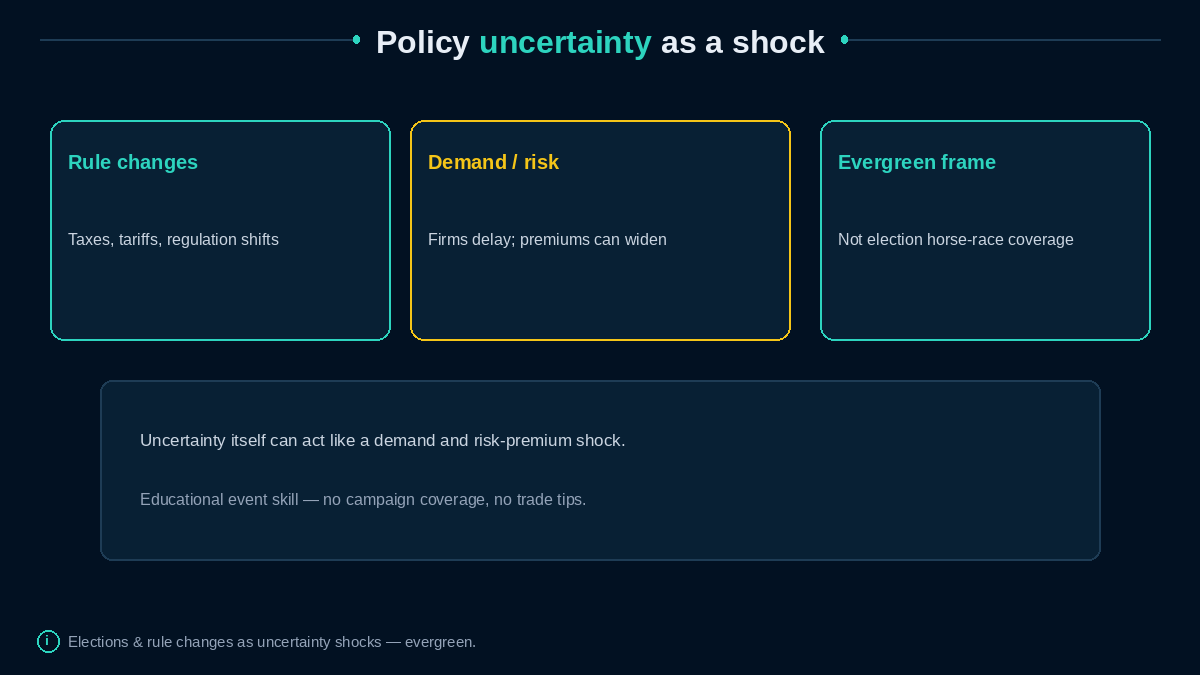
Policy uncertainty as a shock
Elections, rule changes, and uncertainty as a demand/risk-premium shock—evergreen, not campaigns.
Need a quick definition?
Jump into the plain-English glossary — every term links back to a primer.